01 - Carbon-14 dating, the star of archaeometry
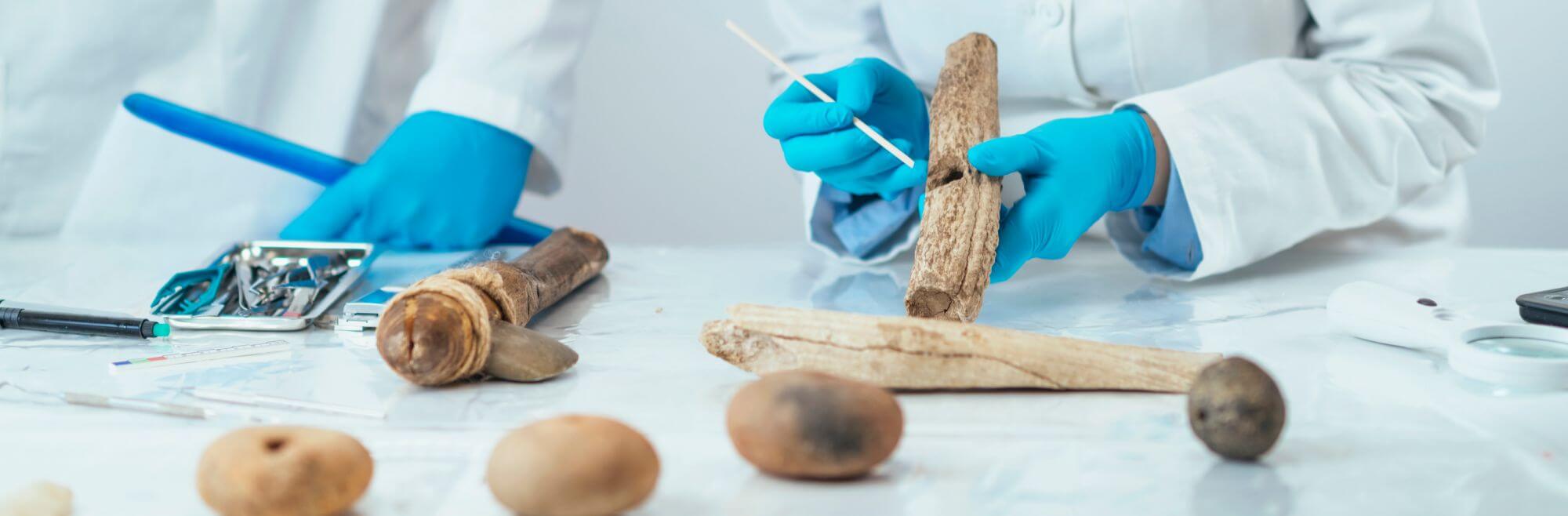
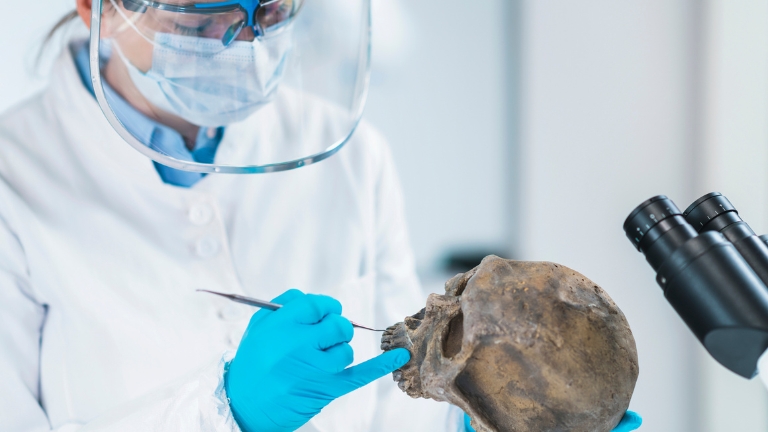
Carbon-14 dating (or radiocarbon dating) is an essential method for dating all organic materials (wood, bones, teeth, charcoal, mortar, etc.). To do this, our doctors and engineers measure the residual concentration of carbon 14 using AMS (particle gas pedal coupled to a mass spectrometer).
Because every archaeological artifact is different, our scientific teams use a protocol adapted to each type of material (ABA treatment for charcoal, collagen extraction for bones).
Our results, delivered within 10 working days, include a detailed report and a customized analysis of the archaeological implications.
Read more
02 - TL and OSL dating
Thermoluminescence (TL) and optically stimulated luminescence (OSL) dating are essential in archaeology for determining the age of materials such as terracotta, bricks, heated minerals and sediments.
These techniques measure the irradiance accumulated in quartz and feldspar crystals since their last exposure to heat or light.
CIRAM, the only private laboratory in France to offer these services with a quality equivalent to that of university laboratories, uses state-of-the-art equipment to provide accurate and reliable dating, thus contributing to a better understanding of archaeological and historical contexts.
Read more
03 - Isotope analysis
Carbon-14 dating is not the only technique used in archaeometry. The analysis of stable isotopes of carbon, nitrogen, sulfur and strontium provides many answers to archaeological problems.
Carbon, nitrogen, sulfur and strontium isotopes provide information on diets and population movements. Was the diet meat-based? Were animal proteins of terrestrial or marine origin? Were these individuals indigenous?
These analyses are carried out on bones and teeth, providing an in-depth insight into past lifestyles and cultural exchanges.
Read more
04 - Organic residue analysis
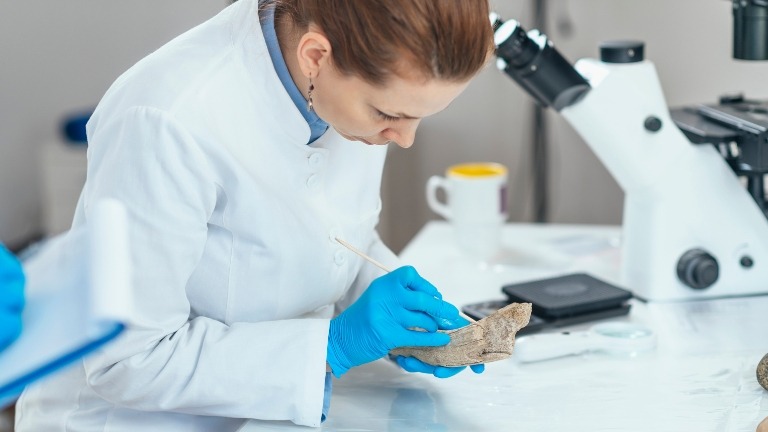
Archaeological artefacts (amphorae, terracotta pots, metal containers) often preserve traces of food, drink or cosmetics. Analysis of organic residues enables us to identify eating habits, culinary practices and exchanges of raw materials.
CIRAM uses infrared spectrometry (FTIR-ATR) and gas chromatography coupled with mass spectrometry (Py-GC-MS) to detect and characterize these molecules, offering a precise reconstruction of ancient uses.
Read more
05 - X-ray imaging - 3D tomography
CIRAM offers non-destructive analysis using X-rays and 3D scans to examine the condition of artifacts. These techniques reveal the internal structure, identify hidden elements and enable the virtual excavation of funerary urns.
Thanks to our portable X-ray system, we can intervene on site in real time.
Tomography or CT scan enables three-dimensional visualization of the homogeneity of an object, its state of preservation or the identification of manufacturing techniques, and, if necessary, a virtual excavation.
Read more
06 - Anthracology and xylology
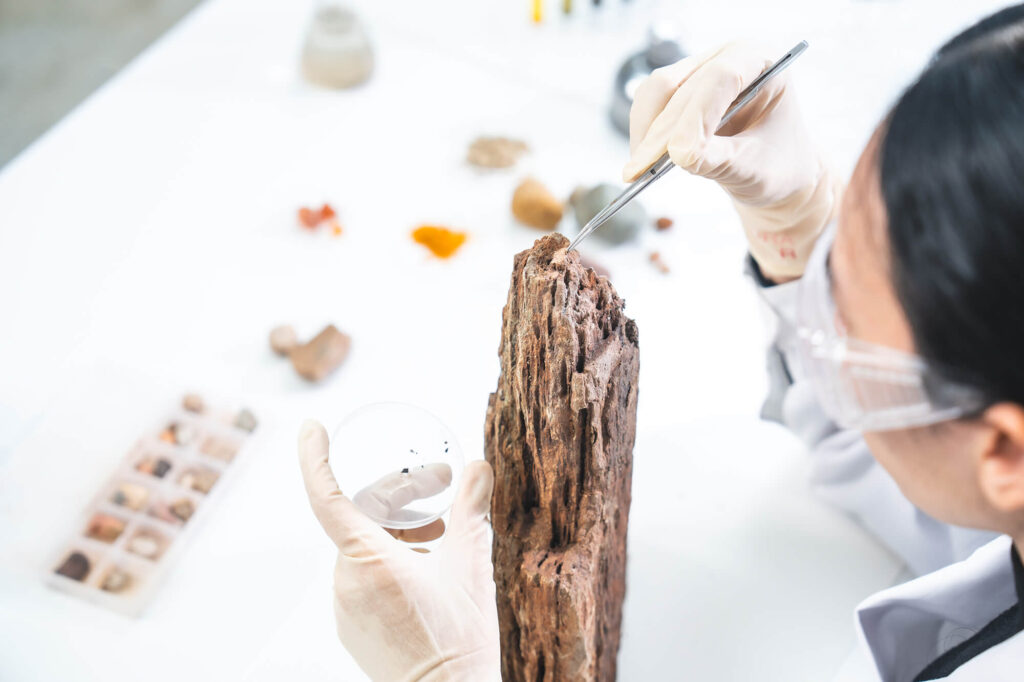
CIRAM goes beyond carbon-14 dating to study wood (xylology) and charcoal (anthracology).
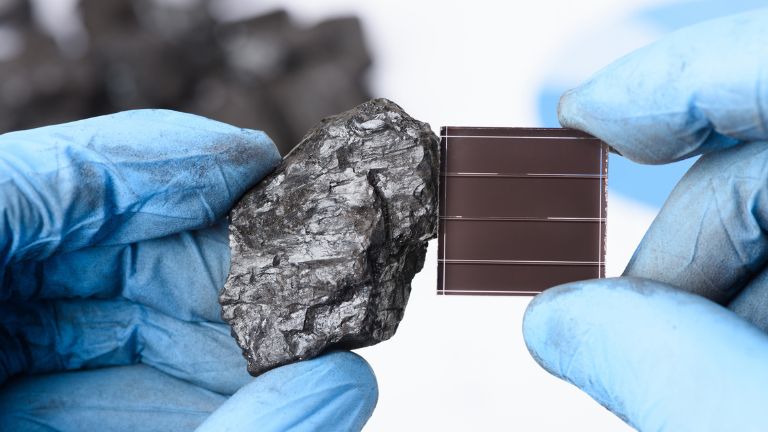
Xylology identifies the species used by craftsmen, enabling us to establish hypotheses on the geographical origin of materials. Anthracology, on the other hand, reconstitutes the ancient plant environment and protects against the "old wood" effect of carbon-14 dating.
Anatomical analysis of charcoal is carried out along three axes (transverse, tangential, radial) to identify the family, genus and sometimes the species of wood studied.
Read more