Milk adulteration: what laboratory testing methods are available?
Milk adulteration is a threat to the quality and conformity of dairy products. What methods can be used to detect these frauds quickly, reliably and ...

Do your suppliers send you 100% natural essential oils, flavors and colorants? Detect adulteration, authenticate a biosourced product or determine its origin.
Contact our teams
The cosmetics sector is subject to strict standards concerning product composition, labeling and ecological certification. European and international regulations require full traceability of ingredients, to ensure their safety and conformity.
Organic certifications, such as the "bio" label, require scientific proof of the natural origin of raw materials. Radiocarbon analysis is a reference method for validating the biobased origin of ingredients, guaranteeing compliance with ecological and regulatory standards.
This approach enables manufacturers to enhance the transparency of their supply chain and guarantee reliable products that comply with legal and environmental requirements.
Contact our teams
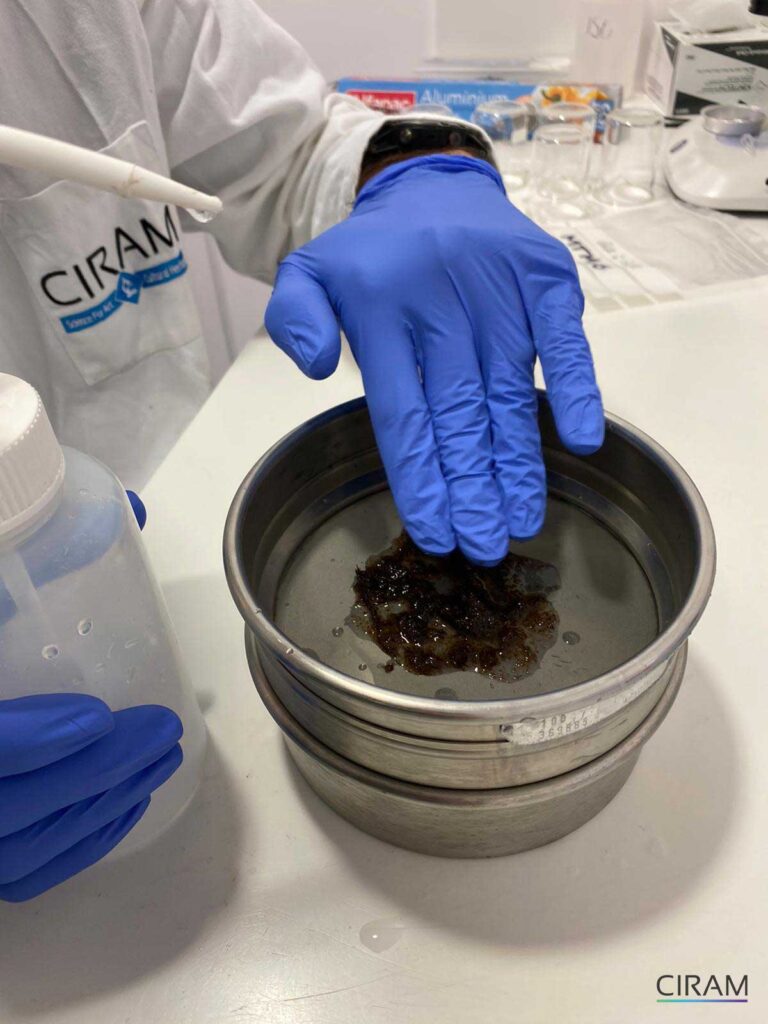
Radiocarbon analysis of your cosmetic products enables us to determine their biobased material content. Whatever the type of ingredient (emulsifiers, emollients, pigments, preservatives), our teams of scientists measure the proportion of natural versus synthetic components.
With CIRAM's measurements, and subject to a pMC of 100, you can label your 100% natural products.
The carbon 14 technique identifies adulteration or falsification of a raw material. By analyzing your inputs, you validate your suppliers and maintain reliable, consistent quality control.
Request a quoteRadiocarbon analysis certifies the organic origin of the raw materials used in your cosmetics. By validating the natural composition of ingredients, this analysis helps you to obtain official certifications, such as the organic label. This strengthens the confidence of consumers, who are concerned about the origin and authenticity of the products they buy.
By ensuring that your ingredients comply with organic standards, you can differentiate yourself in a market that is increasingly demanding in terms of transparency.
C14 analysis can detect any form of adulteration in your cosmetic products. By measuring carbon-14 content, this scientific method detects the addition of synthetic substances or the use of ingredients of dubious origin. This technique protects you from the risk of fraud and ensures the authenticity of your cosmetics.
Stable isotope analysis (carbon, nitrogen, oxygen, hydrogen) identifies adulterations by biosynthetic materials thanks to a distinct isotopic signature, while also providing information on the botanical and geographical origin of the ingredients.
Carbon 14 analysis enables you to trace the exact origin of the raw materials used in your cosmetic products, ensuring complete transparency of your supply chain. This precision is essential to meet consumer expectations for clear information on the origin and ecological impact of ingredients.
What's more, this traceability enables you to differentiate your products in a market where transparency and environmental responsibility are increasingly valued.
CIRAM laboratories, accredited for Research Tax Credit (CIR), are recognized for the quality and innovation of their research. As a leader in the analysis of bio-based products, CIRAM offers you a full range of services, including :
Thanks to our expertise and rigorous methodology, we guarantee reliable, fast and versatile results, with delivery in just 10 working days. Take advantage of the expertise of the European leader in radiocarbon analysis and request your study on our website.
Contact our teamsWe analyze a wide range of cosmetic products, from raw materials (essential oils, aromas, colorants) to finished products such as creams, lotions, shampoos, serums, make-up, etc.
We use ASTM D6866 and EN 16640 standards, which are worldwide references for radiocarbon analysis of biobased products. These standards ensure the reliability and accuracy of our results.
Yes, carbon-14 analysis is an excellent way of authenticating your products and guaranteeing their compliance with eco-labels.
Results are available within 10 working days.
Simply contact us via our website or by telephone to obtain a quotation and arrange for samples to be sent to our laboratory.
Milk adulteration is a threat to the quality and conformity of dairy products. What methods can be used to detect these frauds quickly, reliably and ...
Test the naturalness of your flavors and dietary supplements using radiocarbon and stable isotopes. Carbon 14 and stable isotopes allow...
Stable isotope measurements play a key role in the quality control and traceability of industrial materials. But how can you be sure of the reliability of your results? By entrusting your...
Increasing demands for traceability and sustainability make ISCC Plus certification a strategic asset for manufacturers involved in biobased products. Find out more...
EN ISO 21644 is an essential standard for ensuring the compliance and traceability of solid recovered fuels (SRF). But how can you be sure that your materials comply ...
Honey adulteration is a growing threat to the industry, compromising quality, conformity and traceability. Addition of exogenous sugars, falsification of origin, purity tests ins...