Metallography

Metallographic analysis

CIRAM carries out metallographic analysis of your art objects and archaeological artifacts to authenticate materials, detect alterations and retrace their history.

Contact our teams
corrosion metal 1

Metallographic analysis :
a key technique for metal objects

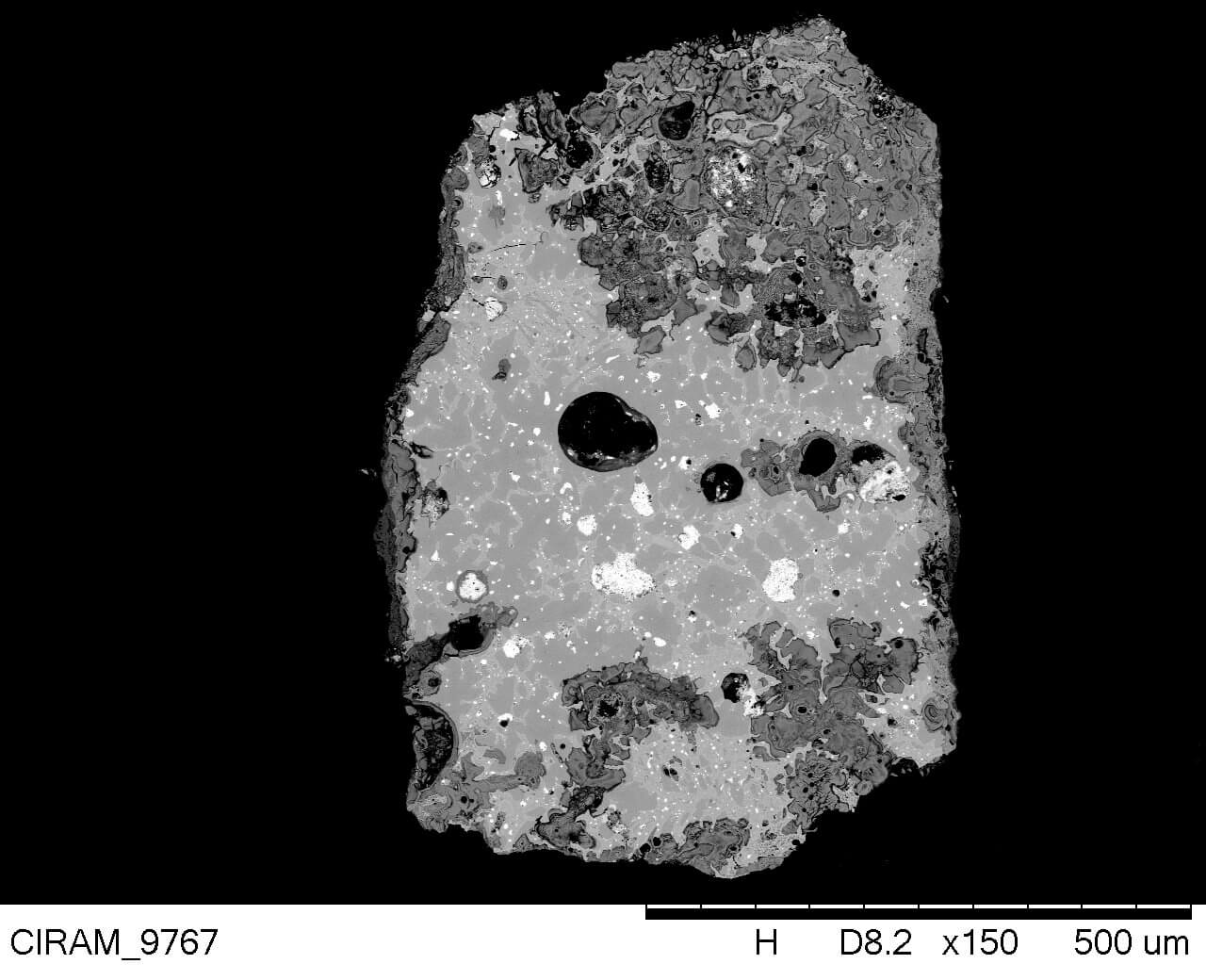
Metallographic analysis is based on the microscopic study of old metals and alloys. It allows us to observe their internal structure, determine their chemical composition and identify manufacturing processes and any alterations (corrosion, patina).

At CIRAM, this method is mainly used forauthentication of art objects and the analysis ofarchaeological artifacts. It is particularly useful for :

Analyses are carried out using state-of-the-art instruments: SEM-EDX (scanning electron microscopy with energy dispersive spectrometry) and ICP-MS (inductively coupled plasma mass spectrometry).

Contact our teams
DSC00568

Thermoluminescence testing, a complement to metallography

Although this method is most frequently used for ceramic objects, the thermoluminescence test (TL) test can also be applied to certain metal objects, particularly those with a cavity or closed shape, in which a residual cast iron core remains.

This core, often made of silicate material, retains properties that enable thermoluminescence dating. Coupled with metallographic analysis, the TL test provides precise chronological data that reinforces the assessment of the work's authenticity.

At CIRAM, this cross-referenced approach is used to consolidate the results of corrosion analysis and alloy composition. This makes it an invaluable tool in complex cases.

Request a quote

Bronze, iron, gold :
methods adapted to each metal

01 - Analysis of bronze, brass and silver

For these alloys, analysis is mainly based on SEM-EDX, used alone in most cases. This technique enables :

  • Identify the alloy's constituent elements (copper, zinc, tin, silver, etc.),
  • De (aluminum, chromium, manganese),
  • Evaluate corrosion to determine its origin (natural or artificial).

Corrosion, or "patina", is an invaluable time marker for a product. Artificial patina can betray an attempt at falsification.

02 - A different approach to iron analysis

Iron is characterized by its rapid corrosion, which makes the study of patina of little relevance for dating. CIRAM favors the analysis of inclusions and internal impurities using SEM-EDX, in order to :

  • Distinguish between ancient and modern manufacturing processes,
  • Identify microstructures indicative of metallurgical origin,
  • Detect any alterations linked to the conservation environment.

This technological approach makes it possible to provide objective results, even on objects with severe surface deterioration.

03 - Gold, a special metal

L’or, très peu sujet à la corrosion, nécessite une analyse chimique très fine. CIRAM utilise ici principalement l’ICP-MS, méthode quantitative de référence pour l’analyse des éléments traces (< 0,1 %), notamment le plomb, le bismuth, l’étain ou le platine.

This technique enables :

  • Detect the chemical signatures typical of ancient golds,
  • Compare results with historical databases,
  • Reveal any modern additions or alloys.

Gold analysis follows three stages:

  1. Determination of chemical composition (major, minor and trace elements),
  2. Check for signs of corrosion or surface deposits,
  3. Contextual interpretation to confirm authenticity.

CIRAM, expert in metallographic analysis

When you call on a laboratory like CIRAM, you benefit from high-precision analyses carried out according to rigorous, scientifically-validated protocols. With over 20 years of expertise, CIRAM is recognized by numerous museum, archaeological and heritage institutions for :

  • His perfect mastery of characterization techniques ;
  • State-of-the-art analytical equipment, adapted to the demands of metal studies;
  • A multidisciplinary team of experienced researchers, including several PhDs in applied sciences.

CIRAM works in France and abroad on authentication, characterization and characterization and conservation projects, and is committed to providing reliable results, interpreted in their historical, scientific and artistic context.

Contact our teams
Are you asking yourself these questions?

What types of objects are suitable for metallographic analysis?

Statues, jewelry, coins, decorative objects... any metal artifact can be metallographically characterized.

How is laboratory metallographic analysis carried out?

It begins with a micro-sampling. After preparation, analyses are carried out at different scales to obtain data on composition, corrosion and any alterations.

Can a bronze sculpture be authenticated using metallography?

Yes, alloy and corrosion analysis can differentiate between modern and old manufacture, and detect any falsifications.

Can the patina of an object be used to date its age?

Yes, natural patina reveals slow, ancient corrosion. Artificial patina, on the other hand, can betray an attempt at fraudulent ageing.

How much does a metallographic analysis of an antique object cost?

Rates depend on the nature of the object, the analysis techniques required and the complexity of the study. Please do not hesitate to contact us for a quote.

Make an appointment with an expert

Get all the answers to your questions!

Make an appointment

Explore our dating and analysis resources

Archaeology
Comparison between carbon-14, TL, and OSL: which method should you choose?

Comparison between carbon-14, TL, and OSL: which method should you choose?

Choosing the right dating method in archaeology is not just a technical issue: it is a key decision that guides the entire interpretation of a site. Which technique to choose...

Read the article

Carbon 14
How carbon-14 analysis helps preserve biodiversity

How carbon-14 analysis helps preserve biodiversity

How can we retrace the invisible history of ecosystems and better understand the dynamics of biodiversity? Thanks to carbon-14 dating, researchers now have a scientific tool that they can use to...

Read the article

Art market
How to recognize bronze and differentiate it from brass?

How to recognize bronze and differentiate it from brass?

Distinguishing a work of art in bronze from one in brass is not possible at a glance, however expert. Deceptive patinas, invisible restorations, sophisticated forgeries...

Read the article

Archaeology
The limits of carbon-14 dating: when should we turn to other methods?

The limits of carbon-14 dating: when should we turn to other methods?

How do you know whether a work of art, an archaeological object or a heritage item is really as old as it claims to be? Carbon-14 dating is often the method of choice, but it can also be used to...

Read the article

Art market
How to recognize a forged signature on a painting?

How to recognize a forged signature on a painting?

A simple signature can make the difference between an anonymous work and a masterpiece valued in the millions on the art market. But what happens when that signature is...

Read the article

Archaeology
What role does anthracology play in preventive excavations?

What role does anthracology play in preventive excavations?

Anthracology plays a key role in preventive excavations: by studying archaeological coals, it sheds light on past human practices and paves the way for carbon dating...

Read the article

Request a quote