

Carbon-14 and radiocarbon

Carbon-14 and radiocarbon

Carbon-14 dating, or radiocarbon analysis, is a reference method for dating organic materials back 50,000 years.

Contact our teams
DSC00706

The principles of carbon-14 dating

Developed in the 1940s by Willard Frank Libby (winner of the Nobel Prize in Chemistry in 1960), radiocarbon analysis is a technique for dating technique which determines the age of an organic sample by measuring the residual concentration of ¹⁴C. This radioactive isotope, absorbed by living beings during their lifetime, decays after their death at a regular rate, with a half-life of 5,730 years.

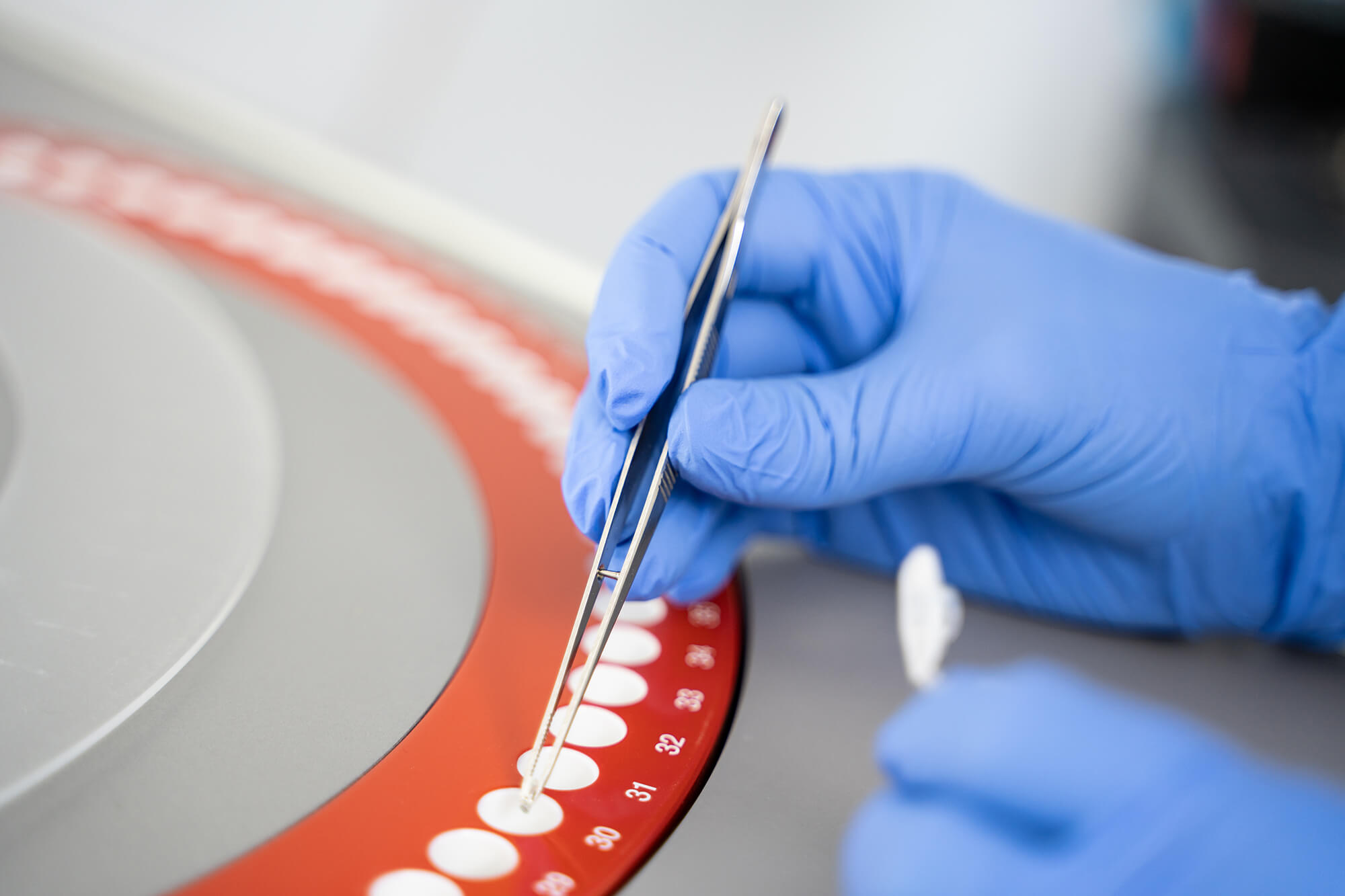
CIRAM uses AMS (Accelerator Mass Spectrometry) technology, which enables objects to be dated with great precision, even on micro-samples (a few milligrams).

This method enables analyses to be carried out over all time periods, up to 50,000 years, with results available within 10 working days of receipt of the sample.

Contact our teams
carbon 14 a multifunctional method

Carbon-14, a multifunctional method

Carbon 14 is present in all materials of biological origin. This means that it can be used in a wide range of applications:

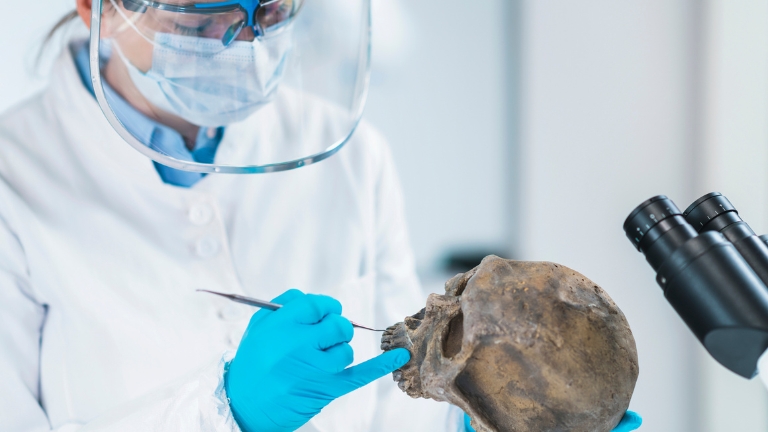
  • Archaeology: dating of charcoal, bones, seeds, teeth, textiles, peat, mortars, shells...
  • Art: analysis of paintings, sculptures, antique objects in wood, paper, ivory or fabric...
  • Industry: assessing the biobased content of products such as biopolymers biopolymersbiopolymers biofuels or cosmetics cosmetics.

Unlike thermoluminescence dating (TL), which is limited to heated mineral materials, carbon 14 can be used to quantify biogenic content in all types of industrial matrices (solids, liquids, gases), and to obtain environmental certifications thanks to its compliance with international standards.

Request a quote

The 3 application areas of carbon-14 dating

01 - Carbon-14 dating for archaeology

An essential method in archaeology, carbon dating carbon-14 dating dating enables precise chronologies to be established for periods of up to 50,000 years. CIRAM is particularly involved in preventive archaeology.

This technique is used for :

  • Date archaeological structures or layers (burials, stratigraphy),
  • Determine the age of organic artifacts (coals, bones, shells, teeth, mortars, peat, etc.),
  • Chronological sequences accurate to ±30 years.

Results available within 10 working days.

Read more

02 - Carbon-14 dating of objets d'art

For art market professionals, carbon-14 dating is a valuable technique for authenticating works containing organic components such as wood, paper or ivory. Its use enables :

CIRAM works with museums, auction houses, galleries and collectors to guarantee the reliability of their acquisitions.

Read more

03 - Analysis of your biobased products

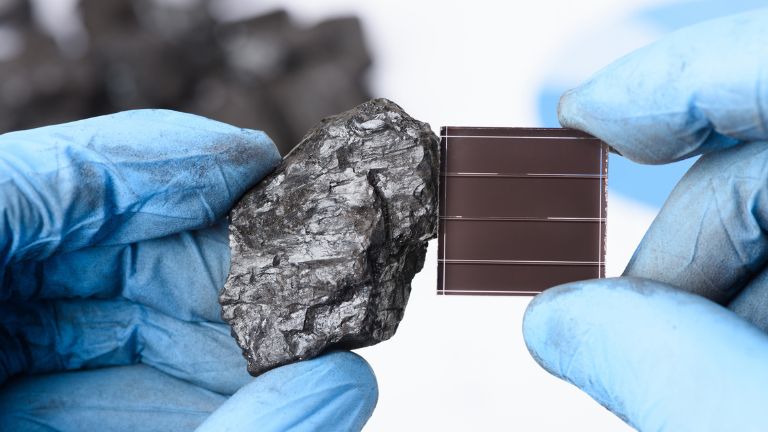
In a context of ecological transition, carbon 14 analysis allows us to (vs fossil carbon) in an industrial product.

Compliant with ASTM D6866 and EN 16640 standards, this analysis is used for :

CIRAM supports R&D and quality departments with measurement accuracy of less than 0.5%.

Read more

CIRAM, European leader in carbon-14 dating

Based in France and recognized worldwide, the CIRAM laboratory offers carbon-14 dating services tailored to scientific, heritage and industrial requirements.

  • Certified, rigorous methodology, in compliance with ASTM D6866 and EN 16640 standards,
  • Team of specialized scientists,
  • Fast, interpretable results,
  • Cross-disciplinary expertise: art, archaeology, industry.

Rely on a leading European player to secure your analyses, enhance the value of your projects and guarantee the scientific reliability of your results.

Contact our teams

Are you asking yourself these questions?

How does carbon-14 dating work?

Carbon-14 dating is based on measuring the rate of decay of this radioactive isotope in an organic sample. The older an object, the less carbon 14 it contains.

How accurate is carbon-14 dating?

Accuracy depends on sample age and sampling quality. In general, it is of the order of ±30 years in crude age.

Can you date a non-organic object using carbon-14?

No. Only elements containing carbon (wood, bone, ivory, etc.) can be dated using this method.

How long does it take to obtain the results of a carbon-14 analysis?

At CIRAM, results are delivered within 10 working days of receipt of samples.

How much does carbon-14 analysis cost?

The cost of a carbon 14 analysis depends on the nature of the sample, the technique used and the number of samples to be analyzed. Please contact us for a personalized quotation.

Make an appointment with an expert

Get all the answers to your questions!

Make an appointment

Explore our dating and analysis resources

Archaeology
Comparison between carbon-14, TL, and OSL: which method should you choose?

Comparison between carbon-14, TL, and OSL: which method should you choose?

Choosing the right dating method in archaeology is not just a technical issue: it is a key decision that guides the entire interpretation of a site. Which technique to choose...


Read the article

Carbon 14
How carbon-14 analysis helps preserve biodiversity

How carbon-14 analysis helps preserve biodiversity

How can we retrace the invisible history of ecosystems and better understand the dynamics of biodiversity? Thanks to carbon-14 dating, researchers now have a scientific tool that they can use to...

Read the article

Art market
How to recognize bronze and differentiate it from brass?

How to recognize bronze and differentiate it from brass?

Distinguishing a work of art in bronze from one in brass is not possible at a glance, however expert. Deceptive patinas, invisible restorations, sophisticated forgeries...

Read the article

Archaeology
The limits of carbon-14 dating: when should we turn to other methods?

The limits of carbon-14 dating: when should we turn to other methods?

How do you know whether a work of art, an archaeological object or a heritage item is really as old as it claims to be? Carbon-14 dating is often the method of choice, but it can also be used to...

Read the article

Art market
How to recognize a forged signature on a painting?

How to recognize a forged signature on a painting?

A simple signature can make the difference between an anonymous work and a masterpiece valued in the millions on the art market. But what happens when that signature is...

Read the article

Archaeology
What role does anthracology play in preventive excavations?

What role does anthracology play in preventive excavations?

Anthracology plays a key role in preventive excavations: by studying archaeological coals, it sheds light on past human practices and paves the way for carbon dating...

Read the article

Request a quote