What is a biobased product?
Find out what biobased products are, what their advantages are, and how manufacturers are integrating them to transform their practices.

Precisely determine the percentage of bio-based carbon in your materials through carbon 14 analysis.CIRAM supports you, industry players, in proving the bio-based nature of your products and formulations, in order to meet regulatory, normative, and commercial requirements.
Contact our teams
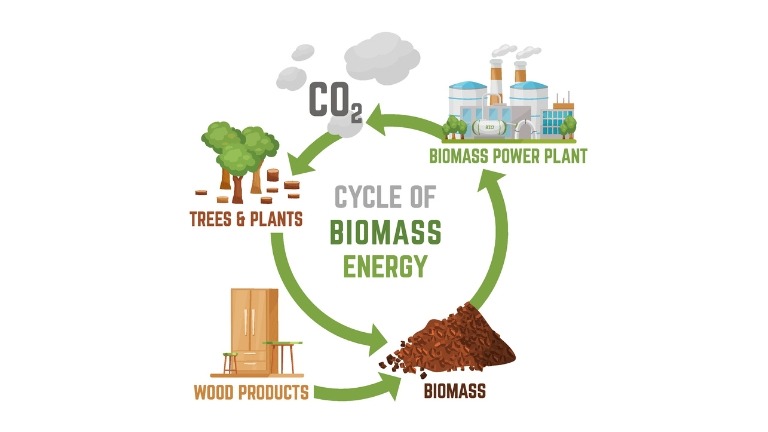
A bio-based product is a product made from biomass (organic matter of plant, animal, or microbial origin: plants, algae, microorganisms, agricultural or food waste). Biomass is a renewable resource.
Consequently, a bio-based product is distinguished from fossil-based materials by its renewable carbon content. It thus represents a promising alternative to fossil resources and a major environmental advantage since it has a low carbon footprint.
The measurement of bio-based carbon content relies on radiocarbon (carbon-14) analysis, the international reference method for distinguishing carbon from renewable resources from that originating from fossil sources.
This analysis is guided by several recognized standards, including:
Bio-based products are used in many sectors: bioplastics, industrial polymers, biodegradable lubricants, solvents, adhesives, detergents, or even cosmetics.
To learn more about the subject and discover all the uses of bio-based products, you can consult our article: What is a bio-based product?
Request a quoteMany companies engaged in the ecological transition and green chemistry rely on CIRAM analyses to quantify the bio-based content of their products.
In a context where industrialists must justify their environmental commitments, the quantification of bio-based carbon content is becoming a strategic issue. Today, you must meet growing demands:
In this context, radiocarbon dating makes it possible to:
Beyond analysis, the challenge is also the interpretation and valorization of results. This is why CIRAM acts as an independent scientific third party, supporting you at every stage: from defining the need to carbon 14 and isotopic analysis, then to the presentation of actionable results for your R&D, quality, marketing, or CSR teams.
Explore the areas of applicationAt CIRAM, we use cutting-edge methods to accurately measure the amount of bio-based carbon in your industrial materials and verify their origin (botanical, geographical, biosynthesis, etc.). Depending on the nature of your product and your objectives, we apply two complementary approaches:
This cutting-edge technology accurately differentiates fossil-based carbon from bio-based carbon derived from recent plant or animal matter, even in very small quantities. It is now the benchmark for certifying the renewable composition of products involved in eco-design, labeling, or Life Cycle Assessment (LCA) processes. It is ideal for:
This method is based on the study of isotopic ratios and complements radiocarbon analysis. It makes it possible to:
By combining these two methods, CIRAM guarantees reliable analyses adapted to industrial requirements.
The quantification of bio-based content at CIRAM follows a structured process, designed to ensure reliable, actionable results that comply with regulatory and commercial expectations:
We take the time to understand your product, your objectives (marketing, compliance, traceability), and the regulatory requirements you must meet in order to advise you on the best analytical approach.
We provide you with a detailed guide to building and shipping your samples in the best possible conditions.
Our experts process samples according to rigorous standards to guarantee the scientific integrity of the results.
We are performing a carbon-14 analysis to quantify the percentage of renewable carbon, and an isotopic analysis to refine the characterization.
You’ll receive a comprehensive report that your marketing, R&D, or quality teams can use, and we’ll help you interpret the results.
By choosing CIRAM, you are calling upon an independent laboratory recognized for its expertise in carbon 14 analysis applied to industry. For over 20 years, we have been supporting companies in the scientific validation of their bio-based products, combining analytical rigor with a keen understanding of regulatory and marketing challenges.
Our analyses comply with international standards (ASTM D6866, NF EN 16640, NF EN ISO 21644, NF EN ISO 13833…), guaranteeing actionable results for certifications, audits, or CSR strategies. We are committed to providing you with reliable results within 10 business days, with personalized support at every step.
Our multidisciplinary team combines expertise in materials science, analytical chemistry, and mass spectrometry, offering comprehensive analyses and tailored solutions for every industry sector.
CIRAM is the guarantee of recognized expertise, total objectivity, and operational support to concretely enhance your bio-based commitments.
Contact our teamsAll materials containing carbon, solid, liquid and gas: polymers, resins, oils, solvents, cosmetics, textiles, inks, biofuels, CSR, CO2 emissions, packaging, etc.
We provide detailed instructions for packaging and shipping, ensuring sample integrity until analysis. You can find all this information in our sampling best practices guide.
Yes. Our reports comply with international ISO, ASTM, and EN standards and can be included in your certification or Life Cycle Assessment (LCA) documentation.
Absolutely. We offer comparative analyses to help you choose your raw materials or validate your batches.
Results are delivered within 5 to 10 working days of receipt of the sample.
This depends on the type of product, the number of samples and the standards involved. Contact us for a customized quote.
Prepare your industrial samples in the best conditions to guarantee reliable and actionable results.
Check the authenticity and natural composition of your products to meet the requirements of eco-labels and consumers.
Determine the biobased content of your fuels and quantify biogenic emissions in line with environmental standards.
Find out what biobased products are, what their advantages are, and how manufacturers are integrating them to transform their practices.
Milk adulteration is a threat to the quality and conformity of dairy products. What methods can be used to detect these frauds quickly, reliably and ...
Test the naturalness of your flavors and dietary supplements using radiocarbon and stable isotopes. Carbon 14 and stable isotopes allow...
Stable isotope measurements play a key role in the quality control and traceability of industrial materials. But how can you be sure of the reliability of your results? By entrusting your...
Increasing demands for traceability and sustainability make ISCC Plus certification a strategic asset for manufacturers involved in biobased products. Find out more...
EN ISO 21644 is an essential standard for ensuring the compliance and traceability of solid recovered fuels (SRF). But how can you be sure that your materials comply ...