


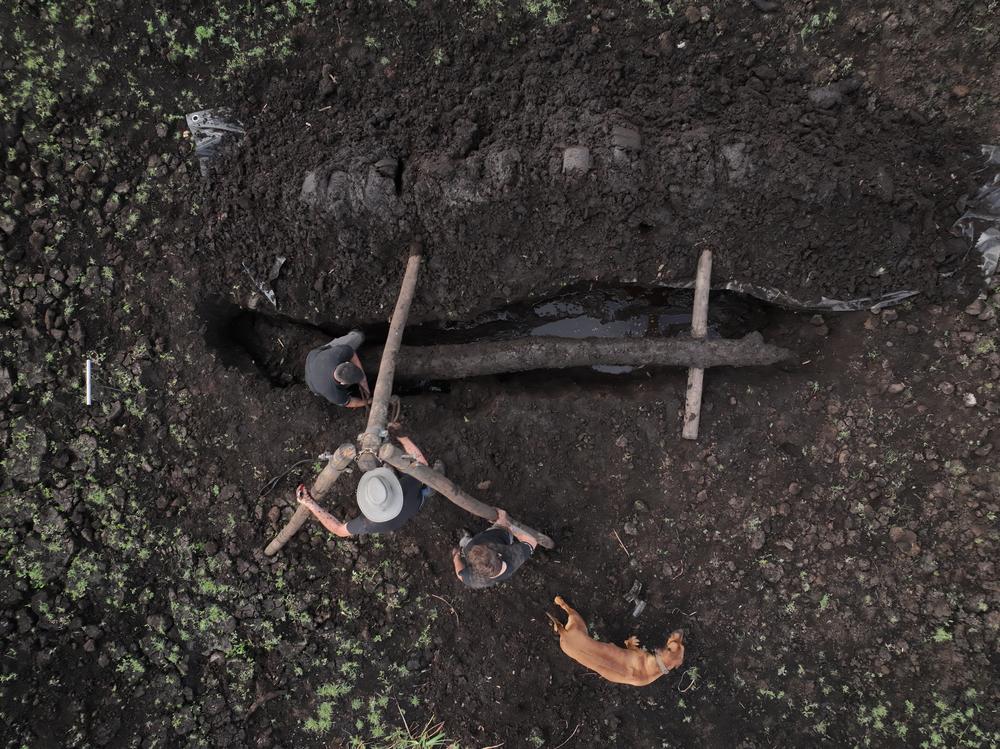
Fossil wood samples dated by the CIRAM laboratory
The CIRAM has dated two fossil woods whose exceptional preservation is explained in particular by their burial in a humid, oxygen-poor environment.

Carbon-14 dating, or radiocarbon dating, is a reference method for dating organic materials up to 50,000 years old.
Contact our teams
Developed in the 1940s by Willard Frank Libby (Nobel Prize in Chemistry in 1960), radiocarbon dating is a dating technique that allows the age of an organic sample to be determined by measuring the residual concentration of ¹⁴C. This radioactive isotope, absorbed by living beings during their lives, decays after their death at a regular rate, with a half-life of 5,730 years.
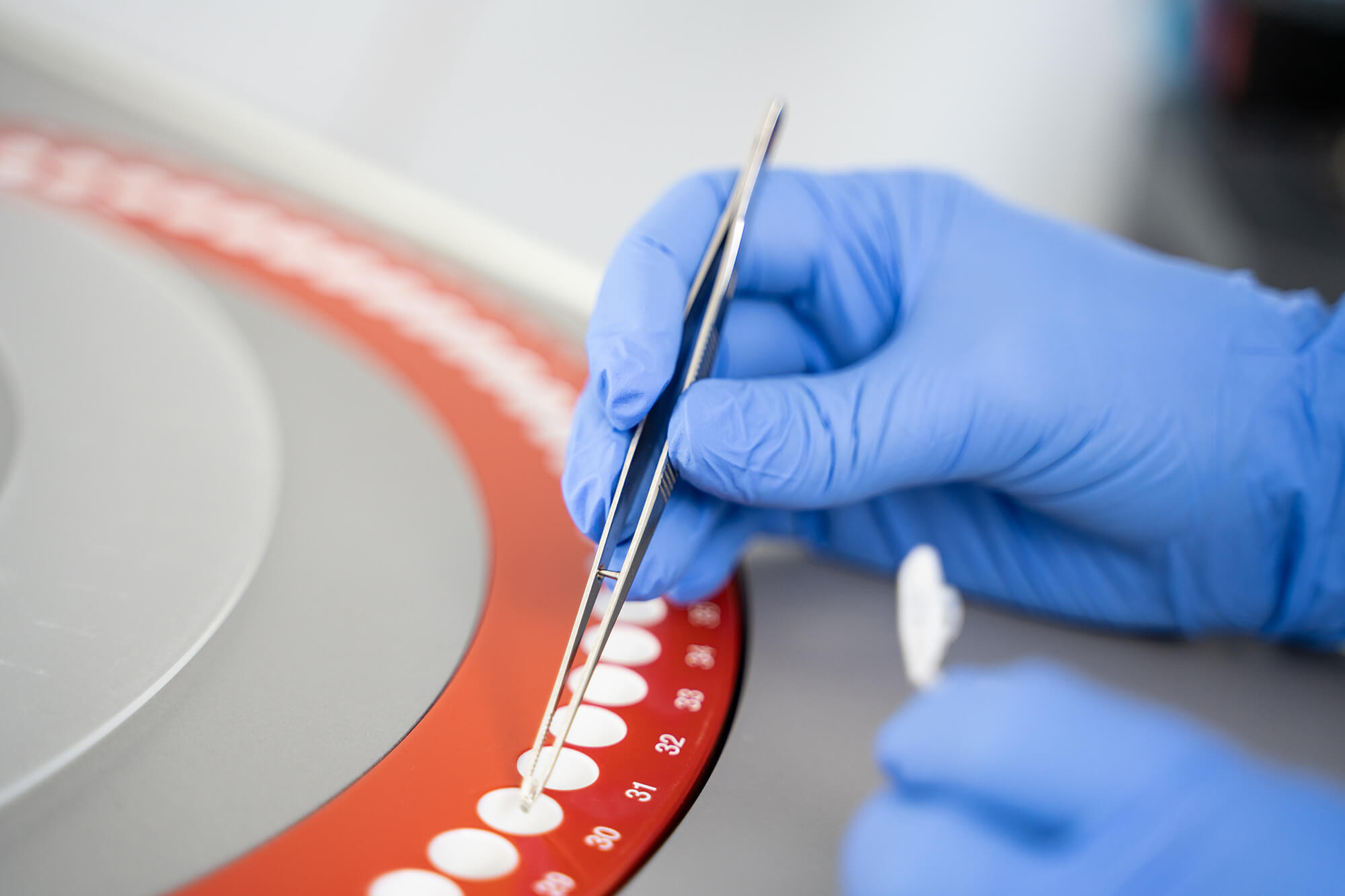
CIRAM uses AMS (Accelerator Mass Spectrometry) technology, which allows objects to be dated with very high precision, even on micro-samples (a few milligrams).
This method allows for analyses over all periods, up to 50,000 years, providing results within 10 business days after sample receipt.
Contact our teams
Carbon 14 is present in all materials of biological origin. This allows its application in multiple fields:
Unlike thermoluminescence dating (TL), which is limited to heated mineral materials, carbon 14 allows for the quantification of biogenic content in all types of industrial matrices (solids, liquids, gases) and for obtaining environmental certifications due to its compliance with international standards.
Request a quoteAn essential method for archaeology, carbon-14 dating allows for the establishment of precise chronologies over periods of up to 50,000 years. CIRAM is particularly involved in the context of preventive archaeology.
This technique is used for :
Results available within 10 working days.
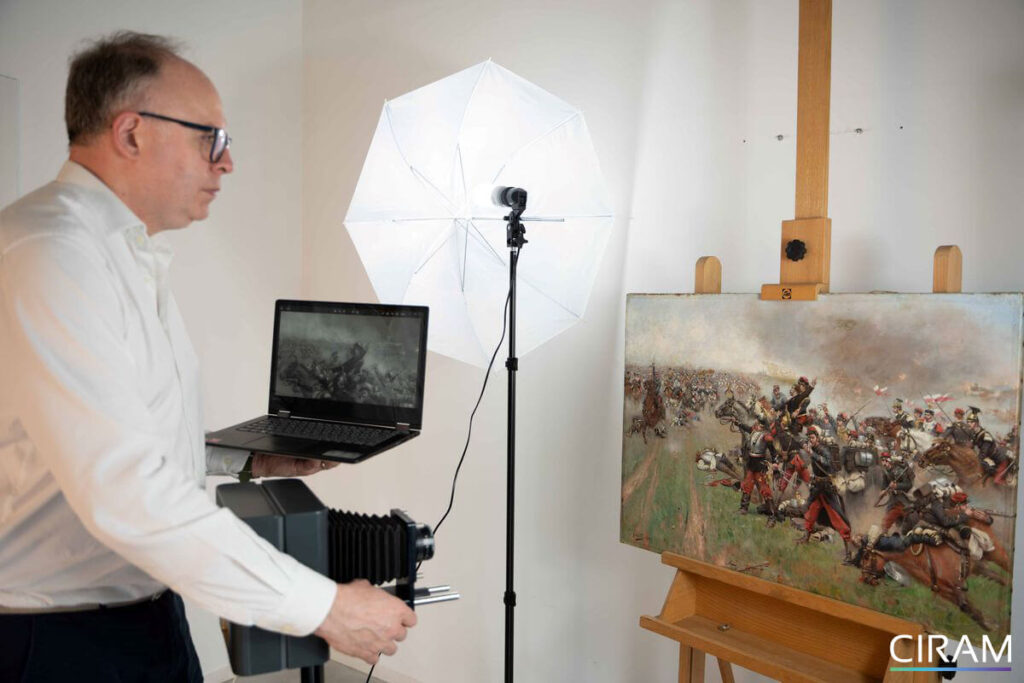
Read moreFor players in the art market, carbon-14 datingis a valuable technique for authenticating works containing organic components such as wood, paper, or ivory. Its use allows for:
CIRAM works with museums, auction houses, galleries, and collectors to guarantee the reliability of their acquisitions.
Read moreIn the context of ecological transition, carbon-14 dating makes it possible to quantify the proportion of biologically derived carbon (vs. fossil carbon) in an industrial product.
In accordance with standards ASTM D6866 and EN 16640, this analysis is used to:
CIRAM supports R&D and quality departments with measurement accuracy of less than 0,5 %.
Read moreBased in France and recognized internationally, the CIRAM laboratory offers carbon-14 dating services tailored to scientific, heritage, and industrial requirements.
Trust a leading European player to secure your analyses, enhance your projects, and guarantee the scientific reliability of your results.
Contact our teamsCarbon-14 dating is based on measuring the rate of decay of this radioactive isotope in an organic sample. The older an object, the less carbon 14 it contains.
Accuracy depends on sample age and sampling quality. In general, it is of the order of ±30 years in crude age.
No. Only elements containing carbon (wood, bone, ivory, etc.) can be dated using this method.
At CIRAM, results are delivered within 10 working days of receipt of samples.
The cost of a carbon 14 analysis depends on the nature of the sample, the technique used and the number of samples to be analyzed. Please contact us for a personalized quotation.
The CIRAM has dated two fossil woods whose exceptional preservation is explained in particular by their burial in a humid, oxygen-poor environment.
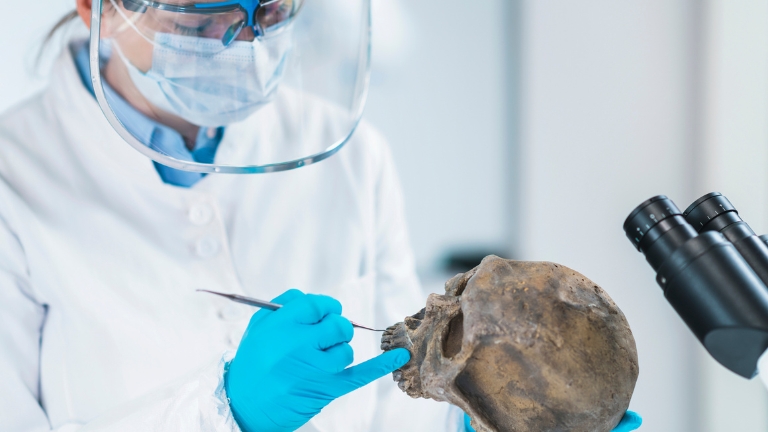
An essential dating method, carbon-14 or radiocarbon is used to date archaeological artifacts, authenticate works of art, or measure bio-based content.
Find out what biobased products are, what their advantages are, and how manufacturers are integrating them to transform their practices.
The scientific analysis of a painting combines several complementary methods for studying its support, materials, manufacturing technique, state of conservation, and a...
Choosing the right dating method in archaeology is not just a technical issue: it is a key decision that guides the entire interpretation of a site. Which technique to choose...
How can you authenticate a work of art or an archaeological relic with scientific rigor? Carbon-14 dating offers a reliable and precise method for analyzing organic materials...