Standard NF EN 16640: Measuring the bio-based content of industrial products

At CIRAM, we perform carbon 14 analyses in compliance with the NF EN 16640 standard to accurately determine the proportion of bio-based carbon in industrial products containing carbon, such as plastics, polymers, solvents, or biocomposites.

Contact our teams
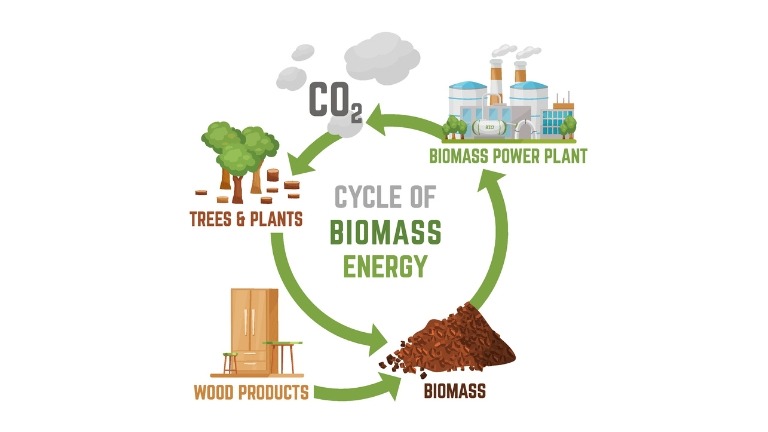
Illustration of Earth featuring icons representing the circular economy and renewable energy

What is the NF EN 16640 standard?

The NF EN 16640 standard is a European standard published in 2017, resulting from the work of technical committee CEN/TC 411, and dedicated to the characterization of bio-based products. It is part of a set of references aimed at structuring and harmonizing methods for measuring bio-based content at the European level.

Its goal is to provide a reliable and standardized method for determining the proportion of bio-based carbon in any carbon-containing product, using carbon-14 measurement as a natural tracer.

The standard is based on radiocarbon analysis (carbon 14), which makes it possible to distinguish:

  • Carbon derived from recent biomass (bio-based),
  • Carbon derived from fossil fuels (petro-based).

It thus allows for:

  • To quantify the bio-based content of a finished product or raw material,
  • To compare materials derived from renewable and fossil sources,
  • To meet the requirements of environmental labels and certifications,
  • To harmonize measurement methods across Europe.

Unlike some international approaches, the NF EN 16640 standard expresses bio-based content relative to the total carbon of the material, ensuring a consistent and comparable reading of results.

To learn more about the principles of this standard and its application to radiocarbon analysis, please consult our dedicated article: the NF EN 16640 standard and radiocarbon analysis of bio-based products

Request a quote

They trust us

Essilor logo
Solvay Logo
IFP Energies nouvelles logo
L'Oréal logo
Michelin logo
Eiffage logo
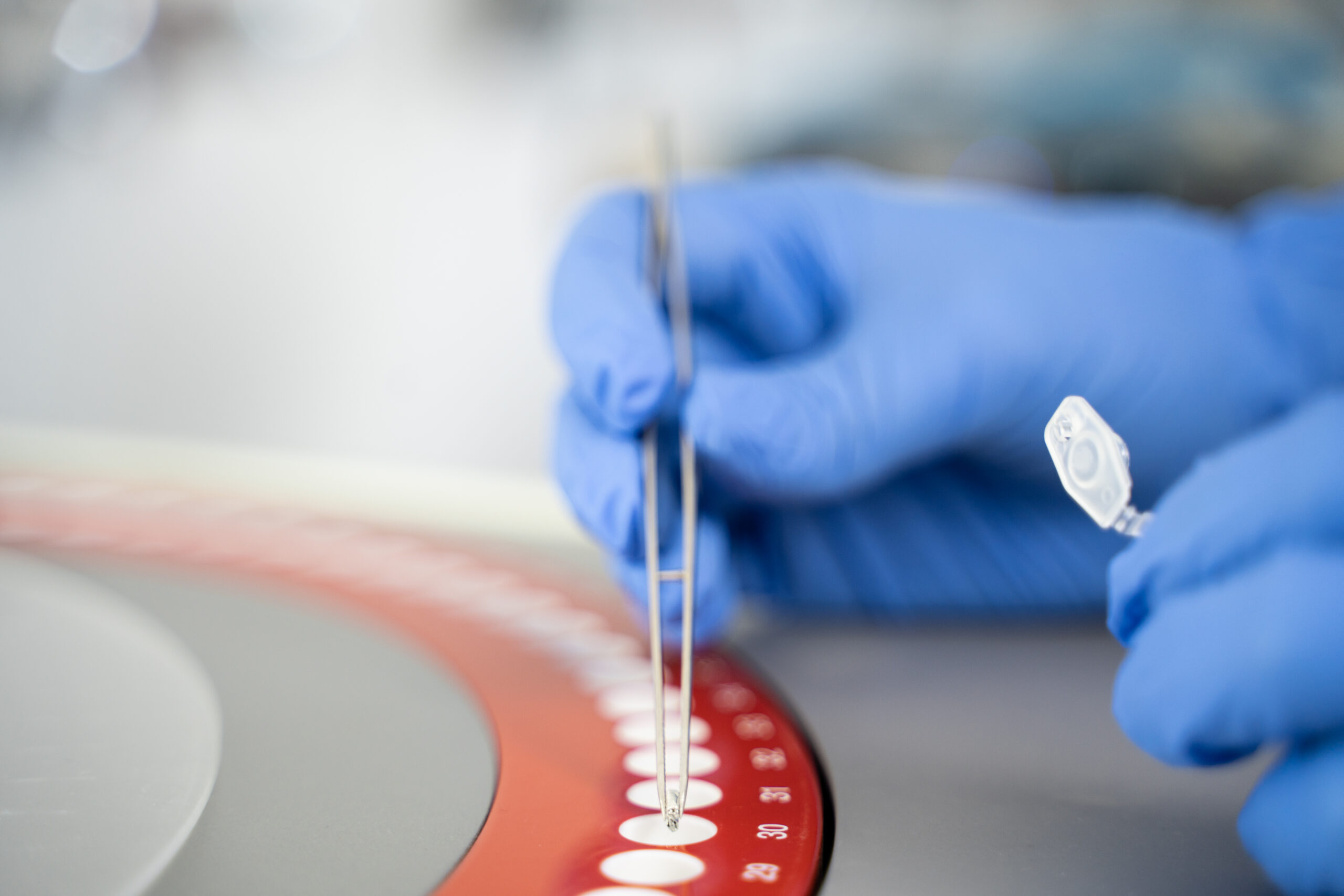
A sample being placed in a centrifuge for radiocarbon dating and carbon-14 analysis in a laboratory

Industrial applications and measurement method according to standard NF EN 16640

The NF EN 16640 standard applies to all products containing carbon, including plastics and polymers, biocomposites, bio-based solvents, as well as certain chemicals and industrial materials.

It is used at various stages of the materials lifecycle, from the development phase (R&D) through to market launch and certification processes, to provide an objective measure of bio-based content that is independent of supplier claims or material balance statements.

The standard provides different analytical methods for measuring carbon 14. Among these, accelerator mass spectrometry (AMS) is today the reference technique due to its precision and sensitivity. This is the method used by CIRAM to guarantee precise, robust, and directly usable results in industrial and certification processes.

The analysis determines the percentage of modern carbon (pMC), a metric derived directly from the measurement of carbon-14. This value is then used to express the material’s bio-based carbon content as a percentage of total carbon, in accordance with the standard’s requirements.

Results can be expressed as a fraction of total carbon or as a percentage of bio-based carbon, ensuring a reliable, traceable, and reproducible measurement that is internationally recognized.

This approach provides a measurement that is independent of declarative formulations or material balances, based solely on the carbon isotopic signature.

Explore the areas of application

Why choose CIRAM for your NF EN 16640 testing?

At CIRAM, we apply the NF EN 16640 standard within a rigorously controlled analytical framework, adapted to industrial products containing carbon and to the comparability requirements specific to European markets.

Our approach is based on the precise measurement of carbon 14 applied to various matrices, in order to guarantee coherent, comparable, and usable results in the validation processes of bio-based content.

We bring you :

  • An advanced understanding of the NF EN 16640 standard and its interpretation in industrial contexts,
  • analyses performed by accelerator mass spectrometry (AMS), the reference method for measuring carbon 14,
  • Expertise in complex and multi-component materials (plastics, solvents, biocomposites, industrial formulations),
  • Reliable, comparable results that can be directly integrated into compliance and certification processes,
  • Scientific support to ensure the accuracy of your bio-based content declarations,
  • Complete confidentiality of data and samples.
Contact our teams

Are you asking yourself these questions?

Is NF EN 16640 different from ISO 16620-2?

Yes. NF EN 16640 applies to a wide range of bio-based products, while ISO 16620-2 is specific to plastics and polymers.

What products can be analyzed?

Plastics, solvents, biocomposites, and any product containing organic carbon.

Does the standard allow for product certification?

It provides data used in certification and labeling processes, but does not constitute certification in and of itself.

Is CIRAM part of a standards committee?

Yes, our laboratory contributes to standardization efforts at the European level, particularly within the CEN/TC 411/WG3 working group dedicated to bio-based products.

What is the current standard?

The currently applicable version is standard NF EN 16640:2017, which serves as the reference standard for measuring bio-based carbon content through radiocarbon analysis in Europe.

Is a new version of the NF EN 16640 standard planned?

To date, no major revisions have been published. The NF EN 16640:2017 standard remains the applicable version. Like any standard, however, it may be subject to revisions or updates as part of European standardization efforts.

Is there a French translation of the standard?

Yes, the French version is available through AFNOR. This translation corresponds to the national adoption of the European standard, with no changes to its technical content.

Make an appointment with an expert

Get all the answers to your questions!

Make an appointment

Explore our dating and analysis resources

Industry
What is a biobased product?

What is a biobased product?

Find out what biobased products are, what their advantages are, and how manufacturers are integrating them to transform their practices.

Read the article

Industry
Milk adulteration: what laboratory testing methods are available?

Milk adulteration: what laboratory testing methods are available?

Milk adulteration is a threat to the quality and conformity of dairy products. What methods can be used to detect these frauds quickly, reliably and ...

Read the article

Industry
How to check the naturalness of a flavor using carbon 14?

How to check the naturalness of a flavor using carbon 14?

Test the naturalness of your flavors and dietary supplements using radiocarbon and stable isotopes. Carbon 14 and stable isotopes allow...

Read the article

Industry
Why trust an ISO/IEC 17025 accredited laboratory for your stable isotope analyses?

Why trust an ISO/IEC 17025 accredited laboratory for your stable isotope analyses?

Stable isotope measurements play a key role in the quality control and traceability of industrial materials. But how can you be sure of the reliability of your results? By entrusting your...

Read the article

Industry
ISCC Plus certification: how to secure your biobased supply chains?

ISCC Plus certification: how to secure your biobased supply chains?

Increasing demands for traceability and sustainability make ISCC Plus certification a strategic asset for manufacturers involved in biobased products. Find out more...

Read the article

Industry
ISO 21644: an essential framework for CSR analysis

ISO 21644: an essential framework for CSR analysis

EN ISO 21644 is an essential standard for ensuring the compliance and traceability of solid recovered fuels (SRF). But how can you be sure that your materials comply ...

Read the article

Request a quote