Accreditation

CIRAM,
ISO-IEC 17025* accredited laboratory

As an ISO-IEC 17025* accredited laboratory, CIRAM guarantees reliable isotope analysis for industry.

Contact our teams
CIRAM: an accredited, independent and recognized laboratory

CIRAM: an accredited, independent and recognized laboratory

ISO-IEC 17025* accreditation, issued by COFRAC, is the international benchmark for testing and calibration laboratories. It attests to their technical competence, the validity of their methods and the reliability of their results. Unlike method standards such as ASTM D6866 or ISO 16640 - which define how to measure a parameter - ISO-IEC 17025 certifies that the laboratory itself is capable of carrying out these analyses under strictly controlled, auditable and reproducible conditions.

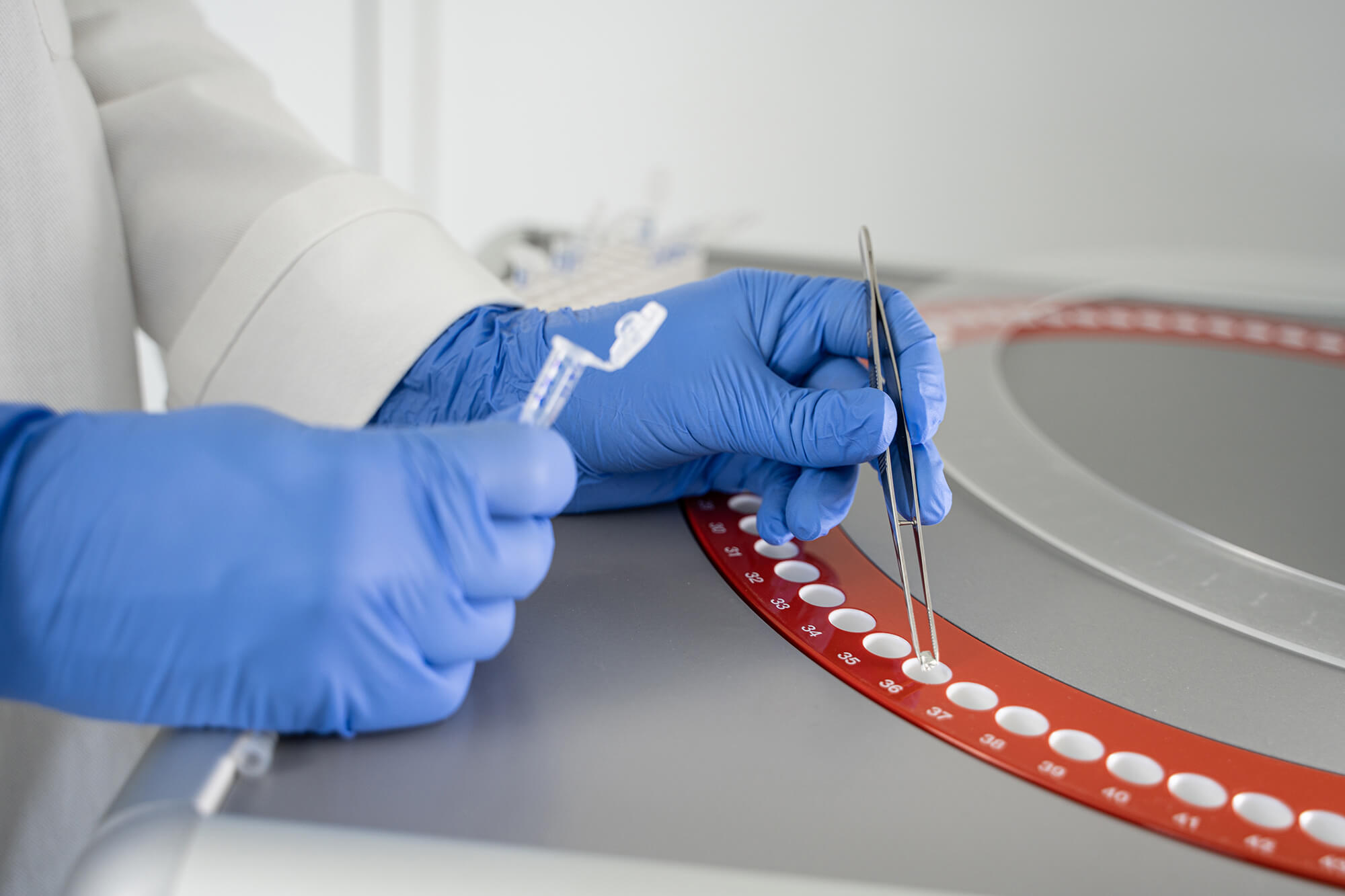
In Martillac, near Bordeaux, CIRAM is ISO/IEC 17025* accredited for stable isotopic analysis of carbon and nitrogen, and graphitization of organic materials.) This site, the only one of its kind in France, was designed to accommodate sensitive and complex analyses in a secure scientific environment. This official recognition reflects our daily commitment to providing our customers with reliable, reproducible results that can be used with complete confidence.

* range available on www.cofrac.fr

Request a quote

A research tax credit (CIR) approved laboratory

The CIRAM laboratory has CIR accreditation from the French Ministry of Higher Education.

This accreditation distinguishes laboratories that carry out research and innovation. It also entitles our customers to a 30% tax credit on all CIRAM invoices.

Request a quote
corrosion metal 3 768x576 1

Certified and controlled analysis methods

At CIRAM, we use rigorous, recognized methods to guarantee reliable results. Our analyses are based on stable carbon and nitrogen isotope analysis, graphitization and graphitization and carbon-14 dating by gas pedal mass spectrometry (AMS), for precise, reproducible measurements.

The main international standards for analysis of the biobased content of materials :

  • ASTM D6866: American standard, measurement of biobased carbon by radiocarbon analysis
  • EN 16640 : European standard, determination of biobased carbon using the C14 method
  • ISO 16620-2 : biobased content in plastics
  • EN 16785-1 : calculating the total biobased percentage of a product
  • ISO 21644: method for measuring biobased carbon in RSCs

This expertise guarantees reliable, legible results that meet the requirements of the industry sectors.

Request a study
a multidisciplinary team at the service of your projects

A multidisciplinary team to serve your projects

CIRAM 's strength also lies in its team. Experts from academic research, materials engineering and the field work together to provide tailor-made services. This multi-disciplinary approach, rare on the market, enables us to understand and respond to the specific needs of each sector.

Are you a manufacturer committed to environmental transformation and the development of biobased materials? CIRAM can put its know-how at your disposal to meet your challenges.

Contact our team for an initial discussion of your project. We'll get back to you promptly with a solution tailored to your constraints and objectives.

Contact our teams

Testimonials

CIRAM is a serious laboratory that I enjoy working with, not least because it's independent and doesn't need any outside influence.

I became acquainted with the CIRAM laboratory through the magnificent publication of a highly professional book, demonstrating CIRAM's acceptance and examination methods by the French archaeology community and its services to the State. We subsequently established a very close working relationship. Their expertise has protected me from mistakes, and it's an integral part of a dealer's duty to consult them when in doubt.

Caroline marchand - DIOR

CIRAM is a serious laboratory that I enjoy working with, not least because it's independent and doesn't need any outside influence.

I became acquainted with the CIRAM laboratory through the magnificent publication of a highly professional book, demonstrating CIRAM's acceptance and examination methods by the French archaeology community and its services to the State. We subsequently established a very close working relationship. Their expertise has protected me from mistakes, and it's an integral part of a dealer's duty to consult them when in doubt.

Caroline marchand - DIOR

CIRAM is a serious laboratory that I enjoy working with, not least because it's independent and doesn't need any outside influence.

I became acquainted with the CIRAM laboratory through the magnificent publication of a highly professional book, demonstrating CIRAM's acceptance and examination methods by the French archaeology community and its services to the State. We subsequently established a very close working relationship. Their expertise has protected me from mistakes, and it's an integral part of a dealer's duty to consult them when in doubt.

Caroline marchand - DIOR

Companies around the world place their trust in us

mnhn logo
L'Oréal
Pasteur Institute
Michelin
6 louvre
National Geographic

Make an appointment with an expert

Get all the answers to your questions!

Make an appointment

Explore our dating and analysis resources

Archaeology
Comparison between carbon-14, TL, and OSL: which method should you choose?

Comparison between carbon-14, TL, and OSL: which method should you choose?

Choosing the right dating method in archaeology is not just a technical issue: it is a key decision that guides the entire interpretation of a site. Which technique to choose...

Read the article

Carbon 14
How carbon-14 analysis helps preserve biodiversity

How carbon-14 analysis helps preserve biodiversity

How can we retrace the invisible history of ecosystems and better understand the dynamics of biodiversity? Thanks to carbon-14 dating, researchers now have a scientific tool that they can use to...

Read the article

Art market
How to recognize bronze and differentiate it from brass?

How to recognize bronze and differentiate it from brass?

Distinguishing a work of art in bronze from one in brass is not possible at a glance, however expert. Deceptive patinas, invisible restorations, sophisticated forgeries...

Read the article

Archaeology
The limits of carbon-14 dating: when should we turn to other methods?

The limits of carbon-14 dating: when should we turn to other methods?

How do you know whether a work of art, an archaeological object or a heritage item is really as old as it claims to be? Carbon-14 dating is often the method of choice, but it can also be used to...

Read the article

Art market
How to recognize a forged signature on a painting?

How to recognize a forged signature on a painting?

A simple signature can make the difference between an anonymous work and a masterpiece valued in the millions on the art market. But what happens when that signature is...

Read the article

Archaeology
What role does anthracology play in preventive excavations?

What role does anthracology play in preventive excavations?

Anthracology plays a key role in preventive excavations: by studying archaeological coals, it sheds light on past human practices and paves the way for carbon dating...

Read the article

Request a quote