Optical imaging techniques

Optical imaging analysis

Optical imaging techniques make it possible to reveal details invisible to the naked eye, while respecting the integrity of the works.

Contact our teams
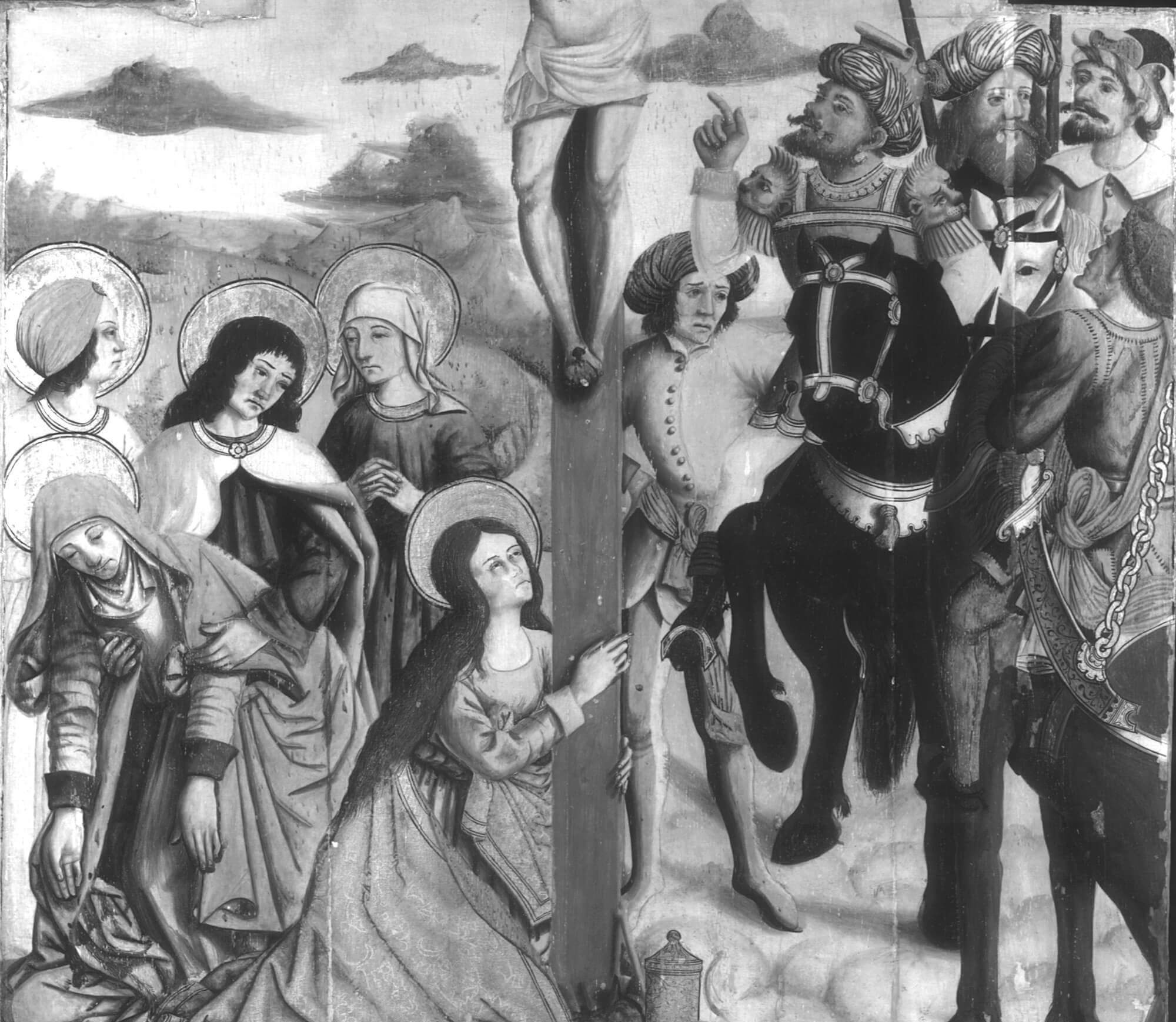
Infrared image of a painting used for optical imaging analysis

In-depth reading of the works thanks to optical imaging

Optical imaging offers a fine and non-invasive exploration of artworks, revealing elements invisible to the naked eye. It allows for the examination of both the surface layers (varnish, pigments, retouching) and the underlying layers (preparatory drawings, pentimenti, hidden signatures), without contact or alteration of the material.

Particularly suited for paintings, wall frescoes, ancient manuscripts, decorated objects, or polychromes, this imaging method helps to retrace the creation process, identify past interventions, and better understand the state of conservation.

It is a key first step in any study, restoration or authentication protocol.

Contact our teams
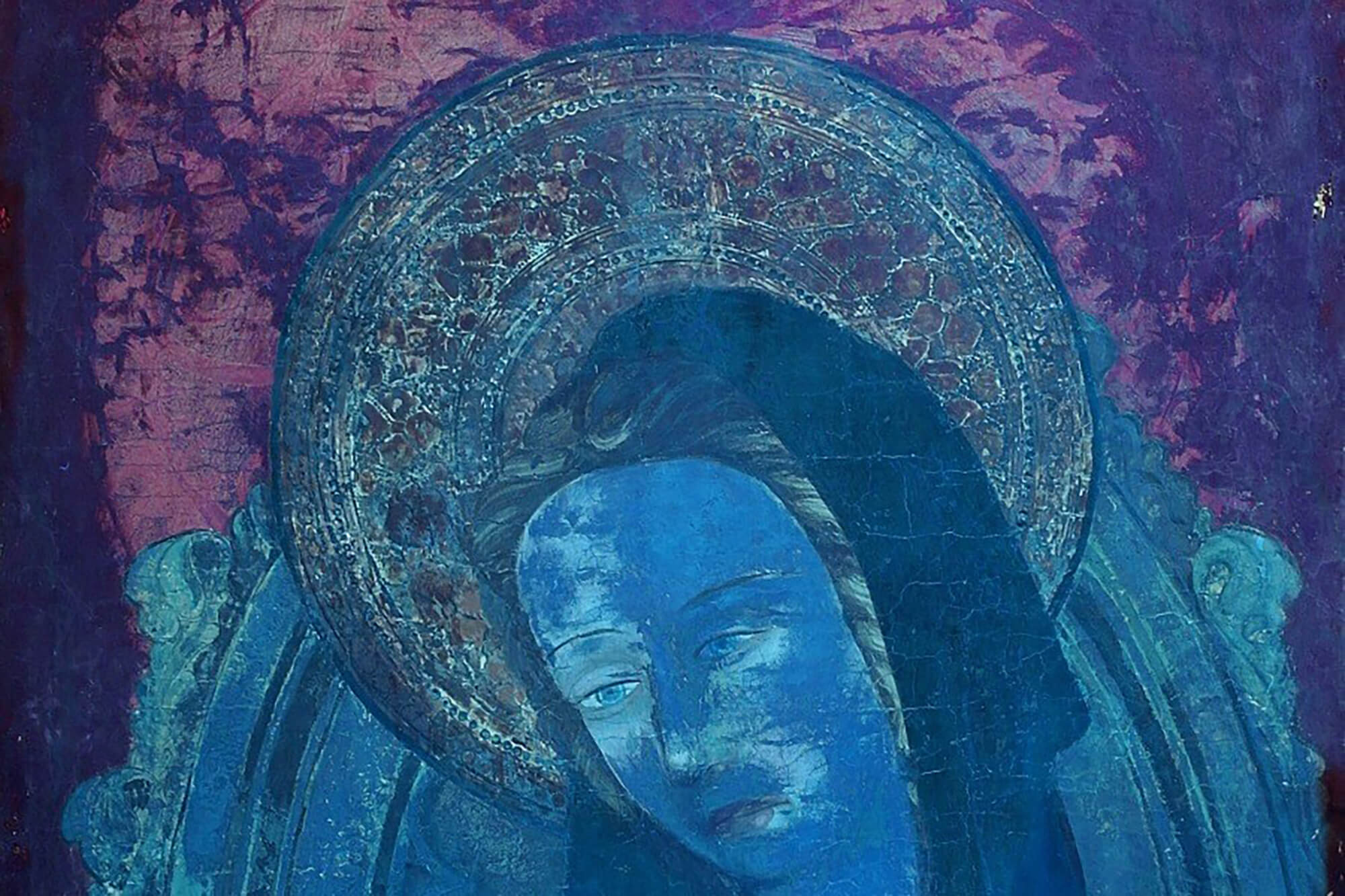
Close-up of UV-cured paint

A non-invasive approach tailored to heritage requirements

Optical imaging methods are non-destructive and non-contact. They respect the conservation constraints of old, fragile, or unique works. Unlike chemical or physical analysis techniques, they do not require any sampling.

These analyses integrate easily into cross-analysis protocols, notably with radiocarbon dating, microanalysis, or even radiography. Together, these techniques offer a complete scientific reading of the object.

CIRAM performs these analyses:

  • In the laboratory, for portable objects,
  • On-site, thanks to portable equipment, in museums, galleries, at collectors' homes, or at excavation sites.

A reliable, scientifically-proven mobile solution for heritage research and preservation.

Request a quote

The main optical imaging techniques

01 - Visible light imaging

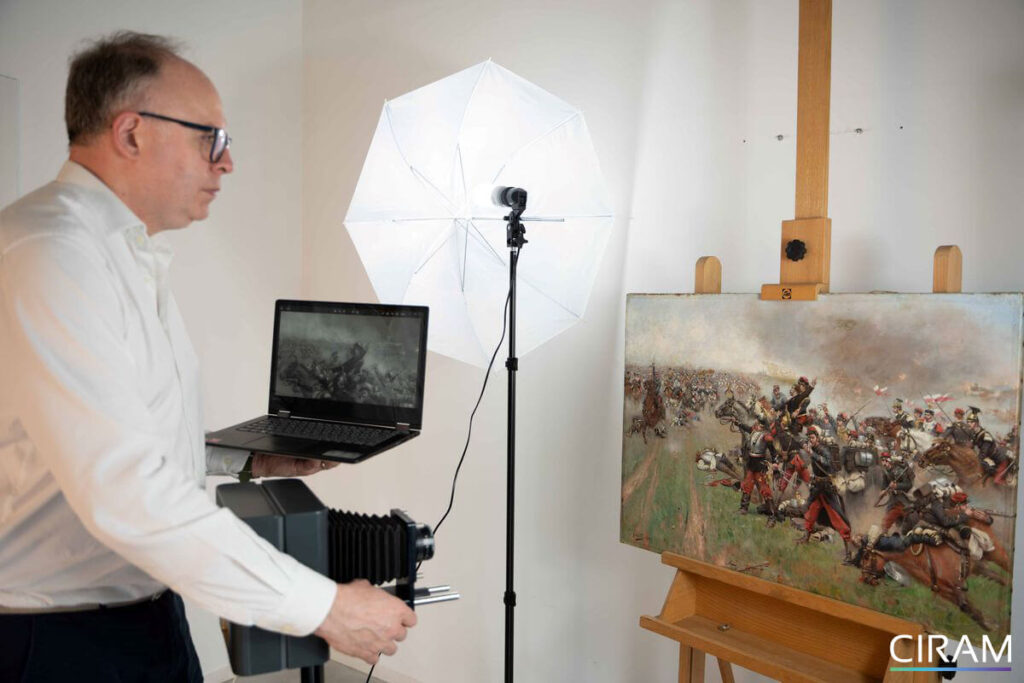
Examinations in visible light constitute a fundamental first approach in the analysis of artworks. They allow for the observation of physical characteristics, surface alterations, and certain technical elements related to the creation or conservation of the object. CIRAM mobilizes three complementary types of imaging:

  • Visible light photography for general observation of the artwork.
  • Grazing light, projected at 15°, to reveal surface alterations (cracks, blisters, lifting), substrate defects (cracks, tension, joints), and pictorial techniques.
  • Transmitted light, observed on the back, to detect holes, tears, and internal defects.

These techniques, which are entirely non-destructive, enhance the visual diagnosis and provide invaluable clues as to the condition, material history and manufacture of the works.

02 - Ultraviolet fluorescence

UV fluorescence imaging exploits the properties of certain pigments and varnishes to emit specific light when subjected to ultraviolet radiation. This technique is particularly valuable for the analysis of paintings, manuscripts, and polychrome objects.

It reveals essential information about the state of conservation of the works:

  • Identify the restorations, repaints, and overpainting not visible under normal light,
  • Detect composition variations in varnishes or surface materials,
  • Detect fluorescent pigments, useful for attributing or authenticating a work.

An essential diagnostic tool, UV fluorescence illuminates areas of interest to guide restorations or alert to potential old interventions.

03 - Infrared reflectography

IR reflectography allows for the examination of the deeper layers of a pictorial work using a high-definition infrared camera. By passing through the upper layers, this radiation reveals what is invisible to the naked eye.

It is used for :

  • Identifyrestoration areasand repaints,
  • Detect repentance and understand the successive stages of the artist's creative process,
  • Visualize underlying drawings or preparatory sketches,
  • Verify the authenticity of a signature and detect possible forgeries.

The preferred tool of art experts, IR reflectography is an invaluable aid to authentication and the study of the creative process.

CIRAM, expert in optical imaging

For over 20 years, CIRAM has been supporting museums, galleries, art market experts, and archaeologists in their scientific heritage analysis projects. Thanks to a unique combination of scientific expertise and cutting-edge equipment, CIRAM guarantees examinations tailored to each artwork, regardless of its format or condition.

Technologies used include :

  • Visible light, grazing light, and transmitted light,
  • UV fluorescence,
  • Infrared (IR) reflectography.

These techniques can be combined with each other or coupled with complementary methods: carbon-14 dating, pigment analysis, microanalysis, or radiography. For paintings, these cross-references are often necessary to confirm attribution hypotheses or reveal the exact nature of an old treatment.

Each intervention is accompanied by an illustrated scientific report, adapted to the challenges of conservation, authentication or enhancement of the work.

Contact our teams
Are you asking yourself these questions?

What kinds of objects can be studied using optical imaging?

Paintings, frescoes, manuscripts, decorated or polychrome objects.

Do these techniques risk damaging the works?

No. These are non-invasive, non-contact methods, perfectly suited to conservation requirements.

When should optical imaging be considered?

Before restoration, to guide interventions; during appraisal or attribution; or in a museographic or scientific context.

Can these techniques be combined with other analyses?

Yes, CIRAM combines optical imaging with other methods (dating, radiography, microanalysis) for a complete study.

Is it possible to intervene on site?

Yes. Our teams travel with portable equipment and perform analyses on-site, while respecting conservation conditions.

Make an appointment with an expert

Get all the answers to your questions!

Make an appointment

Explore our dating and analysis resources

Archaeology
Fossil wood samples dated by the CIRAM laboratory

Fossil wood samples dated by the CIRAM laboratory

The CIRAM has dated two fossil woods whose exceptional preservation is explained in particular by their burial in a humid, oxygen-poor environment.

Read the article

carbon-14
The multiple uses of carbon-14 dating

The multiple uses of carbon-14 dating

An essential dating method, carbon-14 or radiocarbon is used to date archaeological artifacts, authenticate works of art, or measure bio-based content.

Read the article

Industry
What is a biobased product?

What is a biobased product?

Find out what biobased products are, what their advantages are, and how manufacturers are integrating them to transform their practices.

Read the article

Art market
How do you scientifically analyze a painting?

How do you scientifically analyze a painting?

The scientific analysis of a painting combines several complementary methods for studying its support, materials, manufacturing technique, state of conservation, and a...

Read the article

Archaeology
Carbon-14, thermoluminescence TL and OSL: which dating method to choose?

Carbon-14, thermoluminescence TL and OSL: which dating method to choose?

Choosing the right dating method in archaeology is not just a technical issue: it is a key decision that guides the entire interpretation of a site. Which technique to choose...

Read the article

carbon-14
How does carbon-14 dating work?

How does carbon-14 dating work?

How can you authenticate a work of art or an archaeological relic with scientific rigor? Carbon-14 dating offers a reliable and precise method for analyzing organic materials...

Read the article

Request a quote