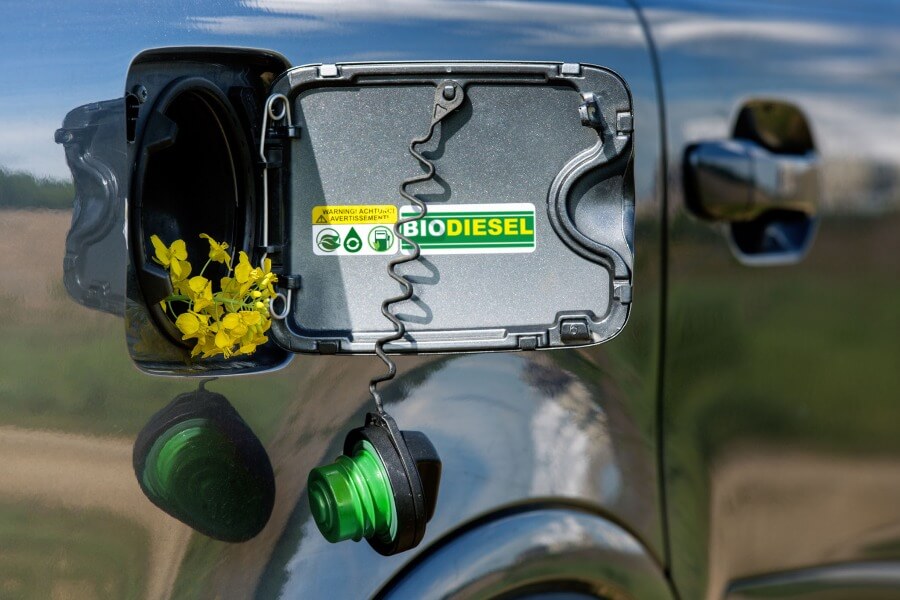

The ASTM D6866 standard is used to determine the biobased content of materials.
Reading time:
Written by:
Article Outline
- Why use the ASTM D6866 standard?
- The ASTM D6866 standard is used to determine the biobased content of materials.
- Develop a new bio-based product
- Check production compliance
- Control its suppliers' raw materials
- Prepare for certification or an audit
- What products can be analyzed?
- Is ASTM D6866 still the most suitable standard?

More and more industries are integrating bio-based raw materials into their products. However, it is still necessary to be able to objectively demonstrate the proportion of biomass-derived carbon present in these materials.
This is precisely the role of ASTM D6866 standard. Based on radiocarbon analysis, it allows for the measurement of the biobased carbon content of many industrial products. But in what situations is this analysis truly useful? What sectors are concerned? And in which cases should another standard be preferred?
In this article, we review the main use cases of the ASTM D6866 standard and the benefits it brings to industrialists.
In summary:
- The ASTM D6866 standard allows for the measurement of the bio-based carbon content of a product through radiocarbon analysis.
- It intervenes at different stages: research and development, quality control, certification, supplier validation, or environmental communication.
- Many industrial sectors use it, including biopolymers, paints, cosmetics, biofuels, packaging, and chemicals.
- The choice of analysis standard depends on the material studied and the project objectives.
Why use the ASTM D6866 standard?
The use of renewable raw materials is progressing in many industrial sectors. This evolution is accompanied by a growing need to demonstrate, through independent scientific analyses, the actual bio-based content of marketed products.
The ASTM D6866 standard meets this objective by providing a recognized method for determining the proportion of renewable carbon in a material. The results obtained can support quality, certification, or regulatory compliance initiatives.
Beyond regulatory requirements, this analysis also serves as a decision-making tool for manufacturers, whether it's to improve a formulation, compare several raw materials, or verify product compliance.
The ASTM D6866 standard is used to determine the biobased content of materials.
Develop a new bio-based product
During research and development phases, manufacturers often seek to increase the proportion of renewable raw materials in their formulations.
Analysis according to ASTM D6866 then allows for precise measurement of the impact of changes made to a product's composition and tracking the evolution of its bio-based carbon content during development.
Check production compliance
A lab-validated formulation can evolve during industrial production. Analytical controls make it possible to verify that the proportion of bio-based carbon remains in line with the set objectives, despite variations in manufacturing or raw materials.
This approach helps to ensure product quality before they are marketed.
Control its suppliers' raw materials
Technical data sheets or supplier declarations are not always sufficient to demonstrate the actual composition of a material.
Radiocarbon analysis offers an independent measurement that allows for verification of the bio-based content of received raw materials and strengthens supply chain control.
Prepare for certification or an audit
The demonstration of bio-based content is frequently requested for certifications, calls for tenders, or environmental initiatives.
The results obtained according to the ASTM D6866 standard can feed technical files and provide objective elements during audits or compliance assessments.
What products can be analyzed?
The ASTM D6866 standard applies to a large number of carbon-containing products. It is currently used in various sectors. Among the main applications are:
- the plastics and biopolymers,
- the paints, resins and coatings,
- the cosmetics,
- visit biofuels,
- visit biogas and CO emissions2,
- packaging,
- lubricants,
- the detergents,
- chemicals,
- the aromas, essential oils and other products derived from biomass.
This diversity of applications makes the ASTM D6866 standard a benchmark for many sectors committed to the transition towards renewable materials.
Is ASTM D6866 still the most suitable standard?
International reference for measuring bio-based content, ASTM D6866 is not always the only applicable method. Indeed, depending on the type of material, the target markets or the specifications' requirements, other standards may be more appropriate, notably certain European standards dedicated to bio-based products (NF EN 16640, ISO 16620, ISO 21644…).
The choice of method therefore depends on several criteria: nature of the product, objective of the analysis, certification sought or applicable regulation. Support from a specialized laboratory makes it possible to select the most relevant protocol from the start of the project and to avoid unsuitable analyses.
Share this article

You might be asking yourself these questions about ASTM D6866?
An analysis according to ASTM D6866 is recommended when it is necessary to determine the bio-based carbon content of a product.
Yes. Formulated or composite products can be analyzed, provided a suitable sampling strategy is defined. Depending on their composition, specific treatments may be necessary to obtain a representative result.
No. It measures the proportion of bio-based carbon present in a product, but it does not identify the plant species, crop, or country of origin of the raw materials.
Yes. The analysis also highlights the absence of bio-based carbon when a material is entirely derived from fossil resources.
Related topics



Need more information or have a question?
Our team will get back to you as soon as possible.