
Mass spectrometry in archaeology: applications and analysis of organic residues
Reading time:
Author's name:
Article Outline
- Understanding mass spectrometry in archaeology: principles and techniques
- The principle of mass spectrometry applied to the analysis of archaeological materials
- The main mass spectrometry techniques: AMS, IRMS and spectrometry coupled with chromatography
- Concrete applications: what mass spectrometry reveals in archaeology
- Date the archaeological remains
- Reconstitute the lifestyles of ancient populations
- Identify the organic residues preserved on the objects
- Complementary techniques for analyzing organic residues
- Limits, precautions and interpretation of results in an archaeological context

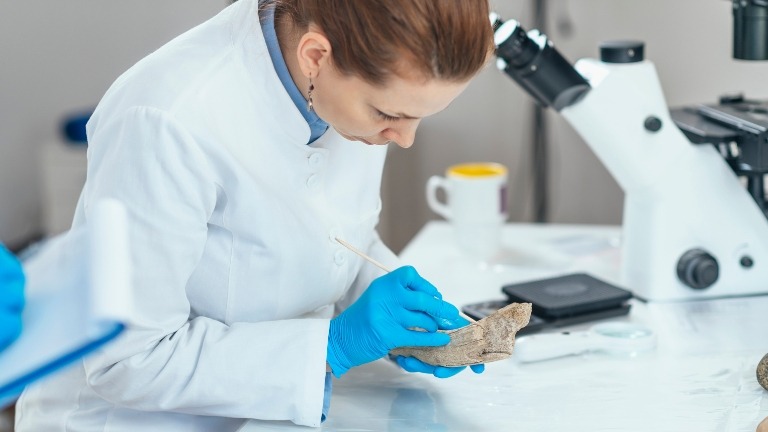
Mass spectrometry is a major analytical technique in archaeology. It can be used to date remains using carbon 14 as well as to study the composition of materials, identify organic residues, or analyze stable isotopes to better understand ancient societies. Its precision and sensitivity allow information to be obtained from minute quantities of matter.
Organic residues found in amphorae, pottery, or flasks also provide information about ancient practices. Their analysis can reveal oils, fats, resins, or other substances. Depending on their nature, researchers use different methods, such as infrared spectroscopy, Raman spectroscopy, or chromatography coupled with mass spectrometry.
These techniques address specific objectives and can complement each other. This article presents their principles, their main applications in archaeology, and the information they allow us to obtain.
In summary:
- Mass spectrometry allows for the dating of remains, the analysis of their chemical composition, and the study of their isotopic signatures from very small quantities of matter.
- Several complementary techniques are used in archaeology: AMS for carbon-14 dating, IRMS for isotopic analyses, and GC-MS or LC-MS for the identification of organic residues.
- Infrared spectroscopy and Raman spectroscopy complement the analysis of organic residues by providing information on the composition of materials.
- The archaeological context allows for the interpretation of results and a better understanding of the history of sites and objects.
Understanding mass spectrometry in archaeology: principles and techniques
Mass spectrometry is based on the analysis of atoms or molecules present in a sample. Depending on the technique used, it can be used to date remains, study their chemical composition, or analyze their isotopic signatures in order to obtain information about their origin, use, or history.
The principle of mass spectrometry applied to the analysis of archaeological materials
The principle of mass spectrometry consists of ionizing a sample, then separating the ions according to their mass. Scientists can thus identify the chemical elements, isotopes, or molecules present, even when the quantities analyzed are extremely small.
This sensitivity allows for the study of precious or very small archaeological remains while obtaining particularly precise results. Depending on the study's objectives, researchers use different mass spectrometry techniques, each addressing a specific issue.
The main mass spectrometry techniques: AMS, IRMS and spectrometry coupled with chromatography
Several methods are used in archaeology:
| Technique | What it measures | Main use |
| Accelerator mass spectrometry (AMS) | Carbon-14 isotopes | Dating of organic materials |
| Isotope ratio mass spectrometry (IRMS) | Stable isotopes (¹³C, ¹⁵N, ¹⁸O, ³⁴S…) | Diet, origin, mobility |
| Chromatography-mass spectrometry coupling (GC-MS or LC-MS) | Organic molecules | Food residues, oils, resins, waxes… |
Each technique addresses a specific scientific problem. They are often complementary and can be combined within the same research project.
Concrete applications: what mass spectrometry reveals in archaeology
Beyond the performance of the instruments, the interest of mass spectrometry lies in the information it provides on archaeological remains. Depending on the technique used, it can date an object, reconstruct the lifestyles of ancient populations, or identify the substances present on an artifact.
Date the archaeological remains
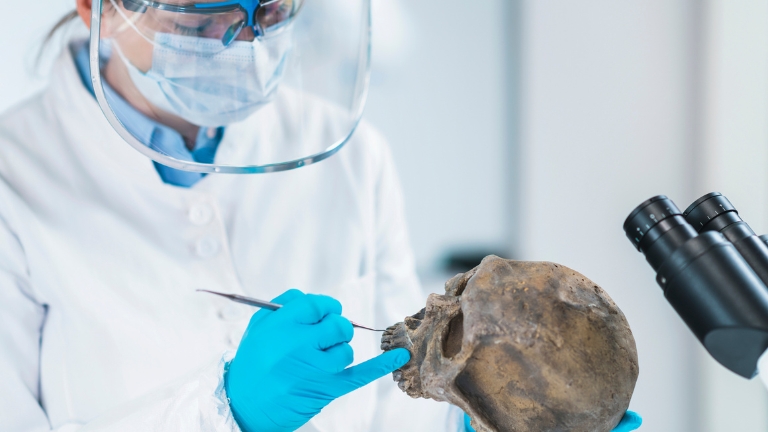
Accelerator Mass Spectrometry, or AMS, remains the reference method for radiocarbon dating in archaeology today. Unlike conventional techniques, it allows for the dating of samples weighing a few milligrams with extreme precision by directly measuring the 14C/12C ratio. It is thus the preferred method for analyzing delicate objects or those of great heritage value (human bones, funerary textiles, charcoal in sealed contexts). It provides precise archaeological dating, limiting biases related to contaminants or sample size.
Reconstitute the lifestyles of ancient populations
IRMS stable isotope analysis, in turn, opens up another field of interpretation in an archaeological context. Thanks to the study of stable isotopes of carbon, nitrogen, oxygen, or sulfur, it becomes possible to trace diets, identify areas of origin, or even distinguish social practices (for example: identifying differentiated diets according to status or gender).
Identify the organic residues preserved on the objects
Chromatography coupled with mass spectrometry (GC-MS or LC-MS) can be used to explore organic molecules trapped in artifacts: food lipids, resin or wine residues, degraded proteins, etc. These analyses provide functional information on the use of artifacts (containers, tools, ornaments) and are invaluable for paleoenvironmental studies or proteomic approaches.
Complementary techniques for analyzing organic residues
Infrared spectroscopy (IRTF) allows for the characterization of major organic compound families, such as oils, fats, or resins. Raman spectroscopy also provides information on material composition and can complement chromatographic analyses. The choice of methods depends on the nature of the residues, their state of preservation, and the archaeological questions being studied.
Limits, precautions and interpretation of results in an archaeological context
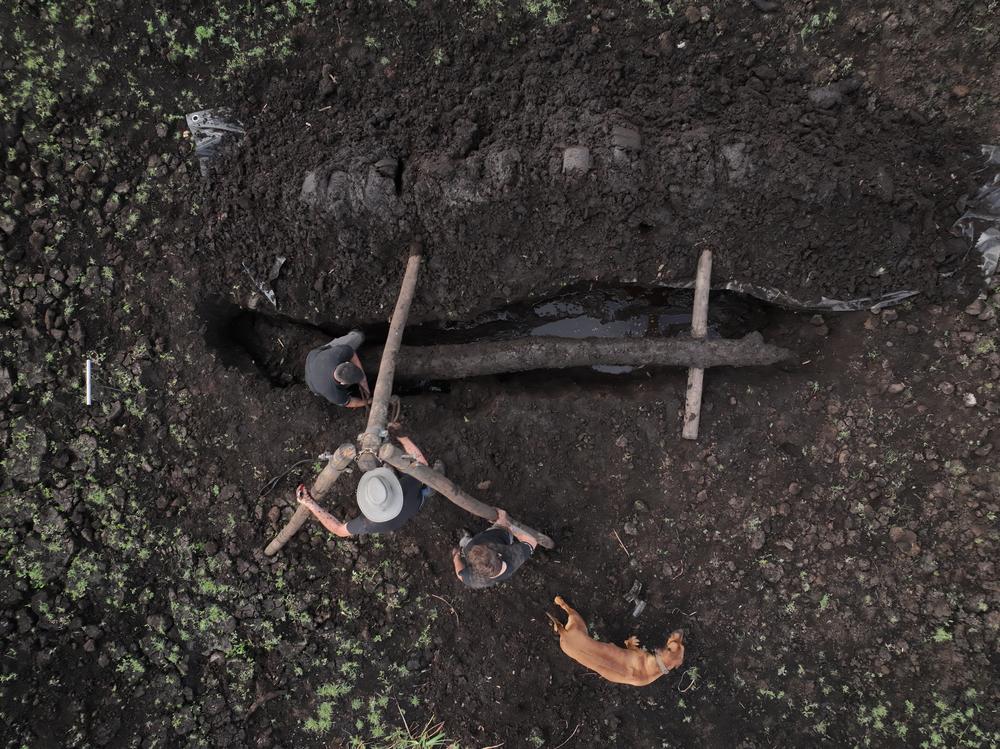
While the possibilities offered by mass spectrometry for archaeology are vast, they nevertheless require the implementation of rigorous study protocols. Sampling must therefore be anticipated upstream of the excavation in order to understand: the nature of the material, the conservation conditions, and any risks of contamination. Reliable interpretation indeed relies on close collaboration between field teams and the specialized analytical laboratory for archaeological study.
Finally, the results cannot be read in isolation from the research context: dating, isotope analysis or organic identification, these techniques do not deliver absolute truths, but their results offer powerful indicators when cross-referenced with archaeological data.
In conclusion, mass spectrometry is now an essential tool for the study of archaeological remains. Thanks to its various techniques (AMS, IRMS, GC-MS, or LC-MS), it allows for the dating of materials, the identification of their composition, and the provision of new information about ancient societies. Combined with field observations, these analyses contribute to building a more complete scientific interpretation of sites. The CIRAM laboratory thus supports archaeology stakeholders by implementing these different analytical approaches, adapted to the challenges of preventive, programmed, and research archaeology.
Share this article

You may be asking yourself these questions about mass spectrometry?
Most analyses require only a few milligrams of material. Laboratories adapt protocols to preserve the remains as much as possible, especially when dealing with rare or heritage objects.
No. The method depends on the nature of the material, its state of preservation, and the scientific question asked. Some samples that are too altered or contaminated may require other analytical approaches or may not be usable.
A single scientific measurement is not enough on its own to understand an archaeological site. Archaeologists interpret the results based on stratigraphy and the discovery context. They cross-reference them with other analyses of the remains. This approach allows for a more reliable chronological and functional interpretation.
Related topics

Need more information or have a question?
Our team will get back to you as soon as possible.