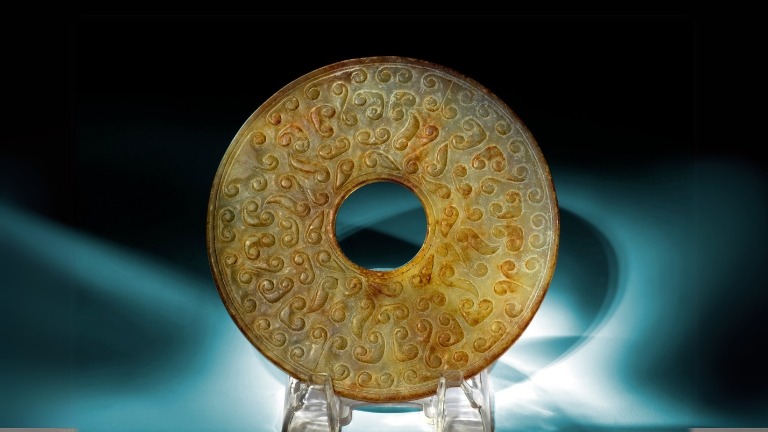

Jade objets d'art are veritable treasures of history and craftsmanship. Their beauty and rarity captivate collectors and art dealers the world over. But how do you guarantee their authenticity, assess their quality or estimate their value? Whether you're a collector or a professional, this guide explores the key players, modern analysis techniques and the indispensable role of mineral analysis laboratories in securing your transactions and enhancing the value of your pieces.
Understanding the expertise of jade objects
The different types of professionals
Appraising jade objects requires a thorough understanding of their history, origin and composition. There are several types of professionals specializing in the study of these works of art. There are three main complementary categories of professionals who can appraise jade objects:
Art experts: These specialists are essential for analyzing the history and cultural context of the pieces. They identify specific details such as style, form, colors, and techniques used to determine the origin of the works. These elements are indeed essential for assessing the authenticity and value of antique jade.
Mineral experts: They bring in-depth knowledge of jade’s specific properties. Using state-of-the-art tools and scientific expertise, they distinguish jadeite and nephrite—prized for their rarity and purity—from serpentine or antigorite, which are more common but also highly sought after. Their expertise is essential for analyzing the chemical composition and geological origin of jade objects. They play a key role in the accurate and reliable evaluation of jade objects for the purpose of authentication.
Gem cutters: These are specialists in cutting and polishing precious and semi-precious stones. They assess the visual quality of jade and identify imperfections and modern treatments. Their technical expertise complements scientific analyses, providing an essential perspective on the material value of jade objects.
Criteria for choosing a competent professional
The choice of an expert is crucial for collectors or art dealers wishing to authenticate their works. To guarantee a reliable appraisal, several criteria are essential:
- Reputation and certifications: choose experts affiliated with recognized institutions or working with laboratories specializing in materials analysis for reliable scientific validation.
- Specialization in jade: make sure the expert masters the specific characteristics of jade (jadeite, nephrite, serpentine, antigorite), as well as the manufacturing and decoration techniques of different cultures.
- Experience in technical analysis: a skilled expert must be able to combine visual observation with modern tools, such as chemical analysis or tracing studies, to deliver precise results.
- Transparency: Choose a professional who can clearly explain his or her findings, with a detailed and justified report.
Choosing a qualified professional is not a trivial matter. His service must be able to meet your specific needs, such as an estimate for an auction or a scientific analysis. To this end, the expert will be able to apply various techniques and approaches adapted to the expertise of jade. Let's take a look at some of them.
Techniques and approaches to jade expertise
Scientific analysis and dating of jade objects
Modern scientific techniques are not limited to identifying the origin or chemical composition of jade, although this is an important dimension. They also offer tools for detecting modern treatments, such as bleaching or dyeing. These artificial patinas are often used to enhance the appearance of low-quality pieces.
Here are the scientific analysis methods used by jade art experts:
- Micro-analysis: analysis of the degree of weathering of jade will provide objective chronological information to authenticate these objects. In addition, the study of the origin of alterations and deposits will provide information on the age of the jade sculptures. Finally, the observation of tool marks will provide information on the lapidary techniques used.
- Advanced imaging: technologies such as 3D tomography and 2D X-ray can be used to examine the internal structure of jade. This analysis is non-destructive: it can identify natural inclusions or hidden fractures, enabling a complete assessment without damaging the object.
Laboratories specialized in the study of rocks provide detailed reports, indispensable for auctions or international transactions, bringing essential transparency at every stage. These approaches boost the confidence of buyers and the value of objects on the market.
Estimating and assessing the value of jade
Beyond the scientific approach, the appraisal of a jade object is also based on subtle criteria that directly influence its market value:
- Quality and type of jade: jadeite, often called "imperial jade", is prized for its purity and vivid color, while the more common nephrite and serpentine have more varied shades.
- Condition: intact or minimally restored objects are more sought-after on the art market.
- Provenance and history: pieces accompanied by clear documentation of their origin, or from renowned collections, will benefit from increased valuation on the art market. This traceability reassures buyers and reinforces their appeal, hence the importance of the role of pre-sales studies.
- Manufacturing techniques: sculptures or jewels featuring complex motifs specific to particular eras or dynasties are often considered more valuable. Only an expert's in-depth analysis can associate these features with specific historical periods.
- Rarity of unique characteristics: some jades, thanks to their exceptional color or texture, such as intense emerald green or natural surface patterns, stand out on the market and captivate collectors and art dealers.
An understanding of these characteristics, and an expert's ability to analyze them, is crucial for any collector or art dealer looking for jade works of art. Professionals or experienced collectors can collaborate with laboratories specializing in jade analysis to provide accurate estimates, using this data to enhance the transparency of the appraisal during transactions. But what does this collaboration involve?
The role of laboratories in jade expertise
The Importance of Laboratories Specializing in Jade Analysis
Laboratories specializing in mineral analysis, such as CIRAM, play a central role in the appraisal of jade objects. They offer a range of services inaccessible to traditional experts alone:
- Detecting restorations: using tools such as electron microscopy or X-ray radiography, specialized laboratories identify repairs invisible to the naked eye, often carried out to mask cracks or breaks. This study is of the utmost importance, as these repairs have a major impact on the value of a jade object.
- Authenticity verification : laboratories can compare the material and stylistic characteristics of objects with scientific databases. This verification guarantees the authenticity of objects in relation to specific periods or regions.
- Reports for insurance companies in the event of disputes: certified analyses supplied by laboratories like CIRAM are essential for insurance companies, particularly in the event of disputes. Expertise provides objective proof of the condition and authenticity of the items analyzed.
Art auction professionals have every interest in collaborating with a scientific laboratory if they wish to obtain solid guarantees to secure transactions and reinforce the confidence of their buyers.
Benefits for art professionals
Using a laboratory such as CIRAM to appraise a jade objet d'art provides art market players with additional strategic advantages:
- Auction preparation: scientific analyses provide objective arguments to justify high reserve prices or to convince buyers at auction. These material elements, derived from physico-chemical analyses, reinforce the competitiveness of objects in relation to other items on the market.
- Investment protection: for collectors, a scientific certificate guarantees that the purchase is based on reliable and verifiable data, avoiding the disappointment of forgeries or unreported restorations.
- Support for exhibitions and museums: objects that have been scientifically appraised gain in credibility when displayed in exhibitions or integrated into museum collections, enhancing their reputation and historical importance.
- Reactivity to market trends: detailed reports help to seize opportunities linked to new collector demands, such as the growing interest in imperial jade pieces or pieces carved during specific periods.
The appraisal of jade objects, whether to authenticate, date or assess their value, requires a combination of traditional know-how and modern scientific tools. A thorough appraisal that is transparent to the applicant requires the various players, experts and specialized laboratories, to collaborate and combine their skills in order to appraise the objects. You can secure your transactions, strengthen your credibility and maximize the value of your pieces by working with CIRAM laboratories.
Our teams of scientists provide you with the tools and innovative analysis methods to appraise your jade objects, while accompanying you through the analysis process. Do you need professional expertise for your jade art objects? Rely on CIRAM for precise scientific analysis and request a study today on our website.