


shutterstock 1947205261

Scanning cinerary urns

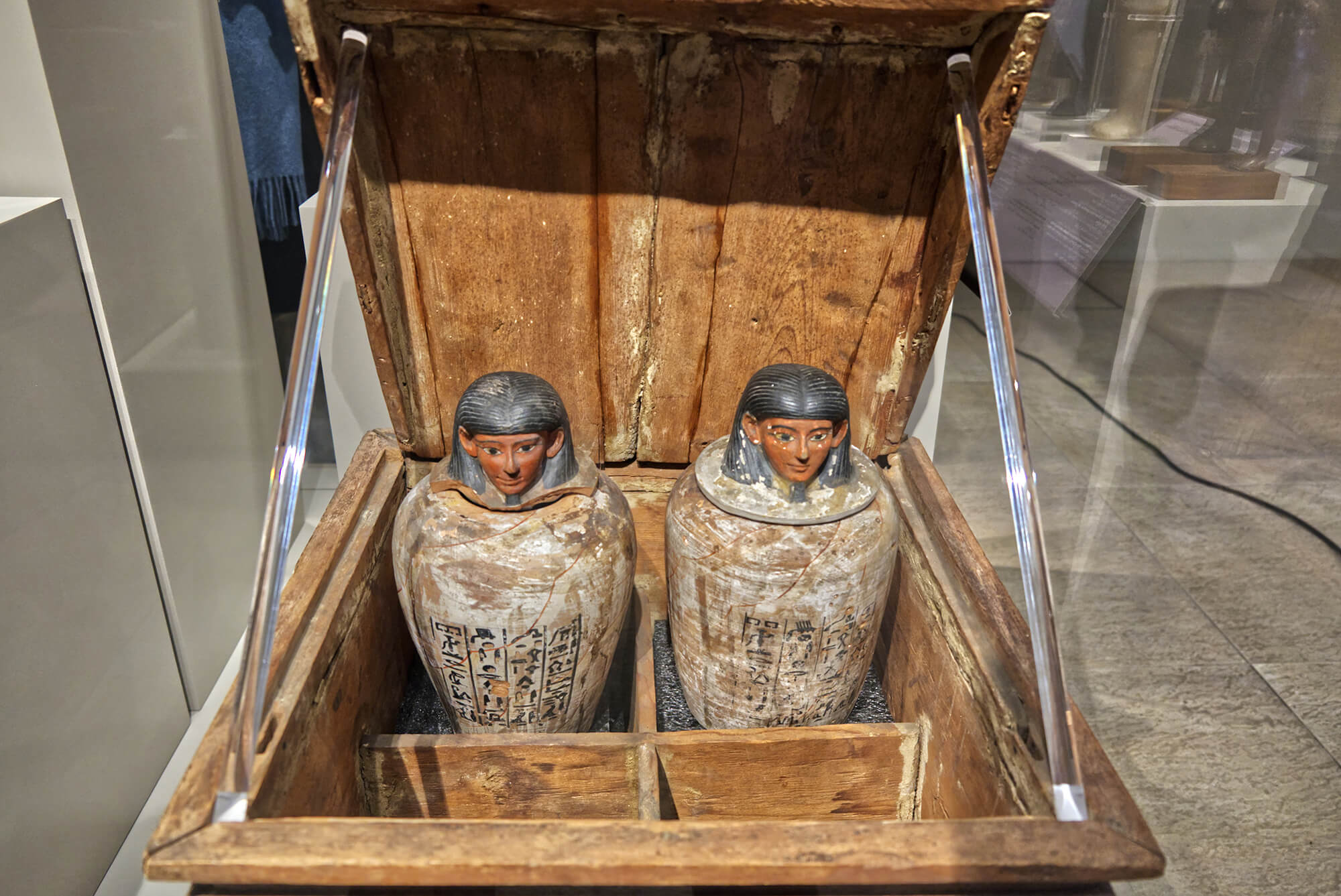
At CIRAM, we use 3D imaging technology technology to help archaeologists and curators explore the interior of cinerary urns without opening or altering them.

Contact our teams
archeo scan

Would you like to scan a cinerary urn without opening it?

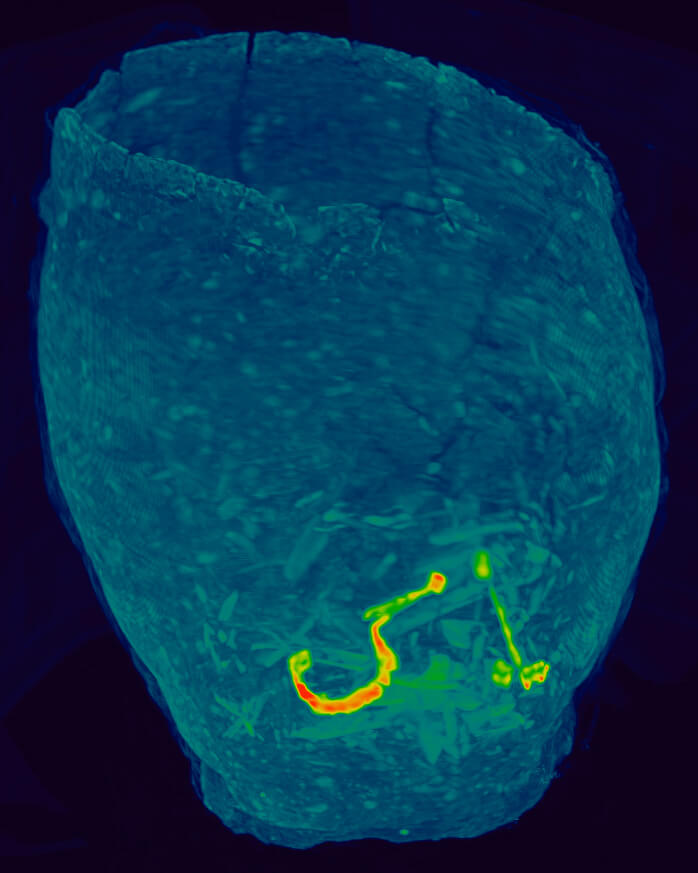
Opening a fragile or historically valuable cinerary urn can present irreversible risks: fragmentation, loss of information, contamination. The use of digital tomography (3D scanner) makes it possible to carry out a virtual excavation, revealing the contents of the urn without direct contact.

This non-destructive technique enables :

  • Identify the presence of bones, objects or ashes,
  • Visualize internal structure, deposits and filling layers,
  • Direct or defer a physical search,
  • To archive a complete state of the urn before any intervention.

At CIRAM, we support museums, archaeological services and institutions in the digitization, analysis and interpretation of cinerary urns.

Contact our teams

They trust us

DRASSM
INRAP
Ifpo
2 museum
National Geographic
Hades

Our scanning techniques for cinerary urns

CIRAM usesX-ray computed tomography, also known as 3D scanning, to visualize the interior of closed or fragile objects.

The process includes :

  • High-resolution scanner capture: acquisition of several thousand internal sections of the urn.
  • 3D volume reconstruction: complete modeling of the interior, without damaging the container.
  • Analysis of internal layers and objects: visualization of deposit levels, bone fragments, nails, beads, or other metallic or organic deposits.
  • Scientific files and reports: deliverables that can be used for excavations, publications or restoration work.

We adapt the scanner's power to the density of the material (terracotta, stone, metal), to guarantee optimum contrast and usable data.

Learn more about our 3D imaging techniques

The steps in a CIRAM analysis

CIRAM 's analysis process is rigorous and transparent:

01 - Contact and analysis of request

We evaluate the nature of the urn, its condition, its composition and the objectives of the virtual excavation.

02 - Secure transport

We can help you organize transport or pick-up on site if necessary.

03 - Tomographic scan

The urn passes through the 3D scanner without opening or touching.

04 - Data processing

3D reconstruction, segmentation of internal volumes, qualitative analysis.

05 - Deliverables

Illustrated report, 2D/3D views, cutaway videos, file export for scientific or museographic use.

Why choose CIRAM for cinerary urn scanning?

When you call on CIRAM, you benefit from :

  • Non-destructive techniques: total preservation of the urn, without opening or removal.
  • High-resolution imaging: latest-generation scanner for precise data processing.
  • Interdisciplinary expertise : archaeometryanthropology, funerary archaeology and scientific imaging.
  • Scientific support: we guide you in interpreting results and integrating them into research or conservation.
  • Strong partnerships: museums, DRAC, SRA, INRAP, universities, local authority archaeology departments.
Contact our teams

Are you asking yourself these questions?

Can all types of urns be scanned?

Yes, as long as they're in good condition. We adapt the scanner to the material (terracotta, metal, stone, etc.).

What is the maximum size that can be analyzed?

Our scanners can handle objects over one meter in length. For larger objects, partial analysis is possible.

Can you see metal objects inside?

Yes, the contrast with organic or mineral materials makes it possible to identify inserted objects, such as nails or jewelry.

How long does the analysis take?

Scanning and processing generally take between 1 and 2 weeks, depending on the complexity and restitution requirements.

Can the results be used for an exhibition?

Exactly. We provide files that can be used for modeling, 3D printing or digital animation.

Is it reimbursed as part of a research program?

Yes, scientific imaging services can be integrated into funded projects (PCR, ANR, etc.).

Make an appointment with an expert

Get all the answers to your questions!

Make an appointment

Your other challenges in Archaeology

Carbon-14 dating
Carbon-14 dating

Obtain precise dates for your organic artifacts using the carbon-14 method, an essential reference in archaeometry.

Dating terracotta by thermoluminescence (TL)

Thermoluminescence (TL) makes it possible to accurately date heated ceramics, terracotta and minerals by analyzing their last exposure to a heat source.

Dating sediments by luminescence (OSL)

Determine the age of sediments and geological formations using optically stimulated luminescence (OSL), an essential method for reconstructing ancient environments.

Analyzing old mortars

Identify the composition and age of ancient mortars to better understand construction techniques and chronologically align heritage structures.

Explore our dating and analysis resources

Archaeology
Comparison between carbon-14, TL, and OSL: which method should you choose?

Comparison between carbon-14, TL, and OSL: which method should you choose?

Choosing the right dating method in archaeology is not just a technical issue: it is a key decision that guides the entire interpretation of a site. Which technique to choose...

Read the article

Archaeology
The limits of carbon-14 dating: when should we turn to other methods?

The limits of carbon-14 dating: when should we turn to other methods?

How do you know whether a work of art, an archaeological object or a heritage item is really as old as it claims to be? Carbon-14 dating is often the method of choice, but it can also be used to...

Read the article

Archaeology
What role does anthracology play in preventive excavations?

What role does anthracology play in preventive excavations?

Anthracology plays a key role in preventive excavations: by studying archaeological coals, it sheds light on past human practices and paves the way for carbon dating...

Read the article

Archaeology
Mass spectrometry in archaeology: what for?

Mass spectrometry in archaeology: what for?

What methods are suitable for dating a fragile artifact, tracing the origin of a material or identifying millennia-old organic residues? Mass spectrometry provides access to...

Read the article

Archaeology
Dating for archaeology: why combine several methods?

Dating for archaeology: why combine several methods?

The cross-fertilization of dating techniques for archaeology guarantees the reliability of analyses in response to the complexity of the contexts and materials studied. Find out why...

Read the article

Archaeology
The importance of calibration in carbon-14 dating

The importance of calibration in carbon-14 dating

How can we guarantee the reliability of archaeological dating in a context where every year counts? Find out why carbon-14 calibration curves and laboratory expertise...

Read the article

Request a quote