





How to recognize bronze and differentiate it from brass?
Distinguishing a work of art in bronze from one in brass is not possible at a glance, however expert. Deceptive patinas, invisible restorations, sophisticated forgeries...

CIRAM detects sculpture copies through rigorous scientific analysis, guaranteeing the authenticity of your works.
Contact our teams
Do you have doubts about theauthenticity of a sculpture? Whether it's an antique bronze, a signed marble or a wooden sculpture, doubts about authenticity can quickly arise.
Uncertain provenance, suspect manufacturing techniques, anachronistic materials or too uniform a patina... To remove any uncertainty, only a rigorous scientific analysis can settle the matter.
CIRAM supports museums, collectors and experts with precise analysis methods, so you can authenticate your works with confidence and make the right decisions.
Contact our teamsLeading museums and art professionals trust us to authenticate their objects.
To distinguish an original sculpture from a copy, CIRAM mobilizes a range of scientific techniques adapted to the nature and period of the sculpture under analysis.
Each technique is selected according to the specifics of the work, to guarantee reliable and relevant results.
Find out more about our analysis methodsAt CIRAM, the analysis process is based on a rigorous, multi-stage methodology.
We start with an in-depth discussion to understand your needs: doubts about authenticity, lack of documentation, upcoming sale or restoration.
We then define the techniques to be used according to the nature of the sculpture.
The sculpture can be analyzed in situ or sampled under carefully supervised conditions. Where necessary, a non-destructive sampling protocol is proposed to respect the integrity of the piece.
Once the results have been obtained, you receive a clear, usable report with conclusions backed up by scientific data.
When you choose CIRAM, you choose a trusted, independent scientific partner, recognized for its expertise in the art market. For over 20 years, we have supported museums, auction houses, collectors and restorers in verifying the authenticity of sculpted works.
Our state-of-the-art equipment, strict protocols and multidisciplinary approach (chemists, physicists, archaeologists) guarantee reliable results that can be interpreted and accepted in a legal or heritage context.
With CIRAM, you benefit from expert, confidential and transparent support to help you make informed decisions about your acquisitions or collections.
Contact our teamsUniform patina, modern materials, absence of traces of traditional tools or unclear provenance are all clues that may indicate a copy.
Yes, some copies date back to modern times or even antiquity. An analysis can help to date the materials and understand the context of creation.
Yes, CIRAM favors non-destructive or micro-invasive methods to preserve the integrity of the work.
On average, between 10 and 15 working days, depending on the complexity of the work and the techniques involved.
A clear and detailed report, including the scientific results, their interpretation, and a conclusion on compatibility with the era in which the alleged perpetrator was born.
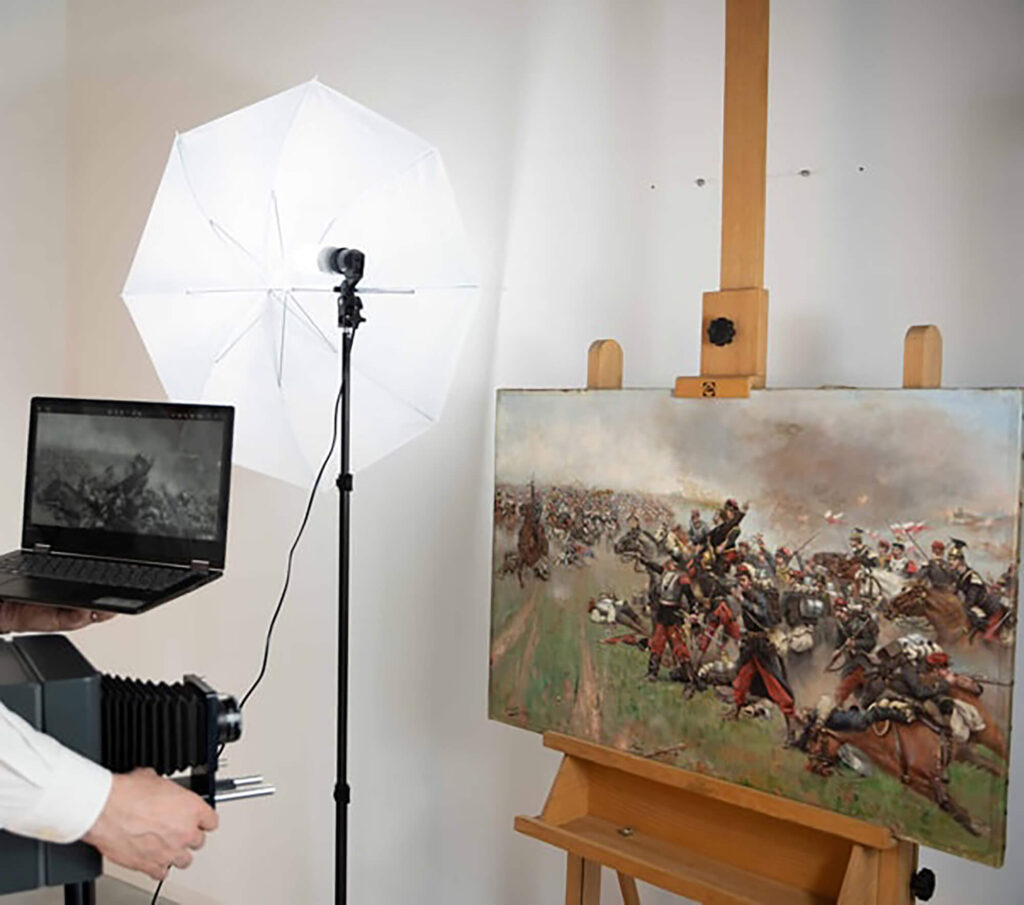
Check the historical compatibility of a painting by studying the pigments, binder and support used in relation to the period advertised.
Identify past restorations and assess the work's state of preservation to guide its exhibition, sale and preservation.
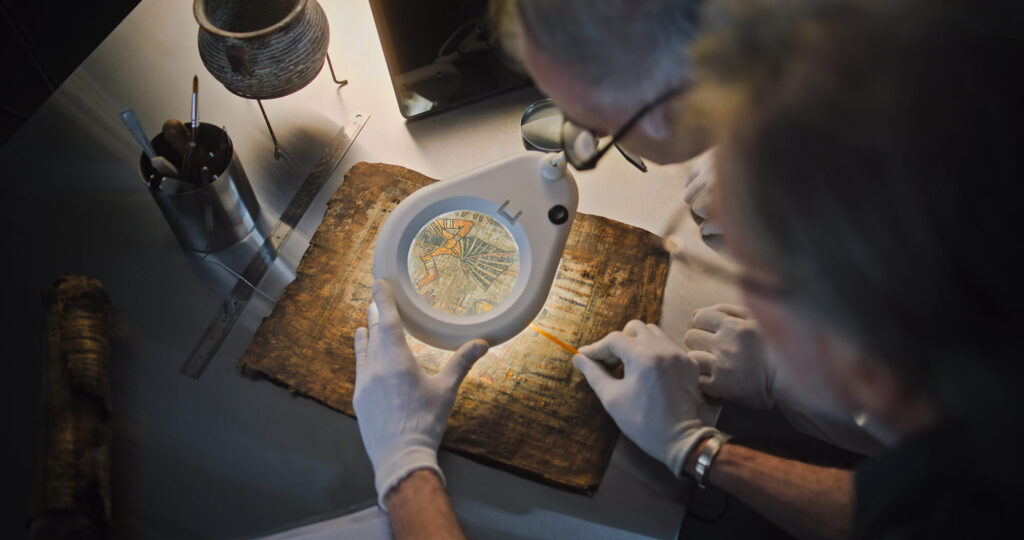
Use radiocarbon dating to accurately determine the age of your wood carving, ancient manuscript, painting or any other organic material, such as ivory...
Check whether your art object is genuine, thanks to scientific analyses adapted to its nature, origin and presumed period.
Distinguishing a work of art in bronze from one in brass is not possible at a glance, however expert. Deceptive patinas, invisible restorations, sophisticated forgeries...
A simple signature can make the difference between an anonymous work and a masterpiece valued in the millions on the art market. But what happens when that signature is...
Knowing how to recognize an authentic antique bronze is a strategic issue for art professionals, to guard against fakes. Patina, composition, corrosion: every clue can help you...
How to analyze a work of art without damaging it? Thanks to non-destructive analysis techniques, it is now possible to access valuable information about pigments, re...
Should optical imaging or radiography be used to analyze a work of art, an archaeological object or an industrial material? Behind this question lie the crucial issues of...
X-rays of paintings reveal what the eye cannot see: internal structures, hidden restorations and forgotten signatures. Thanks to advanced scientific analysis techniques...