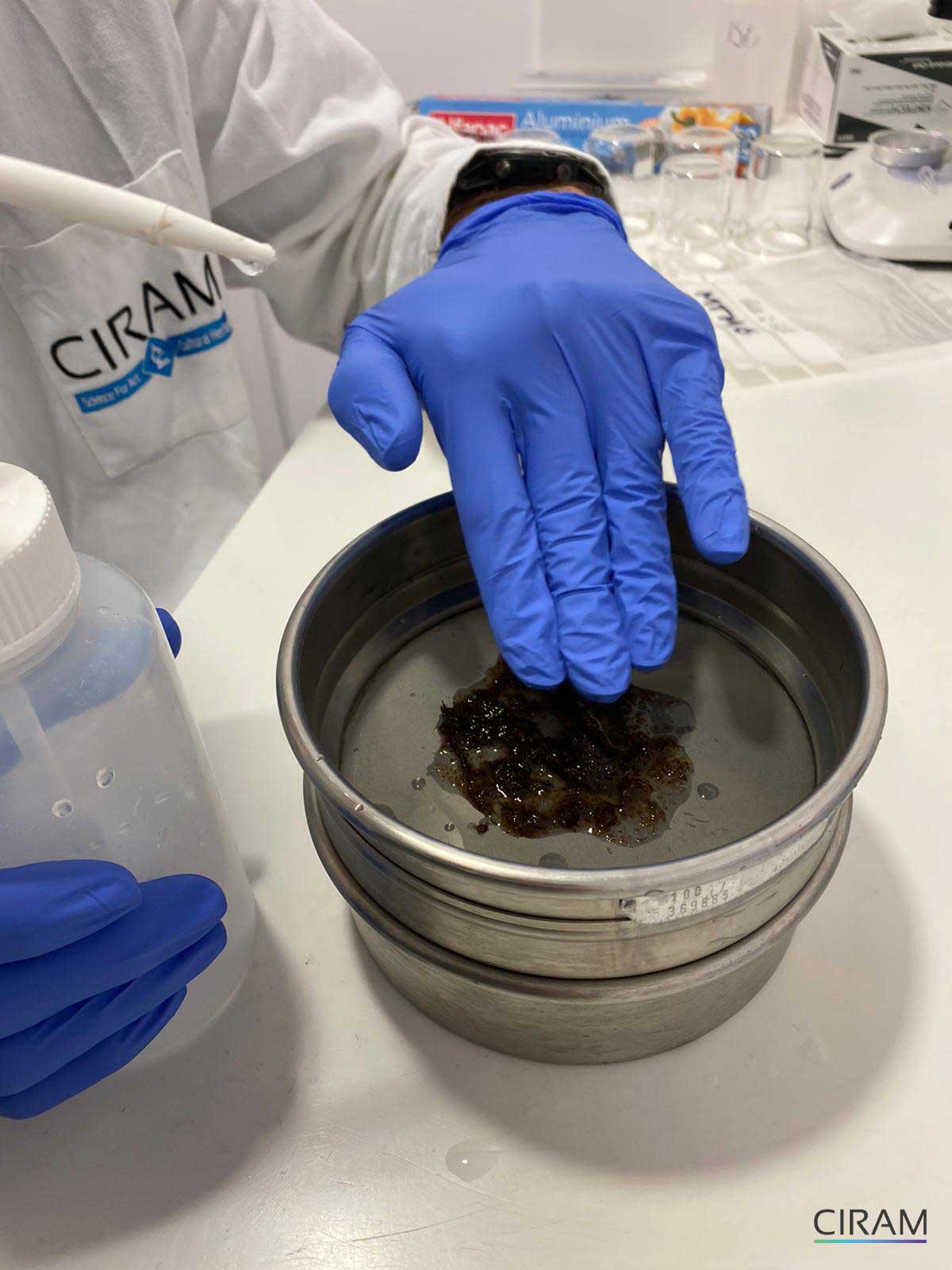

Guarantee the naturalness is no longer just a marketing ploy. Manufacturers must meet both regulatory requirements and the need for transparency demanded by consumers. Certifying thenatural origin of a flavor is becoming strategic for players in the food, functional flavor and nutritional supplement industries. However, traditional analytical methods are showing their limitations when faced with the risks offlavor adulterationwhich complicates the distinction between a natural flavor and an artificial flavor.
L'carbon-14 analysisanalysis, an essential component of the science of dating, now offers a reliable, scientifically valid way of demonstrating theauthenticity of flavors at every stage of the industrial cycle, from component sourcing to the finished product.
In this article, we explore why and how this technology can be integrated into the certification process. certificationcertification traceability and quality controlwith a focus on concrete applicationsand the key role played by specialized laboratories in the food industry such as CIRAM.
Flavor naturalness: issues, definitions and limits of conventional methods
Guaranteeing the naturalness of a flavor is a strategic imperative for any manufacturer committed to quality, transparency and compliance.
Understanding the naturalness of flavors in the food and cosmetics industry
A natural flavor is a flavoring substance derived exclusively from plant, animal or microbiological sources, by physical or enzymatic processes, in accordance with EC regulation n°1334/2008. To claim an "X" natural flavor, at least 95% of the flavor components must come from the source mentioned.
For manufacturers, guaranteeing this naturalness implies perfect traceability, controlled sourcing and usable scientific proof. It is also a prerequisite for obtaining natural flavor labeling, for access to certain certifications (BIO, clean label), or for meeting the expectations of R&D, marketing or regulatory departments.
Flavor adulteration: a growing risk for manufacturers
Flavor adulteration occurs when petrochemical components are intentionally or unintentionally introduced into a formulation presented as natural. This practice poses major risks for product marketing: regulatory non-compliance, loss of certification, food fraud, damage to reputation.
However, conventional chemical flavor analysis methods (GC-MS, HPLC, sensory control) are unable to distinguish a compound's fossil or biobased origin, particularly in complex matrices.
That's why it's so important to call on an analytical laboratory specialized in the industry (like CIRAM) and use scientific methods to prove the naturalness of flavors. These techniques, such as isotope analysis and carbon-14 analysis, are capable of accurately detecting any food flavor adulteration, enabling manufacturers to preserve the integrity of their products.
Carbon 14 for authenticity and traceability of aromas
Carbon analysis 14 analysis analysis is an essential technique for validating the authenticity of a product, proving its biosource, and validating control processes when conventional tools reach their limits.
How does carbon-14 analysis work to verify the naturalness of an aroma?
Carbon-14 is a radioactive isotope naturally present in all living matter. However, fossil matter (such as petroleum) no longer contains it, as this isotope decays over time (with a half-life ≈ 5730 years). Thus, quantifying carbon-14 makes it possible to measure the proportion of "modern" (biobased) carbon versus "old" (petrochemical) carbon.
Carbon-14 isotope analysis can be used to detect adulteration, authenticate natural flavors, and even validate the biobased origin of packaging or additives, thanks to gas pedal mass spectrometry (AMS),
The method is fast (results in 5 à 10 days), highly accurate (0.4% absolute absolute uncertainty) and applicable to all types of matrix (liquids, solids, gels, without prior knowledge of composition). Water content does not interfere with the measurement.
CIRAM complies with international standards ASTM D6866 and EN 16640which govern the analysis of the biobased content of materials.
Practical applications of carbon-14 naturalness verification
Radiocarbon analysis of flavors is applicable at all stages of the product life cycle:
- Sourcing and supplier selection
- Product development and formulations
- Quality control for flavor production
- Regulatory compliance assessment
- Natural labeling or organic certification
- Verification of biobased packaging
Carbon-14 analysis is also a relevant technique used in commercial disputes, audits, or to reinforce an industrial group's CSR approach.
In addition to this technique, CIRAM offers stable isotope analysis (δ¹³C, δ¹⁵N, δ¹⁸O, δ²D) via EA-IRMS. This can be used to determine botanical origin, geographical provenance, or to detect finer fraud on complex aromas. This complementary technique enhances the reliability of analyses and secures teams on the market.
Guaranteeing analysis reliability: the key role of specialized laboratories like CIRAM
The effectiveness of verification of a flavour's naturalness by carbon 14 depends as much on the rigour of the method as on the quality of its execution. That's why more and more manufacturers are working with accredited laboratories experienced in natural flavor analysis.
Why call on an expert laboratory in the biobased industry?
French laboratories specializing in scientific analysis for industry, support quality, R&D, purchasing, compliance and regulatory marketing teams on sensitive projects linked to the naturalness of flavors. CIRAM, an expert in analyses for the biobased industry has teams with know-how based on :
- standardized, enforceable protocols
- state-of-the-art spectrometry and isotope equipment
- multi-matrix analysis capability
- a strategic reading of results
- and support throughout the product life cycle
The results obtained can then be integrated into various regulatory procedures, such as certification dossiers, customer audits or product labeling applications. By calling on a laboratory specialized and experienced in the analysis of natural flavors by carbon 14 (such as CIRAM), you benefit from advice throughout your production process, as well as the reassuring reliability of your product analyses.
Best practices for securing the natural flavors value chain
Integrating carbon-14 analyses enables industrial teams, whether in R&D, compliance or sourcing :
- anticipate non-conformities
- prevent the risk of fraud
- objectify your CSR commitments
- and promote your products to buyers and distributors.
Radiocarbon analysis is therefore a useful management tool right from the research phase, in formulation, sourcing or process validation. It also helps to secure marketing and regulatory decisions, and to negotiate more effectively with suppliers.
Verifying the naturalness of a flavor has become a competitive lever for manufacturers committed to transparency, compliance and quality. Radiocarbon analysis offers a scientific, rapid and reliable method for detecting adulteration, validating the authenticity of a natural flavor, and securing the traceability of raw materials.
CIRAM is the French specialist in carbon 14 and isotope analysis. Our teams can provide you with tailor-made solutions at every stage of the industrial cycle to carry out your studies and support you in the success of your industrial production.
Would you like the support of a laboratory expert in carbon-14 and isotope analysis of natural flavors? Contact us and request a study with CIRAM to strengthen your quality strategy and enhance your commitments.