What is a biobased product?
Find out what biobased products are, what their advantages are, and how manufacturers are integrating them to transform their practices.

Accurately measure the biogenic carbon content in your biofuels, solid recovered fuels (SRF), and CO₂ emissions using carbon 14 analysis.CIRAM assists industrial companies in quantifying biogenic carbon to meet regulatory requirements, secure carbon balances, and ensure reliable environmental declarations.
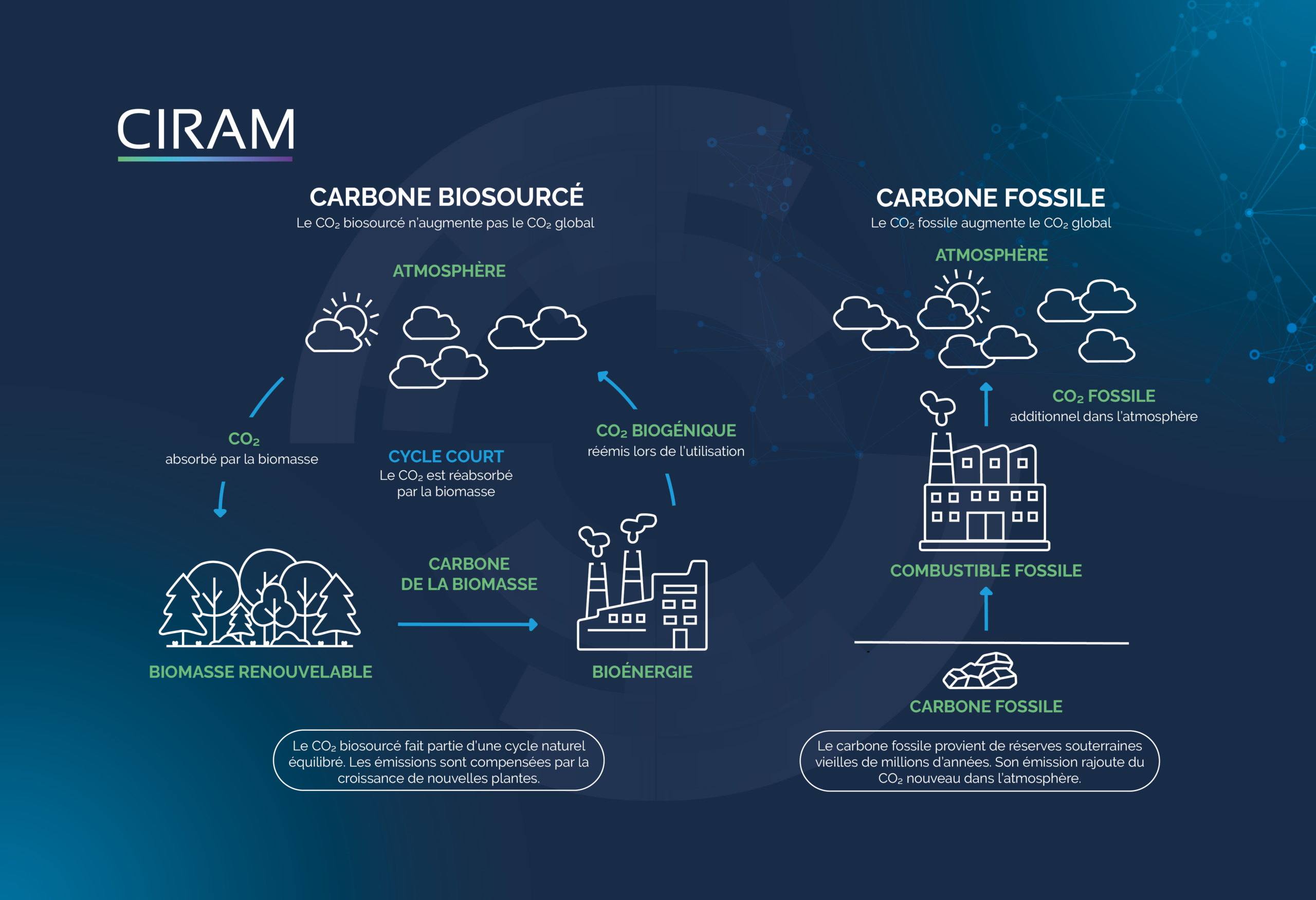
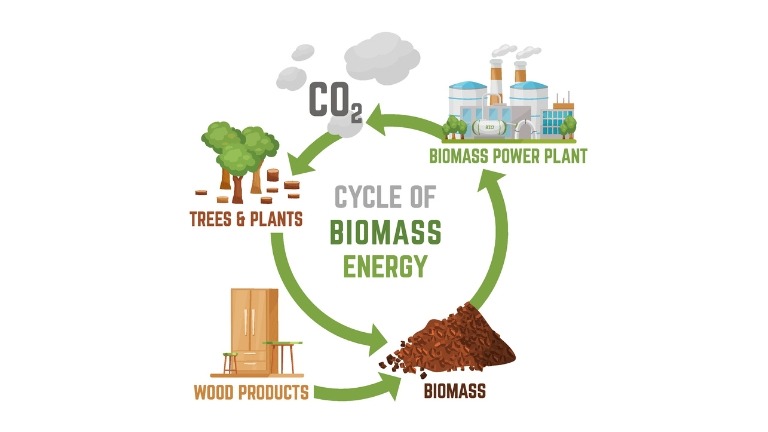
Biogenic carbon refers to carbon derived from recent biomass (plant, animal, or microbial matter), as opposed to fossil carbon originating from oil, gas, or coal.
Unlike fossil carbon, biogenic carbon is part of a short natural cycle: it is captured by living organisms and then re-emitted during their decomposition or combustion. In carbon accounting, it is generally considered neutral, unlike fossil carbon.
In biofuels, SRFs, biogas, or CO₂ emissions, distinguishing the share of biogenic carbon makes it possible to:
Major players in the energy, waste treatment, and chemical sectors call on CIRAM to characterize their biofuels, SRF, and CO2 emissions.
European regulations require producers and users of alternative fuels – such as biofuels or Solid Recovered Fuels (SRF) – to demonstrate the proportion of renewable carbon in their inputs and emissions. This measure is essential for:
At CIRAM, we produce reliable analytical results, accepted by certification bodies, regulatory authorities, and industrial partners.
Find out more about biofuels, RDF and emissions
To quantify the biogenic carbon share of biofuels, of SRF (Solid Recovered Fuel) or CO₂ emissions, CIRAM relies on theCarbon-14 analysis by accelerator mass spectrometry (AMS), international reference method.
This technique makes it possible to distinguish between fossil carbon (which contains no carbon-14) and biogenic carbon derived from recent biomass. It thus provides a reliable and accurate measurement of the renewable fraction, which is approximately 0.3%.
The analysis applies to both fuels and industrial emissions, making it possible, in particular, to determine the proportion of biogenic CO₂ in flue gases and to improve the accuracy of carbon budgets.
Our protocols are developed in accordance with current international standards:
In addition, a stable isotopic analysis can be performed to refine the interpretation, particularly in cases of complex mixtures or litigation.
Each sample is prepared and analyzed in our laboratory according to rigorously validated procedures, guaranteeing the traceability, reproducibility, and robustness of the results. You thus benefit from a standardized, clear, and directly usable report for your compliance, certification, or environmental valorization processes.
Unlike bio-based content analyses, which assess a material’s composition, this approach aims to characterize carbon flows within an energy and industrial context.
Request a studyThe analysis process at CIRAM is rigorous and transparent:
We work with you to identify the type of sample, the applicable standard, the regulatory context and your objectives (declaration, audit, benchmarking, etc.).
We provide you with precise instructions for collecting, packaging and shipping samples (liquids, solids, gases).
Each sample is handled according to strict procedures to guarantee accuracy of analysis, even for heterogeneous or complex materials.
Analysis is carried out according to the relevant standard, with the possibility of quality control or double analysis.
You receive a full report, with biobased data expressed in %.
By choosing CIRAM, you benefit from the support of an independent laboratory, specializing in carbon 14 analysis and recognized for the quality of its services on complex matrices. We regularly work with:
We deliver our results within 10 working days, accompanied by a technical interpretation and, if necessary, a discussion with your teams to integrate the data into your reports or internal tools.
Contact our teamsSolid RSCs, liquid biofuels (ethanol, HVO...), biogas, CO₂ from flue gases, or complex mixtures (textiles, plastics, biomass...).
Yes, our methods comply with ISO 21644, ISO 13833 and ASTM D6866 standards. Results can be used for regulatory audits, certifications or CSR reports.
We can guide you through the sampling protocol and put you in touch with equipped service providers if necessary.
Yes, carbon-14 analysis is particularly well-suited to this type of heterogeneous mixture, enabling the total renewable content to be identified.
Yes, our reports can be used as proof to access regulatory or financial schemes (quotas, green certificates, LCA, etc.).
Prepare your industrial samples in the best conditions to guarantee reliable and actionable results.
Measure the proportion of renewable raw materials in your formulations and certify their biobased origin.
Check the authenticity and natural composition of your products to meet the requirements of eco-labels and consumers.
Find out what biobased products are, what their advantages are, and how manufacturers are integrating them to transform their practices.
Milk adulteration is a threat to the quality and conformity of dairy products. What methods can be used to detect these frauds quickly, reliably and ...
Test the naturalness of your flavors and dietary supplements using radiocarbon and stable isotopes. Carbon 14 and stable isotopes allow...
Stable isotope measurements play a key role in the quality control and traceability of industrial materials. But how can you be sure of the reliability of your results? By entrusting your...
Increasing demands for traceability and sustainability make ISCC Plus certification a strategic asset for manufacturers involved in biobased products. Find out more...
EN ISO 21644 is an essential standard for ensuring the compliance and traceability of solid recovered fuels (SRF). But how can you be sure that your materials comply ...