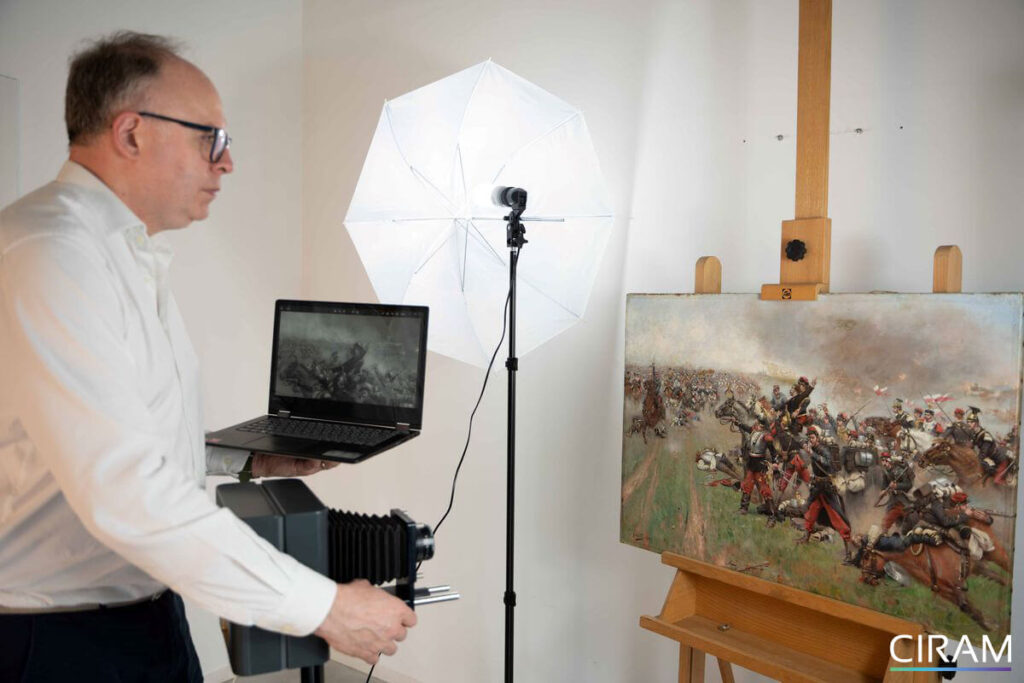
How do you scientifically analyze a painting?
The scientific analysis of a painting combines several complementary methods for studying its support, materials, manufacturing technique, state of conservation, and a...

There is no method for dating glass or enamel, strictly speaking. CIRAM laboratories combine several scientific analyses to reliably determine the age of your glass objects and enamels.
Contact our teams
The analysis of glass objects and enamelsis based on three main axes: chemical composition, state of alteration, and origin of this alteration. These data notably make it possible to contribute to the authentication of a workwithin the framework of an acquisition or a museum expertise.
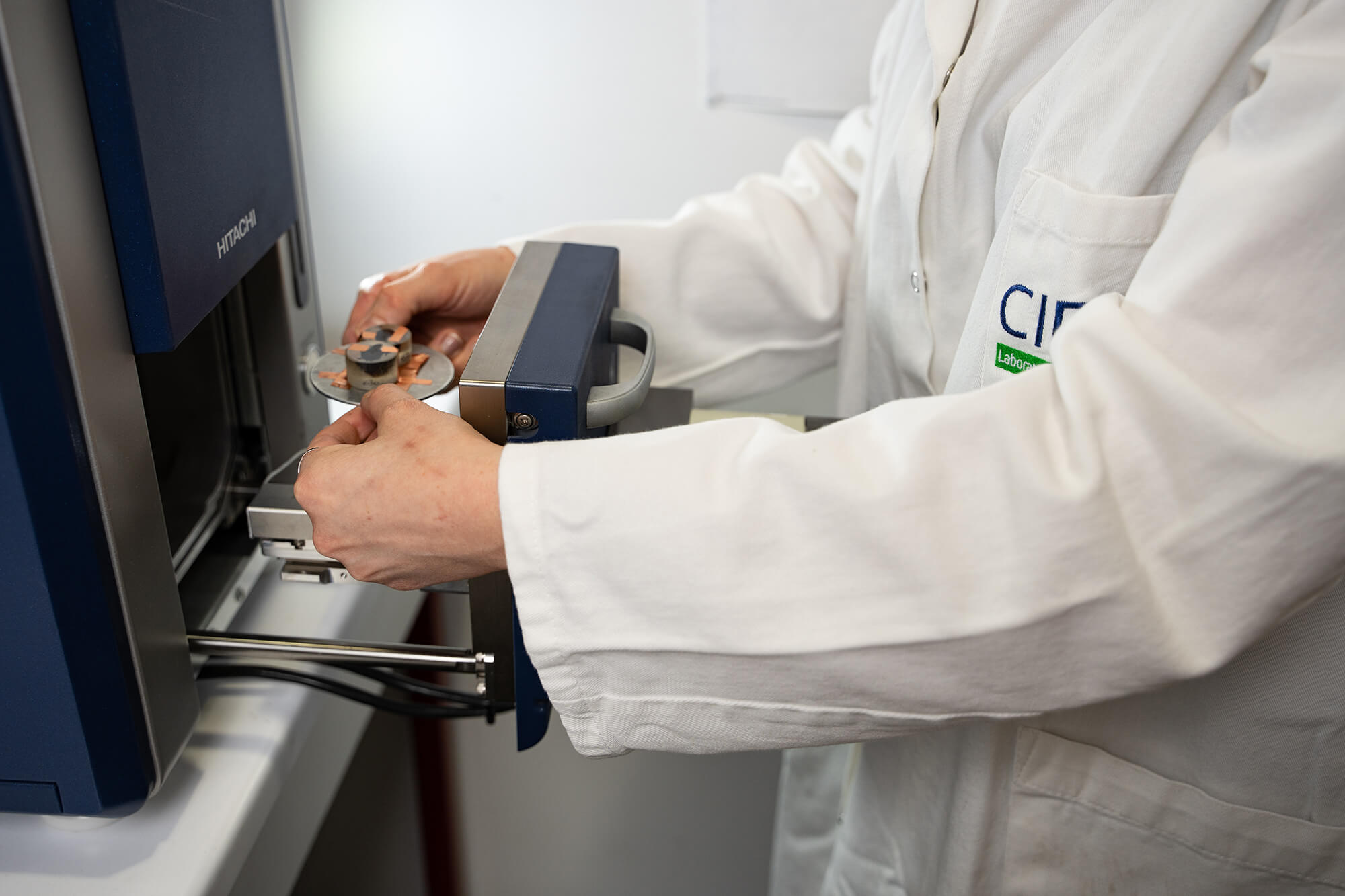
At CIRAM, the study of each piece relies on a combination of complementary laboratory techniques: optical microscopy, scanning electron microscopy (SEM), imaging, etc. Each method reveals precise and cross-referenced information, interpreted by our specialized scientists.
The aim is to build up a coherent, documented body of evidence that will enable us to distinguish between an authentic, antique object and a modern production, or even a counterfeit.
Request a quote
The chemical composition of glass reveals valuable information about its origin, period, and manufacturing technique. Vitrifying agents, fluxes, stabilizers, or pigments: each component plays a role. A high concentration of lead or potassium, for example, helps to place an object in the Middle Ages or the Renaissance. Pigments such as cadmium or chromium indicate modern production, dating from the 19th or 20th centuries.
Our scientists identify the constituent and chromogenic elements of glass to establish reliable dating. Our analyses, recognized for their precision, are used by many museums, auction houses, antique dealers, and collectors in France and internationally.
Contact our teams
The analysis of alteration is a key step in the study of ancient glass and enamel objects. Humidity, temperature variations, or even micro-organisms cause progressive degradation of the material over the centuries. This alteration provides clues aboutthe age of the object.
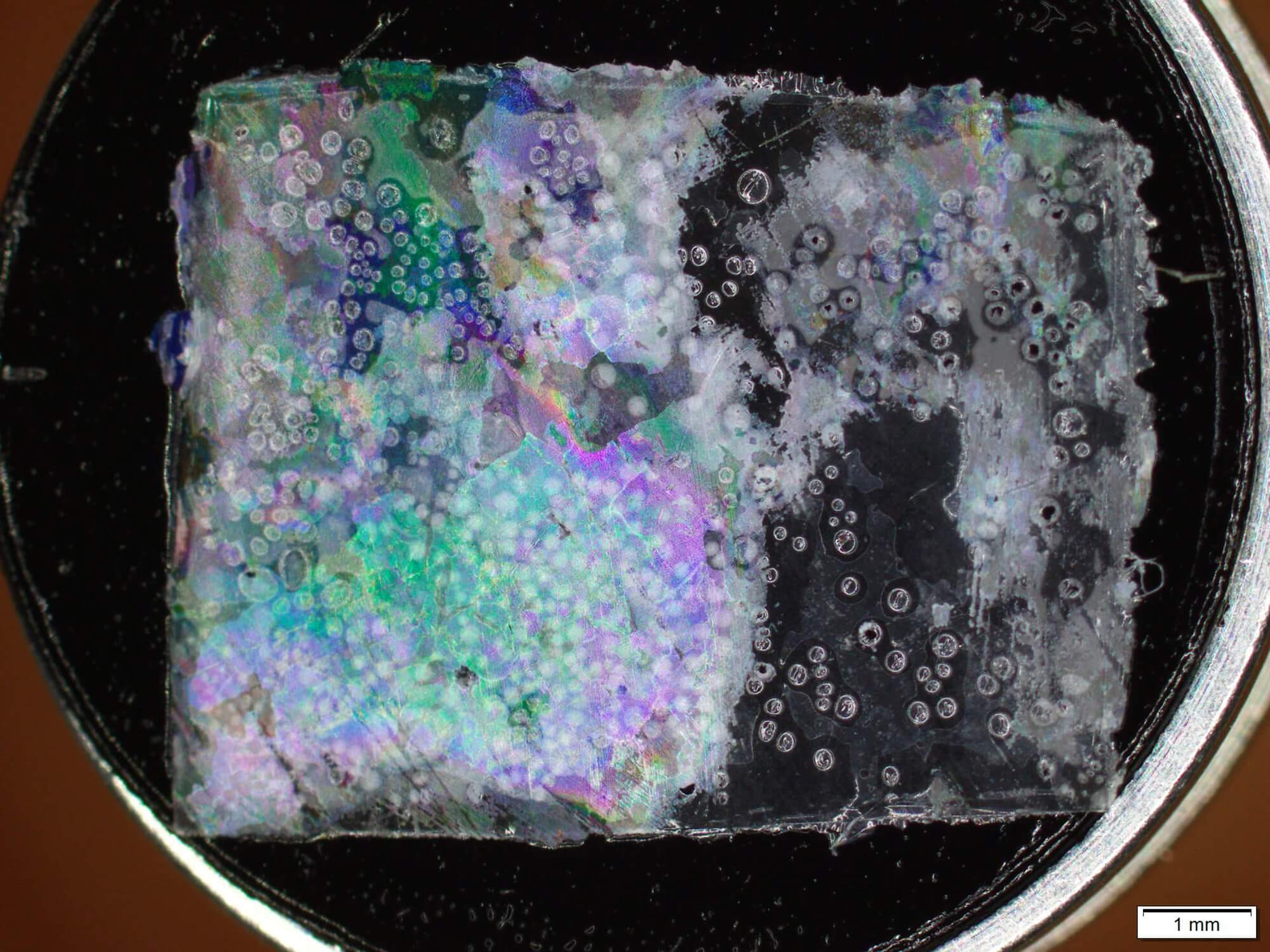
Characteristic signs of natural ageing include deep weathering, alkali leaching, multi-layered structures (onion-skin type), micro-bubbly facies, silica gel and surface sediments.
Conversely, the presence of fluorine in altered areas indicates artificial and modern alteration, often carried out to imitate the aging of old glass.
Request a studyWhen the conservation status of the object allows, a microscopic sample is taken, so as not to alter the integrity of the piece. This sample is then embedded in epoxy resin to facilitate handling and cutting. A cross-section, made perpendicular to the surface, is then prepared for detailed analysis.
Thanks to microanalysis, this cross-section allows for the evaluation of the penetration depth of weathering into the material. It also reveals the formation of successive layered structures, called multi-lamellae, responsible for the iridescence visible on the surface of ancient glasses.
When the object is too fragile or precious to allow direct sampling, we favor the use of surface replicas. This non-invasive method consists of applying a cellulose acetate film to targeted areas of the object. After drying, this film is gently removed, taking with it the most superficial layers of the material as well as any deposits or alterations.
These replicas can then be examined by light microscopy and scanning electron microscopy coupled with elemental analysis (SEM-EDX). The objective is to identify the nature of the alteration: natural, related to aging, or artificial. For example, the presence of fluorine can reveal modern chemical intervention.
In cases where no sampling, even microscopic, is possible – for example, on objects of great heritage value or in perfect condition – we use a totally non-invasive method: analysis by external beam PIXE probe.
This innovative technique allows for the direct study of the chemical composition of glass without destructive contact and in an ambient atmosphere. It offers precise quantification of the major, minor, and trace elements present in the material.
These data make it possible to identify the raw materials used, evaluate the manufacturing conditions and better understand the technical processes employed at the time the object was created.
Choosing CIRAM means benefiting from over 20 years of experience in the scientific analysis of art objects and heritage. Our multidisciplinary team, composed of physical chemists and archaeologists, offers analysis solutions adapted to the nature, state of conservation, and value of your objects.
Thanks to our state-of-the-art equipment and rigorous methodology, we provide reliable, documented, and actionable answers for museums, curators, restorers, auction houses, and collectors. Based in France, we operate worldwide to assist with the authentication, conservation, and historical study of ancient glass, medieval stained glass, and art enamels.
Trust our experts to support you in your analysis projects.
Contact our teamsNo, there is no absolute dating method for glass. However, CIRAM combines several physico-chemical analyses to reliably estimate the age of an object.
It provides information on the raw materials used, the manufacturing techniques, and helps identify any signs of modernity.
Yes, in some cases, surface replicas or in situ analyses can be carried out, particularly in listed buildings.
Depending on the complexity of the object and the method chosen, lead times vary from 2 to 6 weeks. A personalized estimate is drawn up beforehand.
Simply contact us via the online form. Our teams will guide you towards the most suitable analysis method for your object.
The scientific analysis of a painting combines several complementary methods for studying its support, materials, manufacturing technique, state of conservation, and a...
Distinguishing a work of art in bronze from one in brass is not possible at a glance, however expert. Deceptive patinas, invisible restorations, sophisticated forgeries...
A simple signature can make the difference between an anonymous work and a masterpiece valued in the millions on the art market. But what happens when that signature is...
Knowing how to recognize an authentic antique bronze is a strategic issue for art professionals, to guard against fakes. Patina, composition, corrosion: every clue can help you...
How to analyze a work of art without damaging it? Thanks to non-destructive analysis techniques, it is now possible to access valuable information about pigments, re...
Should optical imaging or radiography be used to analyze a work of art, an archaeological object or an industrial material? Behind this question lie the crucial issues of...