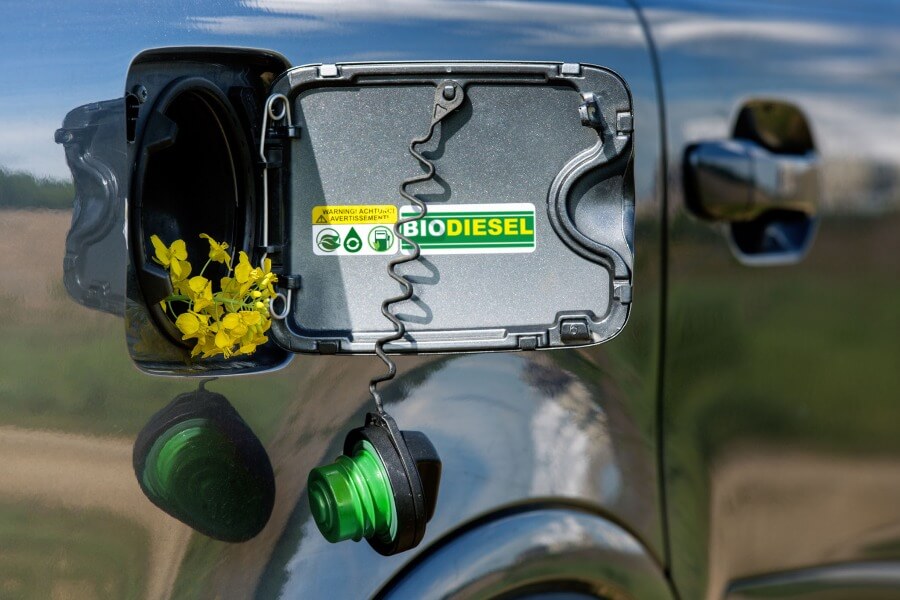

Vehicle fuel cap featuring a rapeseed plant to illustrate bio-based fuels and ASTM D6866 analysis

Biobased industry: what is ASTM D6866-24?

The standard ASTM D6866 has revolutionized the bio-based industry by establishing standards designed to ensure the sustainability and authenticity of materials.

From radiocarbon dating to product certification, in this article we explore these methods that enhance companies’ competitiveness while meeting environmental requirements. 

Understanding ASTM D6866-24 and its role for the biobased industry

ASTM D6866-24 (which replaces ASTM D6866-22 as of February 2024) is an essential tool for manufacturers involved in the production of biobased materials or products.

It provides a rigorous methodological framework that makes it possible to accurately measure the proportion of materials derived from renewable resources, while distinguishing bio-based components from fossil-based materials.

At a time when sustainability is at the heart of industrial concerns, this standard is clearly a strategic reference for certifying products and meeting the expectations of consumers and regulators.

Definition and specifics of ASTM D6866-24

L'ASTM D6866-24developed byASTM Internationalis an international standard that defines protocols for quantifying biobased carbon in a variety of solid, liquid and gaseous samples. This process is based on radiocarbon analysis (or carbon-14 analysis), which analyzes the presence of two types of carbon:

  • The modern carbonderived from recent biomass (e.g. cereals, oils, algae, organic waste).
  • The old carbonfrom fossil fuels such as oil.

This method is based on the analysis of isotopic ratios between 14C, 13C and 12C, isotopes that enable us to precisely quantify the proportion of renewable carbon in a material.

The standard ASTM D6866 is particularly efficient thanks to its use of advanced scientific techniques such as particle gas pedal mass spectrometry (AMS). Prior to analysis, samples must be transformed into pure graphitean essential prerequisite for reliable measurements. This critical step is carried out with precision in specialized laboratories such as CIRAMwhich are equipped to meet the industry's most stringent requirements.

As a reminder: the standard provides for a margin of error of ±3%.This allows reliable results to be obtained, even for complex materials. For example, a measurement of 97 pMC (percentage of modern carbon) is considered to correspond to 100% biobased carbon in ASTM D6866.

ASTM D6866-24 industrial applications

ASTM D6866-24 plays a central role in most industrial sectors by ensuring the authenticity of bio-based materials at every stage of their lifecycle, from research and development (R&D) to final production. Here are some concrete examples of its application:

1. Biofuels :

In thebiofuel industry, this standard is used to verify that fuels contain a significant proportion of renewable carbon. This verification is essential to meet the criteria of environmental policies such as European regulations on renewable energy. In addition to assessing the presence of biogenic carbon in fuels, the analysis also validates the origin of bio-based blends in fuels by quantifying their biogenic proportion.

2. Biopolymers and Packaging :

Manufacturers of bioplastics and biopolymers use ASTM D6866-24 to certify the proportion of modern carbon in their products. The standard reinforces the credibility of their environmental claims and allows them to differentiate themselves in markets where demand for sustainable materials is growing rapidly.

3. Biogas and industrial chimney smoke:

In the field of biogas, the ASTM D6866-24 standard makes it possible to distinguish between contributions from biomass and those from fossil sources within the gases produced. This approach is essential for documenting theorigin of carbon in biogas and meet regulatory requirements related to renewable energies. It also applies to industrial chimney smoke, in order to qualify the nature of the CO₂ emitted and provide objective information for energy transition initiatives.

4. Composite materials containing inorganic carbonates:

For certain materials containing inorganic carbonates, a chemical etching step is sometimes necessary to remove these compounds. This process must be carried out meticulously to avoid artificially reducing the value of the modern carbon and skew the results. Unlike other standards such as EN 16640, which measures the percentage of bio-based carbon relative to total carbon, the ASTM D6866 standard evaluates this proportion relative to total organic carbon, providing greater accuracy for complex materials.

5. R&D and Industrial Innovation :

Companies developing new products use this standard to assess the feasibility of their bio-based innovations. For example, prototypes of packaging or resins can be tested to verify their renewable material content before they are brought to market.

By integrating ASTM D6866-24 into their processes, manufacturers do more than simply comply with current regulations. They are reinforcing their sustainability strategyimprove their competitiveness and gain greater transparency for consumers and business partners.

Analysis and certification processes for biobased products

ASTM D6866-24 analyses are not limited to regulatory compliance. They are also a strategic lever for manufacturers seeking to enhance the value of their products in demanding markets.

Analysis methods and measurement of renewable content

L'radiocarbon analysis is at the heart of the ASTM D6866 standard. It relies on the measurement of 14C, 13C and 12C isotopes to accurately determine the proportion of modern carbon in a material. This method quantifies biogenic carbon content, i.e. the fraction of carbon derived from renewable resources such as biomass (algae, cereals, oils, etc.), as opposed to fossil carbon derived from petroleum.

Key analysis steps :

  1. Sample preparation Sample preparation: materials must be converted to pure carbon (graphite) to guarantee reliable measurements.
  2. Isotope measurement Mass spectrometry is used to detect the exact proportion of modern carbon.
  3. Interpretation of results Data are compared with reference values established by ASTM D6866, such as the 100 pMC standard corresponding to 100% biobased carbon content.

ASTM D6866-24 certification and compliance

ASTM D6866-24 certification is a structured process that enables manufacturers to officially validate their biobased products. This approach offers a double guarantee:

  • Sustainability validation Certification strengthens the credibility of environmental claims, validates product sustainability and facilitates access to markets requiring ASTM compliance.
  • Increased competitiveness Certification enables certified products to stand out in markets where sustainability has become a key purchasing criterion.

What is the certification process?

  1. Sample submission Companies send their products (essential oil, milk, honeyetc.) to specialized laboratories such as CIRAM, which carry out analyses to ASTM standards.
  2. Laboratory analysis Laboratory analysis: laboratories perform rigorous tests to determine biogenic carbon content.
  3. Validation and certification Certification: once compliance has been confirmed, companies can affix labels or endorsements attesting to the proportion of biobased materials used.

The role of laboratories in supporting industry and related sectors

The laboratories analyzing bio-based products play a central role in validating materials and helping manufacturers achieve optimum compliance with ASTM D6866-24.

Laboratory expertise in ASTM D6866 testing

One of the main roles of laboratories like CIRAM is to carry out carbon-14 tests to accurately measure the biobased content of materials. These analyses are crucial to meeting the requirements of ASTM D6866-24. These tests are carried out using state-of-the-art equipment, guaranteeing exceptional precision in isotopic analysis.

But the role of laboratories is not limited to analysis: they are involved at every stage of the process:

  • Research and development (R&D) The laboratory evaluates biobased carbon content right from the prototyping phase.
  • Production Production: may be required to check the conformity of batches manufactured before they are marketed.
  • Post-marketing verifies the authenticity of products in the event of disputes or the need forfood quality audits for example.

Managing complex cases

Laboratories are also called upon to carry out special assessments, particularly for materials containing inorganic carbonates. The presence of these carbonates can bias results by introducing geological carbon, which is not considered as biobased. In such cases, laboratories like CIRAM carry out controlled chemical attacks to eliminate this interference, while preserving the reliability of the measurements.

The role of laboratories in traceability and industrial innovation

Specialized laboratories also play a key role in the traceability of biobased materials. This aspect represents a crucial challenge for manufacturers in controlling their manufacturing processes. 

Raw materials traceability

Thanks to radiocarbon analysis, we can guarantee the origin of the materials used in the manufacture of our products. For example, we can :

  • Identify whether raw materials truly come from certified renewable sources.
  • Verify that suppliers respect sustainability commitments.
    This traceability is particularly important to meet the requirements of certifications such as the BioPreferred® label or European regulations on biobased products.

Contributing to industrial innovation

Manufacturers can integrate radiocarbon analysis into their innovation processes by working with specialized laboratories. This makes it possible to:

  • Develop new materials with an increased proportion of biobased components.
  • Identify areas for improvement in the production chain to reduce the use of fossil materials.
  • Meet current and future consumer expectations in terms of sustainability, while complying with ever-changing regulations.

In the context of biogas production projects, these analyses also serve as a technical tool for documenting the biogenic share of inputs and outputs, an element often required in support mechanisms, public aid, or energy transition support mechanisms.

Customized support

The laboratories do not limit themselves to carrying out tests. They also play a strategic advisory role, guiding manufacturers on technological choices, manufacturing process modifications, and product optimization to meet ASTM D6866 criteria.

The ASTM D6866-24 standard is therefore an essential tool for professionals in the bio-based industry. This standard enables them to guarantee the sustainability and authenticity of their products. Manufacturers need this recognized certification not only to comply with current regulations but also to strengthen their market position in the midst of an ecological transition.

With its leading expertise in radiocarbon analysis and personalized support, CIRAM laboratories are the partner of choice to meet your needs. Request a study today to guarantee compliance and add value to your biobased products.

As specialists in carbon-14 (or radiocarbon) analysis, CIRAM laboratories comply with all applicable standards to ensure that their results meet regulatory requirements.

CIRAM Laboratories analyzes all cosmetic products to determine their content of bio-based ingredients, whether in active ingredients, excipients, or finished products.

Using radiocarbon (or carbon-14) analysis, we measure the ratio of natural components to synthetic components. With CIRAM’s measurements and provided that the pMC is 100, you can label your products as 100% natural.

Discover the different methods used to analyze cosmetics with CIRAM laboratories.

Radiocarbon analysis for in-depth analysis of cosmetics

Radiocarbon dating is based on measuring the activity ofthe carbon-14 isotope. This isotope decays naturally over time and has completely disappeared from fossil resources after approximately 60,000 years. Petroleum-derived materials therefore no longer contain carbon-14 and consist exclusively of fossil carbon, unlike recent biomass ( plants, essential oils, natural extracts), which contains modern carbon.

Radiocarbon, to distinguish between old and modern carbon

The radiocarbon technique allows the proportion of fossil carbon and bio-based carbon in a sample to be measured accurately. This analysis method offers numerous advantages:

  • It is applicable to all types of materials, whether solid, liquid, or gaseous;
  • It offers high accuracy (≈ 0.4%) with a detection limit of approximately 0.3%;
  • It is fast, with results available within 7 business days, and offers excellent value for money.

Carbon-14 testing for natural products

In cosmetics, high natural ingredient content has become a key criterion in terms of marketing, regulations, and the environment. Carbon-14 testing is used at various stages: in the developmentof natural products, the qualification of suppliers, and the inspection of cosmetic products before they are marketed.

This analysis technique is used from the R&D stages through to the finished product, and can also be applied tothe analysis of bio-based packaging.

Measuring the percentage ofbio-based carbon in cosmeticsmakes it possible to verify regulatory compliance, authenticate ingredients from organic farming, and check the actual origin of an essential oil or plant extract.

Please note: the water content of a cosmetic product is not taken into account in radiocarbon dating and does not affect the results. The analysis focuses exclusively on the total amount of carbon and its isotopic ratios; hydrogen and oxygen atoms are not quantified.

Additional analyses to understand product origins

In addition tocarbon-14 analysis, the study of stable isotope ratios of carbon,nitrogen,oxygen, andhydrogen (δ¹³C, δ¹⁵N, δ¹⁸O, and δ²H), carried out by EA-IRMS (elemental analysis coupled with isotope ratio mass spectrometry), makes it possible to:

  • Determine a geographic origin,
  • Detect adulteration or undeclared blending,
  • Identify the botanical origin of certain natural compounds, particularly in the case of high value-added essential oils.

CIRAM laboratories comply with all applicable standards

CIRAM laboratories comply with major international standards, including ASTM D6866 and EN 16640, to ensure reliable scientific expertise.

The EN 16128 standard, dedicated to natural and organic cosmetic products, explicitly recommendscarbon-14 analysis for determining the bio-based fraction.

Reliable methods for cosmetics analysis with CIRAM

In summary, the use of radiocarbon for the characterization of cosmetic products is a reliable, accurate method that can be applied to all cosmetic matrices (liquid, solid, or gel), without the need to know the detailed chemical composition of the sample.

This scientific analysis method is relevant at all stages of the industrial process, from the research project to the final product, including sourcing raw materials, validating processes, formulating, and obtaining labels that highlight the naturalness of cosmetic products.

Would you like to analyze an essential oil, a cosmetic ingredient, or a finished product?
The CIRAM teams are at your disposal to assess your needs and offer you a tailored, reliable analysis solution that complies with your regulatory and industrial requirements.

Carbon-14 analysis to detect adulteration or authenticate a product
 

Used in industry in general—and in the agri-food sector in particular—radiocarbon or carbon-14 analysis can be performed at every stage of the industrial process to characterize your flavorings and dietary supplements. Carbon-14 can also be used to inspect products from a partner or supplier. Learn about the methods used by CIRAM laboratories.

Carbon-14 and stable isotopes can be used to detect adulteration, authenticate a bio-based product, or determine a product’s provenance or botanical origin.

Using radiocarbon (or carbon-14) analysis, CIRAM laboratories measure the ratio of natural components to synthetic components. Radiocarbon analysis is based on the activity of carbon-14. Since carbon-14 decays over time and is completely gone after approximately 60,000 years, we can conclude that petroleum and other fossil materials no longer contain carbon-14; they contain only “old” carbon, unlike biomass, which has a full reservoir of carbon-14 and therefore contains only “modern” carbon.


A method used to measure the amount of "old" carbon and "modern" carbon
 

The radiocarbon technique measures the amount of "old" and "modern" carbon. The method is efficient and offers many advantages:

· It works on all materials, whether solid, liquid, or gaseous;

· It offers high accuracy, on the order of 0.4%, and a detection limit of 0.3%;

· It is very fast—results are available in an average of 7 business days—and inexpensive.


In the food industry in general—and in the flavors and dietary supplements sector in particular—there is a growing demand for products with high natural content. This is both a marketing and an environmental consideration. A carbon-14 test can therefore be used to develop a natural product, evaluate a supplier, or inspect a product before it is brought to market. This technique is useful and is employed from the R&D phase through to the finished product, as well as for analyzing packaging.


Measuring the percentage of natural ingredients will be very useful for verifying that raw materials comply with regulations or standards, authenticating organic agricultural products, and verifying raw materials.


Important: A product’s water content will not be taken into account and will not interfere with the radiocarbon measurement. This is because we measure only the total amount of carbon and its isotopic ratios.


Additional analyses for a detailed study of the products
 

Furthermore, by analyzing the stable isotope ratios of carbon, nitrogen, oxygen, and hydrogen (δ13C, δ15N, δ18O, and δ2D), or through EA-IRMS analysis—elemental analysis coupled with isotope ratio mass spectrometry—we can determine the geographic origin, detect adulteration, or identify the botanical origin of a compound.


CIRAM laboratories comply with international standards, such as ASTM D6866 and EN 16640, which recommend analyzing the bio-based content using the carbon-14 method.


Radiocarbon: An Essential Element in the Study of Products
 

In summary, the use of radiocarbon for characterizing flavors and dietary supplements is a reliable, accurate method that works on all types of matrices (liquid, solid, and gel) without requiring knowledge of their chemical composition. It is also appropriate to use radiocarbon at every stage of the industrial process, from the research project through sourcing, validation of various treatments, and formulation, all the way to the final product—and even for obtaining certification.


CIRAM Laboratories offer a precise and comprehensive analysis of products. In addition to providing the results, we discuss with you the interpretations and relevance of the analyses performed. 

As specialists in carbon-14 analysis, CIRAM Laboratories use the ASTM D6866 standard to provide results that comply with regulations. Learn more today about how radiocarbon contributes to the analysis of biogas, as well as industrial stack gas.

The principle of radiocarbon analysis

Biogases consist mainly of carbon, hydrogen, and oxygen. These elements can be quantified through methods such as elemental analysis. However, it is impossible to distinguish whether a hydrogen or oxygen atom is of biogenic or fossil origin. This is possible, however, for carbon. Carbon-14 is unstable, so it decays over time. Its concentration is halved every 5,730 years; this is called a “half-life.” After 10 half-lives, carbon-14 has completely disappeared. Natural gas originates from the decomposition of organic materials over millions of years, far beyond the 10 half-lives of carbon-14, or approximately 60,000 years. Natural gas therefore no longer contains carbon-14. Conversely, current biomass has a full supply of carbon-14; this is referred to as “modern carbon.” Based on radiocarbon analysis, we quantify the proportion of bio-based or biogenic (modern) carbon and the proportion of fossil (ancient) carbon present in biogas.

Carbon-14 fume analysis

Depending on the fuel burned, chimney flue gases will contain varying amounts of biogenic CO2. CIRAM laboratories analyze the CO2 in chimney flue gases using radiocarbon dating in accordance with ASTM D6866.

By measuring carbon-14 concentration, CIRAM determines the percentage of biogenic carbon in relation to carbon of fossil origin. Two types of carbon are distinguished with :

  • Materials containing biogenic carbon (rich in carbon 14). This includes wood, paper and biomass of animal or plant origin.
  • Materials containing fossil carbon (low in carbon 14), i.e. coal, oil or natural gas.

Measurements can be taken directly on a smoke sample collected at the chimney outlet. CIRAM laboratories use special bags to collect CO2 on site. Fine particles can also be sampled from filters installed on industrial chimneys.

A system dedicated to biogas and flue gas analysis thanks to CIRAM laboratories

CIRAM has developed a dedicated system for biogas and flue gas analysis. This system is directly connected to the automatic graphitizer. The gas is not injected into the elemental analyzer, as it is for solids and liquids, but passes through a "sulfur trap". It is vital to trap the sulfur before graphitization, as sulfur is a graphitization inhibitor. The gas, once purified, will be transformed into graphite (pure carbon) by the graphitizer.

Note that this system does not provide elemental concentration or stable isotopic information, as the gas is injected directly into the graphitizer without passing through the EA-IRMS.

CIRAM laboratories, specialists in carbon-14 dating

CIRAM laboratories take radiocarbon measurements of your biofuel samples in general, and biogas samples in particular, as well as industrial flue gases to determine the percentage of biogenic material they contain.

Carbon-14 analysis is possible not only on gas, but also on liquids and solids. CIRAM complies with the ASTM D6866 standard for the study of your biogas, in order to provide you with reliable and precise expertise.

ASTM D6866 is the reference standard for the analysis of biofuels and biogas using the carbon-14 technique. Our engineers interpret the results in the laboratory, and provide full results within 10 working days.

Stable isotopes play an essential role in the traceability and quality of industrial products, particularly in the following sectors food industry.

In this article, we explore the world of stable isotopes, from their crucial role in fraud detection to verifying the geographical origin of products. Find out how the analysis techniques used by specialized laboratories can help meet the industry's compliance and safety challenges.

Stable isotopes: definition and challenges for industry

Stable isotopes have become indispensable in industrial sectors, offering solutions to ensure product traceability and integrity.

Stable isotope: definition and function

A stable isotope is a non-radioactive form of an atom that retains its structure over time. Unlike radioactive isotopes, it does not decay. Stable isotopes, notably of carbon, nitrogen, oxygen and hydrogen, can be used to trace geographical origins or define botanical origins.

Stable isotopes such as carbon-12 and carbon-13 are particularly useful for analyzing the composition of food and industrial products. Their analysis using techniques such asisotoperatio mass spectrometry enables us to determine the isotopic signature specific to each environment, making it easier to identify the origins and processes undergone by raw materials. More specifically, thestable isotope of carbon can be used to understand biogeochemical cycles and identify botanical origins.

Industrial applications of stable isotopes

Stable isotopes offer industry professionals a reliable means of guaranteeing product traceability in the supply chain. For example, in the agri-food sector, these isotopes are used to determine whether a product really comes from the region claimed (geographical origin), or to identify fraud, such as an alteration in the composition of a dairy product. alteration in the composition of a dairy product.

Thestable carbon isotope varies according to the type of plant photosynthesis: C3 plants (rice, cotton, wheat) have a δ13C below -20 ‰, while C4 plants (grass, corn, sugarcane) have δ13C between -10 and -20‰. In practical terms, this makes it possible to detect adulterations, such as the addition of high-fructose corn syrup in honey.

Stable isotopes in the fight against fraud and traceability

Stable isotopes are an invaluable weapon in the fight against product adulteration and falsification, and in verifying the origin of products.

Detecting adulteration with stable isotopes

L'product adulterationadulteration, whether of origin or quality, is a critical issue for manufacturers. They can detect whether a product has been mixed or adulterated using stable isotope analysis. It is thus possible to analyze the isotopic composition of a sample to check whether it conforms to its declared origin, using stable carbon isotopes.

For example, δ13C analysis can detect the addition of sugar to fruit juice. An abnormally low δ18O can indicate the addition of water to wine, for example. In addition, δ2D analysis can be used to distinguish orange juice adulterated with beet sugar.

Stable isotopes for traceability of origin

Stable isotopes offer industry professionals a reliable solution for tracing the precise geographical origin of products. Environmental conditions, such as altitude, temperature or soil type, influence isotopic signatures. For example, δ18O can be used to differentiate between coffee from Africa and South America. These analyses are also applied to natural vanilla.

These isotope analyses can also be used to detect fraudulent practices, such as substituting products from one region for those from another. Product traceability thus becomes a lever for quality and transparency for manufacturers, enabling them to comply with international standards and guarantee customer satisfaction.

The importance of analytical laboratories for industry

CIRAM plays a central role in the application of these techniques, by carrying out laboratory quality control operations to verify the authenticity, conformity and origin of raw materials.

The role of laboratories in isotope analysis

Specialized laboratories, such as CIRAM, use state-of-the-art technology to carry out accurate and reliable isotope analyses. Sophisticated equipment, such as isotope ratio mass spectrometry (IRMS), can isolate and measure stable isotopes in a wide range of samples, from indsutrients to foodstuffs.

Benefits for manufacturers: safety, compliance and optimization

For manufacturers, working with a laboratory specializing in stable isotopes offers many advantages. These analyses guarantee product compliance with international regulations and avoid the risks associated with fraud. They also optimize the traceability of supply chains, giving companies total control over the origin and quality of their raw materials.

By working with a laboratory like CIRAM, industrial companies can ensure their market presence by offering products whose authenticity and quality have been scientifically verified. 

Stable isotopes are therefore essential for guaranteeing the traceability, quality and authenticity of industrial products. From fraud detection to verification of geographical origin, these analyses offer reliable solutions for industry professionals.

Specialized laboratories like CIRAM play a crucial role in the application of these techniques, thanks to their advanced equipment and expertise. If you need to secure your products and optimize your processes, request a study with CIRAM today.

In modern industry, sustainability and regulatory compliance are major challenges for manufacturers, particularly in the plastics and polymers sector. The ISO 16620-2 standard, which is based on the carbon-14 method, enables the precise measurement of the proportion of bio-based carbon in these materials. 

In this article, we explore how the ISO 16620-2 standard based on the Carbon 14 method can be used to qualify and quantify the biosourced and petrosourced parts of polymers in general, and plastics in particular. You'll also discover the importance of analysis laboratories like CIRAM, which support manufacturers in applying this standard to ensure the quality control and conformity of their materials.

Understanding ISO 16620-2 and its importance for industry

ISO 16620-2 is an essential standard for manufacturers wishing to measure the biobased carbon content of plastics to guarantee their conformity and sustainability. This standard enables the proportion of renewable carbon to be precisely identified usingradiocarbon analysis.

What is ISO 16620-2?

ISO 16620-2 establishes a protocol for measuring the biobased carbon content of plastics and biopolymers using Carbon-14 analysis. It distinguishes between modern carbon (with 14C, present in biomass) and fossil carbon (without 14C, as in petroleum). This process enables us to quantify the biosourced component with precision. 

In addition to voluntary declarations by mass balance and/or life cycle analysis and/or the ISCC method, it is becoming essential to use objective, reliable and rapid measurements to qualify and quantify the biobased content of biopolymers. The percentage of modern carbon (pMC) in relation to total carbon is calculated according to this standard, guaranteeing a reliable measurement respected by certification bodies such as TÜV AUSTRIA and DIN CERTCO. The standard also specifies reference values: 100 pMC since 2019 for 100% biosourced carbon.

Why is this standard crucial for manufacturers?

ISO 16620-2 compliant analyses enable industry professionals to certify the renewable carbon content of their products. This is a crucial step in the certification of bio-based materials, as it validates product compliance with current regulations and environmental certifications. 

Since 2020, for example, European legislation has required plastic bags to contain at least 50% biobased carbon, with this threshold rising to 60% by 2025. Carrying out this type of analysis is a key differentiating factor for companies wishing to meet new standards and requirements in the plastics industry.

Application of ISO 16620-2 for the analysis and certification of bioplastics

Application of the ISO 16620-2 standard enables manufacturers to reliably quantify the biosourced content of plastics. This step is essential for obtaining certification and ensuring the conformity of the materials used. 

Radiocarbon analysis of plastics: the Carbon-14 method

The Carbon 14 method is used to distinguish fossil carbon from bio-based carbon in polymers. This analysis is based on the measurement of isotopic ratios of 14C, 13C and 12C, and enables the percentage of modern carbon to be calculated. 

To comply with ISO 16620-2, radiocarbon measurement must be expressed as a percentage of modern carbon, or pMC. The biobased carbon content can then be expressed as a percentage of total carbon, TC, or as a percentage of total organic carbon, TOC.

ISO 16620-2 also sets a reference value, REF, for 100% biobased carbon content.

According to ISO 16620-2, this REF is or was :

  • to 100 pMC from 2019, for 100% biobased carbon content.
  • to 102 pMC in 2015, for a 100% biobased carbon content.
  • 200 in 1964-1965, for a 100% biobased carbon content.

Consequently, the biobased carbon content of a material is the value of the measured pMC / REF.

ISO 16620-2 also allows for a variation of up to ±2% in biobased carbon content, depending on the AMS (gas pedal coupled to a mass spectrometer) used. Consequently, a measurement of 98 pMC can be considered to correspond to 100% biobased carbon in relation to total carbon.

Certification and quantification of biomass in plastics

The ISO 16620-2 standard is essential for certifications such as OK Biobased® or DIN CERTCO®, which require radiocarbon analysis to verify the proportion of biopolymers in a product. The EN 16620-2 standard clearly specifies the information that must be included in analysis reports. In addition to the pMC measurement, we must include:

  • χTC the total carbon content of the sample,
  • χB biobased carbon content as a fraction of sample mass

From the REF reference value, we can calculate χTCB, which is the biobased carbon content in relation to the total carbon content. It is this value that is decisive.

Using this standard, manufacturers can not only quantify their biomass content, but also ensure the certification of biobased materials at every stage of the industrial process, from R&D to marketing.

The role of laboratories in implementing ISO 16620-2

Specialized laboratories like CIRAM play an essential role in implementing ISO 16620-2, guaranteeing accurate and reliable analyses for industry professionals.

Importance of analytical laboratories in the plastics industry

Biobased product analysis laboratories such as CIRAM play an indispensable role in the implementation of ISO 16620-2. They provide precise services for verifying biobased carbon content at every stage of the industrial process, whether for raw materials, in-process products or finished products. The Carbon 14 method used in these laboratories enables materials to be certified in compliance with the strict requirements of certification bodies and international standards. AMS carbon 14 specialists since 2005, our laboratories not only comply with current international standards, but also deliver accurate, reliable results thanks to innovative solutions and personalized support.

For industry professionals, this means being able to rely on reliable results to validate material conformity, ensure rigorous quality control, and guarantee that their products comply with current standards, notably those required for certification of biobased materials. 

Quality control and ISO compliance in the bioplastics industry

Quality control is a priority in the bioplastics industry, where the integration of standards such as ISO 16620-2 is becoming essential to prove product sustainability. Thanks to ISO 16620-2-compliant analyses, manufacturers can control the quality of bioplastics and guarantee that their products meet biomass and biobased carbon content criteria. 

When combined with complementary standards such as the ASTM D6866 analysis, this approach ensures compliance with ISO 16620-2, which is essential for companies to remain competitive in an industry undergoing rapid transformation toward more sustainable materials. Specialized laboratories in the bio-based industry, such as CIRAM, thus enable companies to secure their production chains while meeting regulatory and environmental requirements.

ISO 16620-2 is a key tool for the bio-based plastics industry, guaranteeing the conformity and certification of materials. Thanks to rigorous methods such as Carbon 14 analysis, it enables manufacturers to accurately quantify the renewable carbon content in their products. Specialized laboratories like CIRAM play a crucial role in this process, offering reliable analyses and personalized support. To find out more, contact the CIRAM teams and request your sample study. 

In accordance with this standard, we use radiocarbon dating (also known as carbon-14) using analytical testing techniques to determine the age of carbon-containing objects.

Please note that bio-based content does not in any way define a product's environmental impact or sustainability. This impact can be measured using a life cycle analysis based on defined sustainability criteria.

Radiocarbon analysis of biobased products

Radiocarbon analysis of bio-based products must comply with the NF EN 16640 standard by using one of the three regulatory methods.

CIRAM laboratories explain AMS carbon-14 analysis in detail.

What is a biobased product?

The term biosourced means "derived from biomass". A biobased product can be entirely or partially derived from biomass. Thanks to our laboratory analyses, we can characterize the quantity of biomass contained in a product (paint, solvent polymers, etc.).

It will be interesting to measure the amount of bio-based carbon in an R&D phase, but also in a finished product (biogenic carbon in biofuels, biogas, smoke, but also in cosmetics and agri-food products) or to evaluate a supplier's raw materials. Carbon-14 measurement quantifies the biogenic and synthetic (petro-based) carbon content.

Carbon-14, an element present in all living organisms

Carbon-14 (¹⁴C) is a radioactive isotope of carbon produced by the interaction between nitrogen-14 atoms in the atmosphere and cosmic radiation. Naturally unstable, it gradually decays back into nitrogen-14. Its half-life, estimated at 5,568 years, means that its concentration decreases by half over this period and that it disappears almost completely after about 60,000 years.

Due to its continuous regeneration by solar activity, the concentration of carbon-14 is considered to be virtually constant in the atmosphere. It is therefore present in all living organisms, where it is assimilated through photosynthesis and respiration. Current biomass (cereals, algae, wood, residues, and organic waste) therefore has a fully active reservoir of "modern" carbon-14.

Conversely, fossil fuels such as oil, gas, and coal, which are formed from the transformation of organic matter over millions of years, no longer contain carbon-14. They are composed exclusively of ancient or petroleum-based carbon, which clearly distinguishes them from bio-based sources.

By measuring the isotopic ratio between ¹⁴C, ¹³C, and ¹²C, scientists at the CIRAM precisely determine the content of modern (bio-based) and fossil (petro-based) carbon in a sample. This approach forms the basis ofradiocarbon analysis, which is used for the characterization of bio-based products, the control of raw materials, and the verification of environmental claims.

AMS radiocarbon analysis

The NF EN 16640 standard specifies three methods for measuring the carbon-14 content of bio-based products. CIRAM laboratories exclusively use accelerator mass spectrometry (AMS), a reference technique recognized for its high precision and sensitivity inradiocarbon analysis.

Before measurement by AMS, the sample is prepared by transforming it into pure carbon in the form of graphite, then compacted into a sample-holding cathode. This preparation step is essential to ensure the reliability of the results and the reproducibility of the measurements.

The carbon-14 content is then expressed either as a mass fraction of the sample or as a fraction of the total carbon content. The percentage of modern carbon, known as pMC (percent Modern Carbon), corresponds to a normalized and standardized value of the measured carbon-14. This value is compared to that of a reference material (REF), representing 100% bio-based carbon.

Since 2003, the official reference values used under the NF EN 16640 standard have been published bythe University of Groningen, ensuring international consistency in the interpretation ofcarbon-14 analysis results.

To illustrate the evolution of these references, we can recall that:

  • in 2022, the value corresponding to 100% bio-based carbon was set at 100 pMC;
  • in 2010, the reference value for certifying 100% content was 104 pMC;
  • In 1964, this value reached 190 pMC, due to the effects of atmospheric nuclear testing on carbon-14 concentrations.

The calculation method for biobased products

The NF EN 16640 standard specifies that, in addition to measuring the pMC, we must also indicate:

  • XTC the total carbon content of the sample,
  • Xb the biobased carbon content as a fraction of the sample mass.

Based on the REF reference value, we can calculate XTCB, which is the bio-based carbon content as a fraction of the total carbon content. This value is decisive.

Please note that the NF EN 16640 standard specifies that the measurement of bio-based carbon content using AMS radiocarbon dating has an uncertainty of ±2%. This means that the bio-based carbon content may vary by ±2%. In other words, an XTCB value of 98% may be considered as 100% bio-based carbon relative to total carbon, within the margin of uncertainty.

The NF EN 16640 standard does not recommend any specific treatment for materials containing inorganic carbonates. However, calcium carbonates contain “old carbon” and may artificially lower the XTCB value. This clarification is important because it indicates that the NF 16640 standard defines the percentage of bio-based carbon relative to total carbon, unlike the ASTM D6866 standard , which may consider the percentage of bio-based carbon relative to total organic carbon.

Find out more about the various methods for analyzing solid recovered fuels, as well as current international and European regulations.

What is solid recovered fuel (SRF)?

Solid recovered fuels (SRF) are a new, partially renewable energy source. SRFs enable the recovery of household or industrial waste and are an attractive alternative to fossil fuels. However, before they can be used, solid recovered fuels must first be analyzed, as they are heterogeneous materials that may contain paper, cardboard, and wood, as well as petroleum-based products such as plastic.

Techniques used for CRS analysis

There are several methods for analyzing the bio-based carbon content of CSR while complying with the NF EN ISO 21644 standard.

CSR can be analyzed by manual sorting, selective dissolution or radiocarbon analysis.

The selective dissolution technique

Selective dissolution is based on the assumption that biomass dissolves under the combined effect of sulfuric acid and hydrogen peroxide. While this technique may seem simpler to use than radiocarbon analysis, it does present a number of biases and inaccuracies:

  • Selective dissolution assumes that all materials have common physico-chemical properties.
  • Some plastics, though petroleum-based, are biodegradable and will therefore be dissolved and associated with biomass.
  • Conversely, some biobased polymers are not biodegradable and will therefore not dissolve;
  • The EN ISO 21644 standard specifies that the selective dissolution method underestimates the biobased content by 3% when CSRs contain paper, and by up to 16% for those containing rubber.

The selective dissolution method therefore lacks precision and reliability. That's why CIRAM laboratories use a more precise and reliable scientific technique: radiocarbon.

The radiocarbon technique, the method used by CIRAM laboratories

To deliver accurate, reliable results that comply with current standards, CIRAM laboratories use the radiocarbon technique to measure the biomass content of SRF.

This analysis is based on the activity of the carbon 14 isotope. Knowing that carbon 14 decays over time, disappearing after 60,0000 years, we can consider that oil and other fossil materials no longer contain carbon 14; they contain only "old" carbon, unlike biomass, which contains exclusively "modern" carbon.

The radiocarbon technique measures the amount of "old" and "modern" carbon. The method is efficient and offers many advantages:

  • It works on all materials, whether solid, liquid or gaseous;
  • Greater reliability and precision than with selective dissolution. Accuracy with radiocarbon is estimated at 0.5% and the detection limit at 0.3%;
  • There is no underestimation or overestimation of biobased content;
  • The radiocarbon method developed in CIRAM laboratories provides accurate biomass quantity values.

Sample preparation for radiocarbon technique

While radiocarbon analysis is more accurate, it requires special sample preparation.

Since radiocarbon samples consist of various materials, the sample must first be homogenized before carbon-14 dating can be performed. Micronization ensures the representativeness of the sample and, consequently, of the result. While no radiocarbon laboratory is accredited for micronization according to the NF EN ISO 21646 standard, there are specialized sample preparation units that perform these mechanical treatments prior to radiocarbon dating.

Why choose carbon-14 for CSR analysis?

As we've said, the radiocarbon method is the most accurate and reliable analysis for your solid recovered fuels. With this technique, you not only reduce the shortfall in revenue, but also avoid a tax adjustment due to misdeclaration of biobased content.

Taking tires as an example, selective dissolution underestimates the biobased content of rubber by 16%. Bearing in mind that tires contain an average of 40% rubber, we can estimate a shortfall of 10,000 tonnes of C02 equivalent in 2015 with selective dissolution.

Radiocarbon analysis is therefore the most reliable and accurate method for characterizing your CSR.

Biopolymer analysis plays a key role in the process of industry's ecological transition to sustainable materials. Biopolymers, derived from renewable resources, offer an ecological alternative to materials derived from fossil fuels.

To guarantee their authenticity and contribution to reducing greenhouse gas emissions, it is crucial to accurately quantify their biogenic carbon content. CIRAM laboratories, experts in scientific dating and analysis, use carbon 14 to provide reliable and accurate results. 

This text describes the importance of carbon-14 analysis for biopolymers, explaining its applications, advantages, and the methodology used to distinguish between carbon sources.

Carbon-14 analysis of biopolymers

The importance of biopolymers


A biopolymer is a polymer of natural origin, produced by living organisms, or synthesized from raw materials of biological origin. They can be derived from plants, animals or micro-organisms, and are made up of substances such as proteins, polysaccharides (like starch and cellulose), and natural polyesters (like PHB). 

Unlike synthetic polymers made from petroleum, biopolymers are renewable and for the most part biodegradable, making them materials of interest for ecological and sustainable applications. Biopolymers are thus key materials for the transition to renewable energy sources.

Biopolymers are manufactured from organic resources, which reduces greenhouse gas emissions, unlike petroleum-based materials. Their use limits the environmental impact of the manufacturing industry, making them essential players in the fight against climate change and global warming.

The role of carbon-14 in scientific analysis

Carbon 14 (14C) is a naturally occurring radioactive isotope used to date organic matter. As radiocarbon decays over time (its concentration halves every 5,730 years), it is totally absent from petroleum, whereas its proportion is at its highest in today's biomass. Carbon-14 analysis thus enables us to differentiate between fossil carbon, derived from petroleum, and biogenic carbon.

Beyond its ability to differentiate between carbon sources, carbon-14 plays an important role in identifying the proportion of biomass present in industrial products. This analysis technique is particularly interesting for manufacturers seeking to prove the sustainability of their biobased products and comply with environmental regulations. For example, certified products containing a minimum percentage of biogenic carbon can benefit from eco-certifications, enhancing their market acceptability and boosting consumer confidence. 

Last but not least, carbon-14 analysis is used to detect potential fraud, by verifying that manufacturers' claims about the origin of materials are true and comply with current standards and legislation.

Understanding the difference between fossil and biogenic carbon

Definition and characteristics of fossil carbon

Oil comes from the decomposition of organic matter over millions of years. This process excludes the presence of 14C, classifying it as ancient. Fossil fuels, rich in ancient carbon, are a major source of greenhouse gases, contributing to climate change.

Fossil carbon is a major source of carbon dioxide (CO₂) emissions. When burned, fossil fuels also pose ecological challenges during extraction, transportation and refining. These processes regularly lead to significant environmental degradation, such as oil spills and the destruction of ecosystems. 

Definition and importance of biogenic carbon

Biogenic carbon, or modern carbon, is present in living organisms and biobased materials. It has a full C14 reservoir, which distinguishes it from fossil carbon. Biopolymers, often derived from renewable resources such as plants, are rich in biogenic carbon and play a crucial role in storing atmospheric carbon, acting as carbon sinks.

The increasing use of biobased materials by manufacturers is encouraging the recovery of organic waste and the production of biomass. The transition to renewable materials thus stimulates innovation in the green chemistry and biotechnology sectors, by developing new materials with unique, sustainable properties. As alternatives to petro-based materials, biopolymers can reduce dependence on fossil fuels, thereby contributing to energy security and the preservation of natural resources.

The use of carbon-14 in biopolymer analysis

The process of analyzing biopolymers with carbon-14

Carbon-14 analysis of biopolymers involves the measurement of 14C/12C and 13C/12C isotope ratios. Samples are analyzed by mass spectrometry, enabling precise quantification of the proportion of biogenic carbon. This method can even detect low levels of 14C, ensuring an accurate assessment of biobased content.

Analytical precision is enhanced by the use of certified reference materials. These are used to calibrate the instruments and validate the results obtained. These procedures are rigorous and essential to guarantee the accuracy of measurements critical to industrial applications such as certification of biogenic carbon content, product quality control, and compliance with environmental regulations.

The benefits of using carbon-14 in biopolymer analysis

Carbon-14 is a reliable and objective method for differentiating bio-based materials from petro-based materials. It is not only accurate, but also adaptable to different types of matrix (liquid, solid, gel). Compared with other analytical methods, it offers exceptional precision, essential for industry in the context of product regulation and certification.

Carbon-14 analysis offers another crucial advantage thanks to its ability to deliver rapid, reproducible results. This is essential for manufacturers who regularly need to check product conformity or innovate rapidly to meet market demands. 

The use of carbon-14 helps to guarantee the integrity of supply chains by providing scientific proof of the origin of raw materials for regulators. Carbon-14 analysis thus contributes to product transparency and traceability, reinforcing the credibility of companies' marketing claims concerning the biobased nature of their products. It is therefore an essential tool not only for regulatory compliance, but also for competitiveness in a global market where sustainability criteria are becoming a key differentiating factor.

The interest of carbon-14 analysis laboratories in biopolymer analysis

Carbon-14 analysis laboratories play a key role in the research and development of new bio-based materials. Working with researchers and manufacturers, they optimize biopolymer formulations to improve properties and performance, while ensuring compliance with ecological requirements. 

The technical expertise of their scientists and their state-of-the-art equipment position them as privileged partners for the implementation of rigorous quality control programs, essential for guaranteeing the reliability of finished products. By providing detailed and precise analyses, C14 analysis laboratories contribute to the development of new industrial and regulatory standards, thereby reinforcing transparency and confidence in biobased products. 

CIRAM laboratories, located near Bordeaux, are experts in carbon-14 analysis. They provide reliable analyses to determine the biogenic carbon content of industrial products. These analyses are vital for industrial companies seeking to certify the biobased content of their products, to avoid fraud and comply with growing environmental standards. In addition, CIRAM laboratories support industrial companies, helping them to navigate the complexities of regulations and adopt more sustainable and innovative practices. This comprehensive support makes CIRAM laboratories a key player in the biobased materials landscape and in the transition to a new, more environmentally-friendly industry.

Carbon-14 analysis of biopolymers is therefore an indispensable tool for guaranteeing the authenticity and quality of biobased materials. This method not only distinguishes biogenic carbon from fossil carbon, but also supports efforts to ensure sustainability and compliance with environmental standards.

Thanks to their expertise and advanced technologies, CIRAM laboratories provide precise, reliable analyses for thebiobased industry. These studies enable industry professionals to comply with regulations, avoid fraud and promote environmentally-friendly practices. If you would like to discuss your biopolymer-related industrial issues, contact our experts by requesting a study. 

Widely used in our laboratory analyses, carbon-14 (or radiocarbon) dating is also employed in research and analysis of bio-based products.

What is ASTM D6866?

ASTM D6866 is a test method developed by ASTM International. This protocol provides detailed instructions on how to experimentally measure the bio-based carbon content of solid, liquid, or gaseous samples in accordance with current regulations using radiocarbon analysis (also known as Carbon-14 analysis).

Radiocarbon analysis for manufacturers

Whether for raw materials or products from your suppliers, radiocarbon dating is primarily used by manufacturers.

CIRAM Laboratories analyze the bio-based content of materials at every stage; we evaluate products at every stage of the process, from R&D and development through to finished, market-ready products. Measuring carbon-14 in your products allows us to determine the quantity and proportion of bio-based and fossil-based materials.

Radiocarbon analysis to measure the content of biobased products

It is important to differentiate between two types of carbon:

  • Modern carbon: the current biomass (cereals, oils, algae, organic waste) used to manufacture biosourced molecules contains exclusively "modern" carbon;
  • Old" carbon: the petroleum used to manufacture synthetic products contains only "old" carbon.

By measuring the ratio of 14C, 13C and 12C isotopes, radiocarbon analysis can quantify the proportion of modern (i.e. bio-based) and old (i.e. petro-based) carbon present in a product.

Note that to comply with ASTM D6866, the sample must first be transformed into pure carbon (graphite), as it is this graphite target that will be analyzed in the laboratory by a particle gas pedal coupled to a mass spectrometer (AMS).

According to the international standard ASTM 6866, carbon 14 can be measured by three different methods, but here we will only deal with the particle gas pedal mass spectrometry (AMS) technique.

Measures to comply with ASTM D6866

To comply with current regulations andASTM D6866, the biogenic carbon content must be expressed as a percentage of modern carbon relative to total carbon, resulting in a value expressed as pMC (Percentage of Modern Carbon).

The reference value, called REF, corresponds to 100% biobased carbon at a given date.

Note that in 2022, still according to ASTM D6866, the REF was 100 pMC for a 100% biobased carbon content, whereas the value was 102pMC in 2015 and 200 in 1962. In order to harmonize the results and keep the same reference values, we consider that over the last four years, 100 pMC represents 100% biobased carbon content in relation to total carbon.

ASTM D6866 also allows for a ±3% variation in biobased carbon content using the radiocarbon technique. This margin of error considers, for example, a measurement at 97 pMC as corresponding to 100% biobased carbon in relation to total carbon.

Measuring materials containing inorganic carbonates

With regard to materials containing inorganic carbonates, ASTM D6866 states that chemical leaching may be performed to remove the carbonates. Since carbonates contain carbon derived from geological materials, there is a risk that the pMC value will be artificially reduced, thereby skewing the results. In fact, the radiocarbon method treats carbon from geological carbonates and carbon from petroleum in the same way. This distinction is important because, unlike the NF EN 16640 standard, which considers the percentage of bio-based carbon relative to total carbon, the international ASTM D6866 standard determines the bio-based carbon content relative to total organic carbon.

CIRAM, specialist in radiocarbon analysis

As specialists in radiocarbon analysis, our scientists carry out all tests in the laboratory. We comply with current international standards to deliver accurate results thanks to innovative solutions and meticulous support.

Request a quote