






The standard ASTM D6866 has revolutionized the biobased industry industry by establishing standards to guarantee the durability and authenticity of materials.
From radiocarbon analysis to product certification, in this article we explore these methods, which boost competitiveness while meeting environmental requirements.
Understanding ASTM D6866-24 and its role for the biobased industry
ASTM D6866-24 (which replaces ASTM D6866-22 as of February 2024) is an essential tool for manufacturers involved in the production of biobased materials or products.
It provides a rigorous methodological framework for accurately measuring the proportion of materials derived from renewable resources, while differentiating between biobased components and materials of fossil origin.
At a time when sustainability is at the heart of industrial concerns, this standard is clearly a strategic reference for certifying products and meeting the expectations of consumers and regulators.
Definition and specifics of ASTM D6866-24
L'ASTM D6866-24developed byASTM Internationalis an international standard that defines protocols for quantifying biobased carbon in a variety of solid, liquid and gaseous samples. This process is based on radiocarbon analysis (or carbon-14 analysis), which analyzes the presence of two types of carbon:
- The modern carbonderived from recent biomass (e.g. cereals, oils, algae, organic waste).
- The old carbonfrom fossil fuels such as oil.
This method is based on the analysis of isotopic ratios between 14C, 13C and 12C, isotopes that enable us to precisely quantify the proportion of renewable carbon in a material.
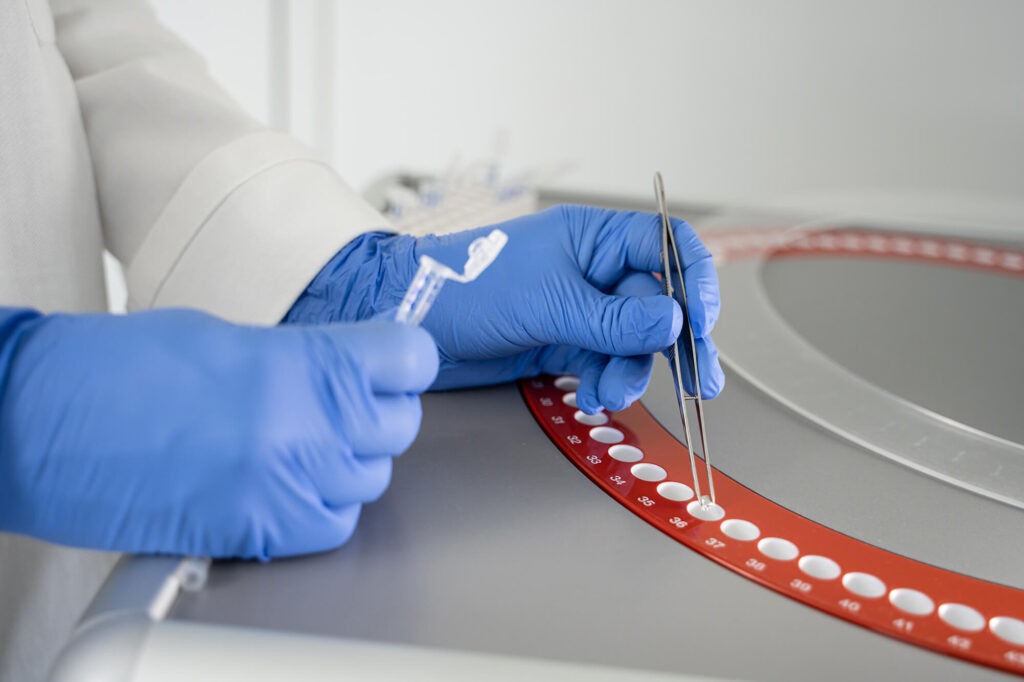
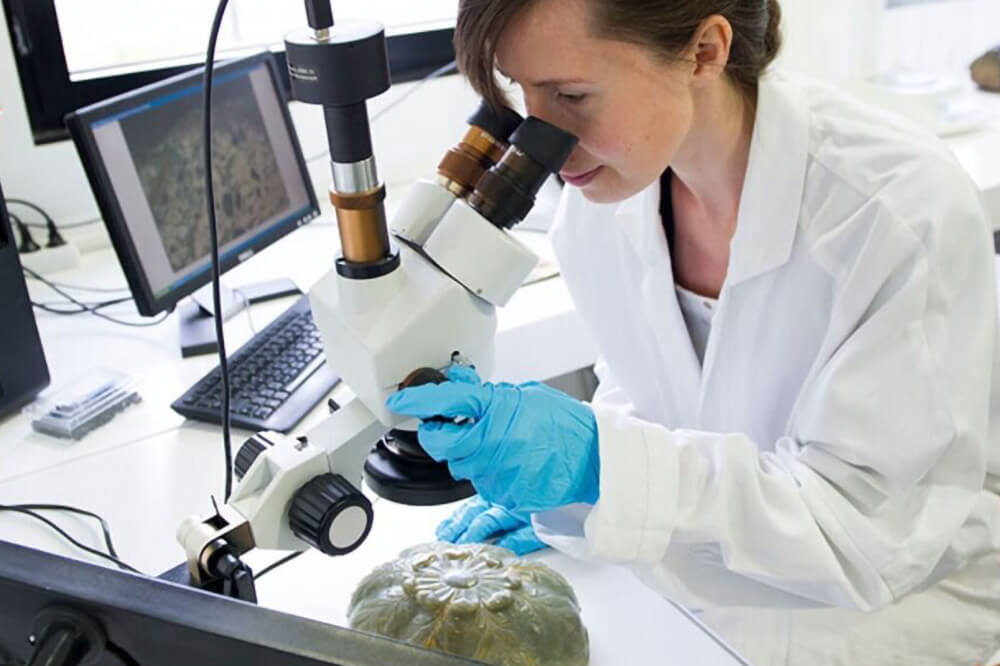
The standard ASTM D6866 is particularly efficient thanks to its use of advanced scientific techniques such as particle gas pedal mass spectrometry (AMS). Prior to analysis, samples must be transformed into pure graphitean essential prerequisite for reliable measurements. This critical step is carried out with precision in specialized laboratories such as CIRAMwhich are equipped to meet the industry's most stringent requirements.
As a reminder: the standard provides for a margin of error of ±3%.This allows reliable results to be obtained, even for complex materials. For example, a measurement of 97 pMC (percentage of modern carbon) is considered to correspond to 100% biobased carbon in ASTM D6866.
ASTM D6866-24 industrial applications
ASTM D6866-24 plays a central role in most industrial sectors by ensuring the authenticity of bio-based materials at every stage of their lifecycle, from research and development (R&D) to final production. Here are some concrete examples of its application:
1. Biofuels :
In thebiofuel industry, this standard is used to verify that fuels contain a significant proportion of renewable carbon. This verification is essential to meet the criteria of environmental policies such as European regulations on renewable energy. In addition to assessing the presence of biogenic carbon in fuels, the analysis also validates the origin of bio-based blends in fuels by quantifying their biogenic proportion.
2. Biopolymers and Packaging :
Manufacturers of bioplastics and biopolymers use ASTM D6866-24 to certify the proportion of modern carbon in their products. The standard reinforces the credibility of their environmental claims and allows them to differentiate themselves in markets where demand for sustainable materials is growing rapidly.
3. Biogas and industrial chimney smoke:
In the field of biogas, the ASTM D6866-24 standard makes it possible to distinguish between contributions from biomass and those from fossil sources within the gases produced. This approach is essential for documenting theorigin of carbon in biogas and meet regulatory requirements related to renewable energies. It also applies to industrial chimney smoke, in order to qualify the nature of the CO₂ emitted and provide objective information for energy transition initiatives.
4. Composite materials containing inorganic carbonates:
For certain materials containing inorganic carbonates, a chemical etching step is sometimes necessary to remove these compounds. This process must be carried out meticulously to avoid artificially reducing the value of the modern carbon and skew the results. Unlike other standards such as EN 16640, which measures the percentage of bio-based carbon relative to total carbon, the ASTM D6866 standard evaluates this proportion relative to total organic carbon, providing greater accuracy for complex materials.
5. R&D and Industrial Innovation :
Companies developing new products use this standard to assess the feasibility of their bio-based innovations. For example, prototypes of packaging or resins can be tested to verify their renewable material content before they are brought to market.
By integrating ASTM D6866-24 into their processes, manufacturers do more than simply comply with current regulations. They are reinforcing their sustainability strategyimprove their competitiveness and gain greater transparency for consumers and business partners.
Analysis and certification processes for biobased products
ASTM D6866-24 analyses are not limited to regulatory compliance. They are also a strategic lever for manufacturers seeking to enhance the value of their products in demanding markets.
Analysis methods and measurement of renewable content
L'radiocarbon analysis is at the heart of the ASTM D6866 standard. It relies on the measurement of 14C, 13C and 12C isotopes to accurately determine the proportion of modern carbon in a material. This method quantifies biogenic carbon content, i.e. the fraction of carbon derived from renewable resources such as biomass (algae, cereals, oils, etc.), as opposed to fossil carbon derived from petroleum.
Key analysis steps :
- Sample preparation Sample preparation: materials must be converted to pure carbon (graphite) to guarantee reliable measurements.
- Isotope measurement Mass spectrometry is used to detect the exact proportion of modern carbon.
- Interpretation of results Data are compared with reference values established by ASTM D6866, such as the 100 pMC standard corresponding to 100% biobased carbon content.
ASTM D6866-24 certification and compliance
ASTM D6866-24 certification is a structured process that enables manufacturers to officially validate their biobased products. This approach offers a double guarantee:
- Sustainability validation Certification strengthens the credibility of environmental claims, validates product sustainability and facilitates access to markets requiring ASTM compliance.
- Increased competitiveness Certification enables certified products to stand out in markets where sustainability has become a key purchasing criterion.
What is the certification process?
- Sample submission Companies send their products (essential oil, milk, honeyetc.) to specialized laboratories such as CIRAM, which carry out analyses to ASTM standards.
- Laboratory analysis Laboratory analysis: laboratories perform rigorous tests to determine biogenic carbon content.
- Validation and certification Certification: once compliance has been confirmed, companies can affix labels or endorsements attesting to the proportion of biobased materials used.
The role of laboratories in supporting industry and related sectors
The laboratories analyzing bio-based products play a central role in validating materials and helping manufacturers achieve optimum compliance with ASTM D6866-24.
Laboratory expertise in ASTM D6866 testing
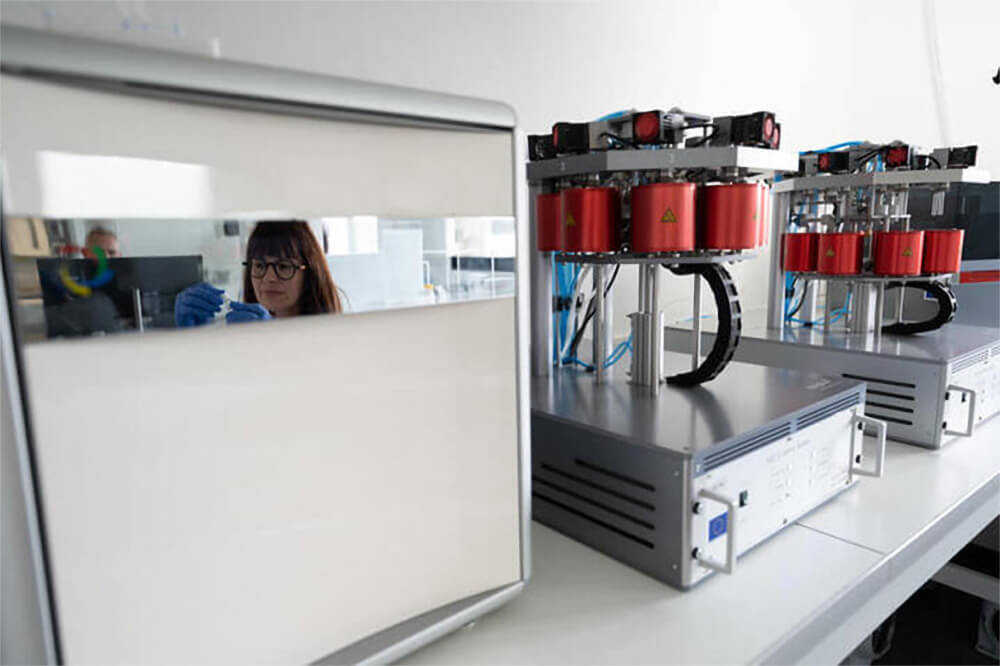
One of the main roles of laboratories like CIRAM is to carry out carbon-14 tests to accurately measure the biobased content of materials. These analyses are crucial to meeting the requirements of ASTM D6866-24. These tests are carried out using state-of-the-art equipment, guaranteeing exceptional precision in isotopic analysis.
But the role of laboratories is not limited to analysis: they are involved at every stage of the process:
- Research and development (R&D) The laboratory evaluates biobased carbon content right from the prototyping phase.
- Production Production: may be required to check the conformity of batches manufactured before they are marketed.
- Post-marketing verifies the authenticity of products in the event of disputes or the need forfood quality audits for example.
Managing complex cases
Laboratories are also called upon to carry out special assessments, particularly for materials containing inorganic carbonates. The presence of these carbonates can bias results by introducing geological carbon, which is not considered as biobased. In such cases, laboratories like CIRAM carry out controlled chemical attacks to eliminate this interference, while preserving the reliability of the measurements.
The role of laboratories in traceability and industrial innovation
Specialized laboratories also play a key role in the traceability of biobased materials. This aspect represents a crucial challenge for manufacturers in controlling their manufacturing processes.
Raw materials traceability
Thanks to radiocarbon analysis, we can guarantee the origin of the materials used in the manufacture of our products. For example, we can :
- Identify whether raw materials truly come from certified renewable sources.
- Verify that suppliers respect sustainability commitments.
This traceability is particularly important to meet the requirements of certifications such as the BioPreferred® label or European regulations on biobased products.
Contributing to industrial innovation
Manufacturers can integrate radiocarbon analysis into their innovation processes by working with specialized laboratories. This makes it possible to:
- Develop new materials with an increased proportion of biobased components.
- Identify areas for improvement in the production chain to reduce the use of fossil materials.
- Meet current and future consumer expectations in terms of sustainability, while complying with ever-changing regulations.
In the context of biogas production projects, these analyses also serve as a technical tool for documenting the biogenic share of inputs and outputs, an element often required in support mechanisms, public aid, or energy transition support mechanisms.
Customized support
The laboratories do not limit themselves to carrying out tests. They also play a strategic advisory role, guiding manufacturers on technological choices, manufacturing process modifications, and product optimization to meet ASTM D6866 criteria.
The ASTM D6866-24 standard is therefore an essential asset for professionals in the biobased industry. This standard enables them to guarantee the durability and authenticity of their products. Indeed, manufacturers need this recognized certification not only to comply with current regulations, but also to strengthen their positioning in a market in full ecological transition.
With its leading expertise in radiocarbon analysis and personalized support, CIRAM laboratories are the partner of choice to meet your needs. Request a study today to guarantee compliance and add value to your biobased products.