

Dating for archaeology: why combine several methods?
Reading time:
Written by:
Article Outline
- Understanding the diversity of dating methods in archaeology
- Dating methods for archaeology: an overview of absolute and relative techniques
- Advantages, limitations and technical challenges of the various methods
- Cross-fertilizing methods to make archaeological chronology more reliable
- Why adopt a multi-technique approach to archaeological dating?
- Towards a coherent chronology: interpreting, modelling and exploiting results
- The role of a specialized laboratory in a multi-technique strategy

Archaeologists must establish reliable chronologies to understand the occupation, evolution, and uses of the sites studied. This step is a fundamental element of their scientific approach. However, due to the diversity of contexts, materials, and research objectives, no single method can guarantee irrefutable dating on its own.
It is for this reason that researchers today adopt the crossing of several dating methods as a reference approach in archaeological contexts. The combination of several techniques such as radiocarbon dating, thermoluminescence, OSL, dendrochronology, and ESR allows them to refine, validate, and secure the results of their studies. To achieve this, however, they must have a good understanding of the strengths and limitations of each method, respect the protocols, and understand the decisive role of specialized laboratories.
In this article, we offer a review of dating techniques in an archaeological context, an examination of their complementarity, and the importance of collaborating with an expert laboratory.
In summary:
- Combining multiple dating methods helps ensure the reliability of archaeological chronologies and minimizes the biases associated with each technique.
- Carbon-14 dating, thermoluminescence, OSL, ESR, and dendrochronology provide complementary information depending on the materials being studied.
- A multi-technique approach, combined with the expertise of a specialized laboratory, enhances the accuracy and scientific value of the results.
Understanding the diversity of dating methods in archaeology
In an archaeological context, knowledge of the specifics of dating and materials analysis methods is essential for optimizing analytical strategy right from the outset of a project. This enables research teams to limit the impact of field, material and schedule constraints specific to this environment.
Dating methods for archaeology: an overview of absolute and relative techniques
The dating process in archaeology is based on two main methodological groups: absolute dating and relative dating. Each group serves distinct purposes, depending on the nature of the artifacts, the excavation context, or the constraints of expected chronological precision.
Absolute methods, such as carbon-14 dating, thermoluminescence, dendrochronology, OSL, ESR, or U-Th, allow an age to be assigned in years. They are applicable to various materials such as organic matter (charcoal, bones), ceramics, sediments, building materials, etc.
On the other hand, relative dating techniques, such as archaeological stratigraphy, typology or seriation, enable us to chronologically order layers and objects without providing an absolute age. They are essential for contextualizing finds on site, particularly in complex or disturbed environments.
To do this, archaeologists need to choose which method to use, depending on the type of archaeological material to be dated (wood, ancient pottery, ceramics, bone, sediment), its conservation, its context and the chronological resolution required. It is therefore important, right from this stage, to consult with an analytical laboratory in order to avoid possible biases and anticipate analytical constraints.
Advantages, limitations and technical challenges of the various methods
Each technique has a defined field of application, specific error margins, and strict protocols. It is precisely this complementarity that justifies their joint use.
For example, carbon-14 dating is a reliable technique for organic materials up to 50,000 years old, but it remains sensitive to recent contamination. Thermoluminescence and OSL, on the other hand, are reserved for materials that have undergone a final heating or exposure to light (ceramics, sediments), with uncertainties related to the annual dose received.
Other useful methods, such as ESR or U-Th, are adapted to specific contexts (enamels, limestones, fossil teeth). Dendrochronology can achieve annual precision when a suitable reference is available, but its application remains limited to species and regions with reference chronologies.
The reliability of dating for archaeology therefore depends less on a single method than on a reasoned choice, informed by the limitations of each chosen technique and the imperatives of the field.
Cross-fertilizing methods to make archaeological chronology more reliable
No method, however effective, is sufficient on its own to establish a reliable chronology of the analyzed sample. Cross-referencing dating methods therefore allows for the construction of more robust and better-documented chronologies.
Why adopt a multi-technique approach to archaeological dating?
Cross-referencing several dating methods in archaeology enables us to compare, refine or confirm the results obtained. By combining different techniques based on different physical or chemical principles, we reduce the margins of error associated with each method, while increasing reliability.
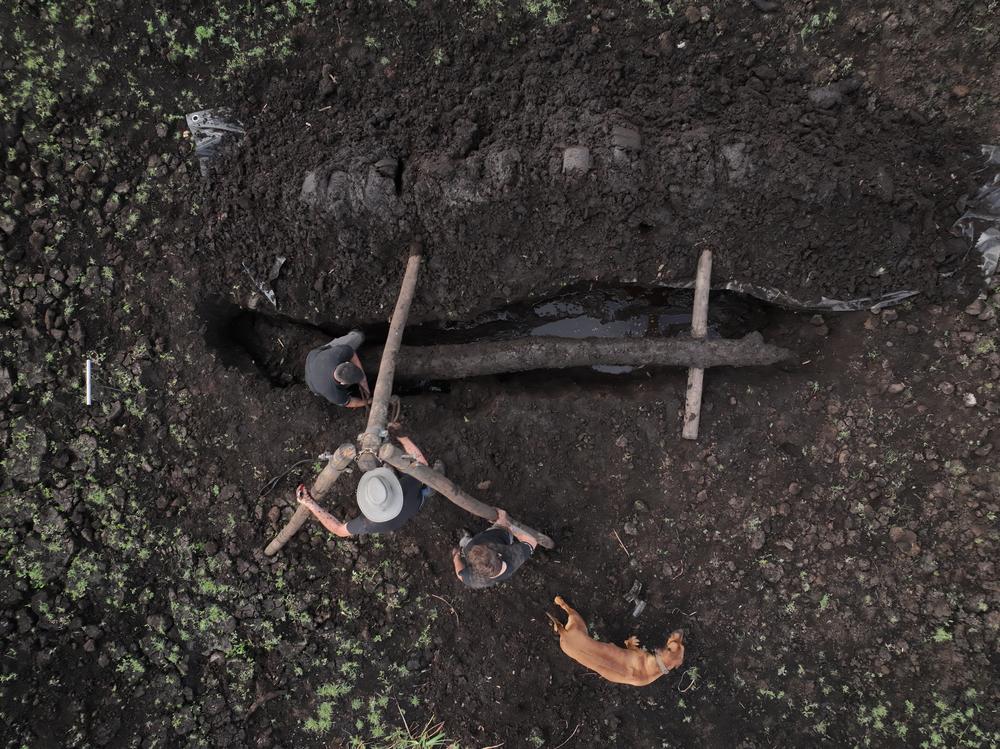
Let's take the example of a prehistoric site combining hearths, ceramic furniture and bone remains. Radiocarbon dating on charcoal can be combined with thermoluminescence dating on the heated ceramic fragments, or OSL dating on the surrounding sediments, to obtain a more precise view of the sample's history. This chronological triangulation makes it possible to exclude anomalies (e.g. recent carbon-14 pollution) or to specify the actual age of deposition.
Another common case for archaeologists is the dating of bones, which is regularly subject to post-depositional leaching or contamination. Using ESR dating in parallel, which is more stable over time, helps to secure the historical interpretation. This type of approach (combination) is particularly recommended in complex contexts (caves, disturbed layers, tropical environments), or when the dating of artifacts & archaeological samples needs to be integrated into long sequences.
Towards a coherent chronology: interpreting, modelling and exploiting results
As we've seen, combining analysis methods limits their limitations and adds their own advantages. However, crossing techniques is not enough: the results must be integrated into a coherent chronological framework. This phase relies on advanced statistical tools, notably Bayesian models. These enable data to be linked together, while taking into account the uncertainties inherent in each measurement.
Dating for multi-technique archaeology makes it possible to reconstruct phases of occupation, to better define the dynamics of a site, or to redefine technical periods. This advanced methodology is a decisive asset for dating prehistoric sites, built structures and burial contexts.
Finally, this approach further enhances the scientific value of the results, their credibility with heritage institutions, and their potential for dissemination in specialized publications. In short, the cross-fertilization of techniques is not a simple choice, but becomes a strategic lever for any dating approach in demanding archaeology.
The role of a specialized laboratory in a multi-technique strategy
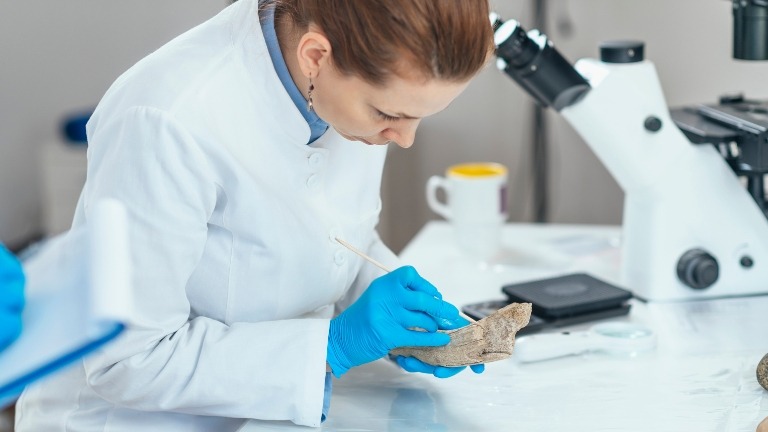
The choice of a multi-technique strategy therefore relies on a precise analysis of the archaeological context, available materials, and the scientific objectives of the project. A specialized laboratory intervenes from the initial stages to guide sampling and define the most suitable analytical protocols.
This expertise makes it possible to limit biases related to contamination, material preservation, or the inherent limitations of each method, in order to construct coherent and scientifically usable chronologies.
Thanks to its expertise in radiocarbon dating and archaeological material analysis, CIRAM supports professionals in implementing analytical strategies tailored to their specific challenges.
Share this article

Related topics

Need more information or have a question?
Our team will get back to you as soon as possible.