

How to recognize a forged signature on a painting?
Reading time:
Reading time:
Article Outline
- What are some signs that can help you spot a forged signature?
- Warning signs that an expert can spot with the naked eye
- The limits of traditional methods in the face of modern painting forgery
- The Role of Scientific Techniques in Analyzing a Signature on a Painting
- Study of signature materials: pigments, binders, inks
- In-depth observation with microscopy and scientific imaging
- When to call an analysis laboratory?

Among art market professionals, a signature—no matter how discreet—can add thousands, or even millions, of euros to the value of a painting. However, a signature alone does not guarantee a work’s authenticity. It may have been forged, added after the painting was completed, or altered during restoration.
Faced with increasingly inventive counterfeiters, experts can spot certain clues with the naked eye, but only scientific analysis can verify if a signature is consistent with the materials, the execution technique, and the period of the painting's creation.
In this article, discover what clues may serve as warning signs, what analyses can be used to study a signature, and why it is essential to cross-reference these results with an examination of the work as a whole.
In summary:
- Given modern forgery techniques, the analysis of a signature cannot rely solely on visual observation.
- Scientific analyses (UV imaging, infrared imaging, X-ray imaging, and spectrometry) make it possible to study the composition and chronology of a signature.
- Combined with an analysis of the painting’s materials, this approach provides objective evidence to authenticate a work of art and ensure the reliability of expert assessments.
What are some signs that can help you spot a forged signature?
An unusual signature does not necessarily mean that the painting is a fake. Some artists evolved their signature over their careers or signed certain works several years after they were created. Conversely, a perfectly imitated signature can hide a forgery. This is why the expert must always analyze the signature in conjunction with the materials, the execution technique, and the history of the work.
Warning signs that an expert can spot with the naked eye
When a professional examines a signature, there are several visual criteria that may indicate forgery. One of the first reflexes is to compare the suspect signature with certified copies by the same artist. This comparative analysis focuses on elements as precise as the shape of the letters, the regularity of the gesture, the pressure of the stroke or the use of the medium (oil, ink, graphite).
The expert will also observe the consistency between the signature and the pictorial layer: is it located below or above the varnish? Is it in harmony with the natural wear of the support? A signature that seems to "float" on the surface, or whose colors are not found anywhere else on the canvas, is a warning sign.
Finally, the composition as a whole must be studied in terms of stylistic chronology: does the signature correspond to the work's supposed period? Are the materials used compatible with those available at the time? These analyses can sometimes reveal inconsistencies that are striking to the naked eye.
The limits of traditional methods in the face of modern painting forgery
Today, visual expertise faces its own limits in the face of advances in forgery techniques. Some counterfeiters use sophisticated processes: stencilling from authentic signatures, meticulous imitation of the gesture, insertion of ancient pigments to cover their tracks. A masterpiece of craftsmanship.
Deception sometimes reaches such a level that restorers or forgers add a signature during a restoration to pass off an anonymous work as a signed painting. Even the most seasoned expert then encounters difficulties when counterfeiters reuse period materials, such as old canvases, original frames, or historical pigments, to mask their tracks.
This is why art professionals are increasingly turning to an integrated approach, combining sensitive observation with scientific tools such as multispectral imaging or chemical analysis of paintings. Rigorous and reliable expertise can no longer do without scientific evidence capable of confirming or refuting what the eye perceives.
The Role of Scientific Techniques in Analyzing a Signature on a Painting
Science can compensate for the limitations of visual examination. Thanks to high-performance analysis tools, it is now possible to precisely characterize the materials making up a signature, and to place them in their temporal and pictorial context.
Study of signature materials: pigments, binders, inks
Like the rest of the painting, a signature contains identifiable materials: ink, oil paint, acrylic, oil pastel, or even grease pencil. Scientists can analyze their composition and compare it to that of other materials present on the artwork. Chemical analysis allows for the detection of these components with fine precision, thanks to techniques such as infrared spectrometry (FTIR), Raman spectrometry, or X-ray fluorescence (XRF).
These methods make it possible to compare the pigments and binders used for the signature with those used for the rest of the pictorial composition. A discrepancy in chemical formulation, such as ink containing synthetic dyes that appeared after the artist's supposed death, will reveal a proven indication of forgery. Similarly, the use of pigments incompatible with the presumed period or absent from the artist's usual palette may reveal a later addition or forgery.
In-depth observation with microscopy and scientific imaging
It is also essential to understand when signatures incorporated into older works were applied. To this end, stratigraphic analysis is crucial for visualizing the different layers of material and the chronological order in which they were applied. Under an electron or optical microscope, it is possible to determine whether the signature lies on top of a layer of varnish, which would indicate that it was added after the work was completed.
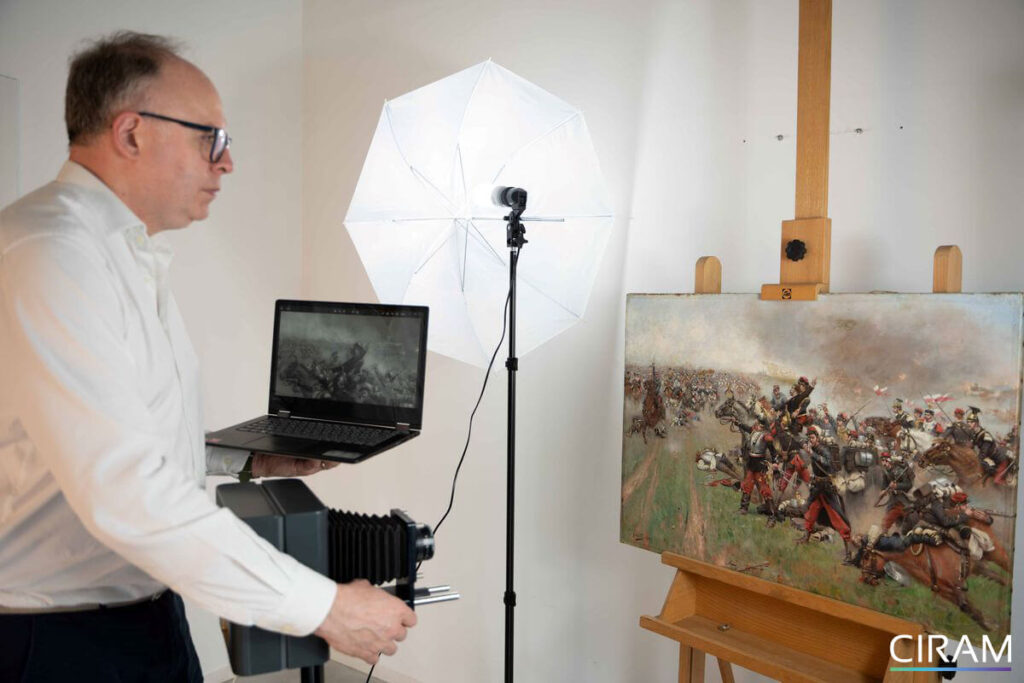
UV (ultraviolet), IR (infrared), and X-ray imaging, on the other hand, reveal what is invisible to the naked eye. UV, for example, can reveal abnormal fluorescence around a repainted signature. Infrared imaging allows us to see beneath the original paint layer in search of a signature that has been erased, altered, or added later. Finally, X-ray imaging identifies material densities: any mechanical engraving or foreign material stands out immediately.
The use of these analytical techniques makes it possible to cross-reference important physical data. It becomes possible to identify not only the chemical nature of a signature, but also its chronology and its formal relationship to the painting. This provides crucial support for any rigorous expert analysis.
When to call an analysis laboratory?
When a signature raises doubt, scientific analysis can provide objective elements that visual observation alone cannot. By studying the composition of pigments or inks, their position in the different layers of the painting, and their consistency with the work's materials, a specialized laboratory can determine whether the signature is contemporary with the creation of the painting or if it is the result of a later addition.
At CIRAM, this approach combines scientific imaging, physico-chemical analyses, and materials study to place the signature within its creation context. The results are presented in a clear and documented analysis report, usable for expert appraisals, sales, insurance, or litigation.
Share this article

You might be wondering about these questions regarding the signatures on the paintings?
A signature alone is not enough to authenticate a painting. The examination of the painting must be supplemented by an analysis of the materials, pigments, stratigraphy, and scientific imaging techniques in order to verify that it is consistent with the period and the creation of the work.
Yes. A signature can be added several years after a work was created, during restoration, or as part of a forgery. Only scientific analysis can determine when it was applied.
In particular, the laboratories use ultraviolet imaging, infrared imaging, X-ray imaging, microscopy, and various chemical analysis techniques (Raman, FTIR, X-ray fluorescence) to study the materials and the chronology of a signature.
Yes. The identification of pigments, binders, or inks that are incompatible with the presumed date of creation may indicate that a signature was added at a later date or that it dates from the time of restoration.
A specialized laboratory combines visual observations with scientific analyses to provide objective evidence regarding the painting’s signature, materials, and history. This approach helps ensure the reliability of an expert assessment or attribution.
Related topics




Need more information or have a question?
Our team will get back to you as soon as possible.