Isotope analysis

Isotope analysis

In parallel with carbon-14 datingdating, stable isotopes of carbon, nitrogen, sulfur and strontium will provide important information on diets and population movements.

Contact our teams
isotope archeo 1

Isotope analysis, an essential method for understanding ancient societies

At archaeologyisotope analysis involves measuring the ratios between stable isotopes of the same chemical element. In this case, the ratios are 13C/12Cfor carbon, 15N/14Nfor nitrogen, 34S/32Sfor sulfur and 87Sr/86Srfor strontium.

The aim: to obtain detailed information on the origin, history or biological or environmental characteristics.

Request a quote
isotope archeo 2 scaled

The benefits of isotope and elemental analysis, coupled with carbon-14 dating

CIRAM laboratories don't just provide dates; they also systematically integrate isotopic analyses to contextualize the results and validate the data obtained. These complementary analyses enable a more complete diagnosis of the condition of the samples and avoid any misinterpretation.

For bones, elemental analysis, and in particular the carbon/nitrogen (C/N) ratio, is a key indicator of collagen preservation. An outlier in the C/N ratio could indicate significant alteration of the sample, making carbon-14 dating unreliable. In addition, analysis of the δ13Cisotope ratio provides information on the nature of the organic material studied. For example, it can be used to distinguish authentic charcoal from other forms of carbon that could distort the archaeological interpretation.

Isotopic and elemental analysis is therefore essential, as it enables :

  • Check collagen quality to ensure accurate dating,
  • Confirm the nature and integrity of the materials analyzed,
  • Distinguish between the marine and terrestrial origins of a sample, particularly for food practices or ancient trade.
Contact our teams

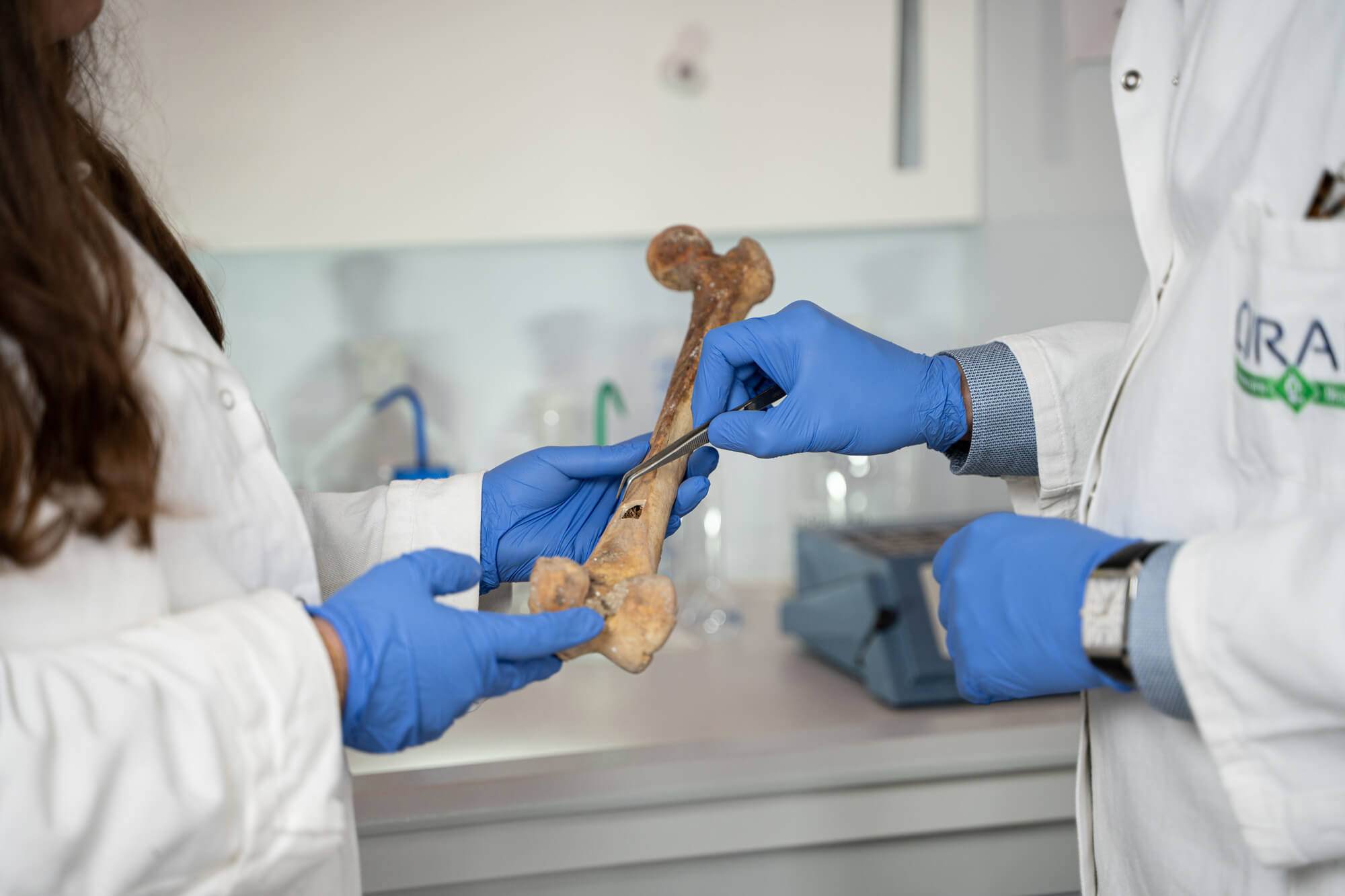
Samples analyzed for isotopes

Depending on the nature of the archaeological artifact, the choice of component to be analyzed varies. The larger the corpus studied, the more relevant the results. The analysis of a single sample is not sufficient to obtain solid conclusions.

The most suitable materials for stable isotope analysis are :

  • The bones,
  • Teeth

However, isotope analysis is not limited to organic materials. Carbon, oxygen and strontium isotopes can be used to establish the origin of marble.

Request a study

Multi-isotopic analysis,
a global approach to archaeology

01 - Carbon isotope analysis

Analysis of the ratio of carbon 13 to carbon 12 (δ13C) provides information on the photosynthetic strategies of plants and thus enables us to identify the plant resources consumed in the past. C3 plants (woody trees, wheat, rice) have a δ13Cbelow -20 ‰, while C4 plants (maize, sugarcane) show a δ13Cbetween -10 and -20 ‰.

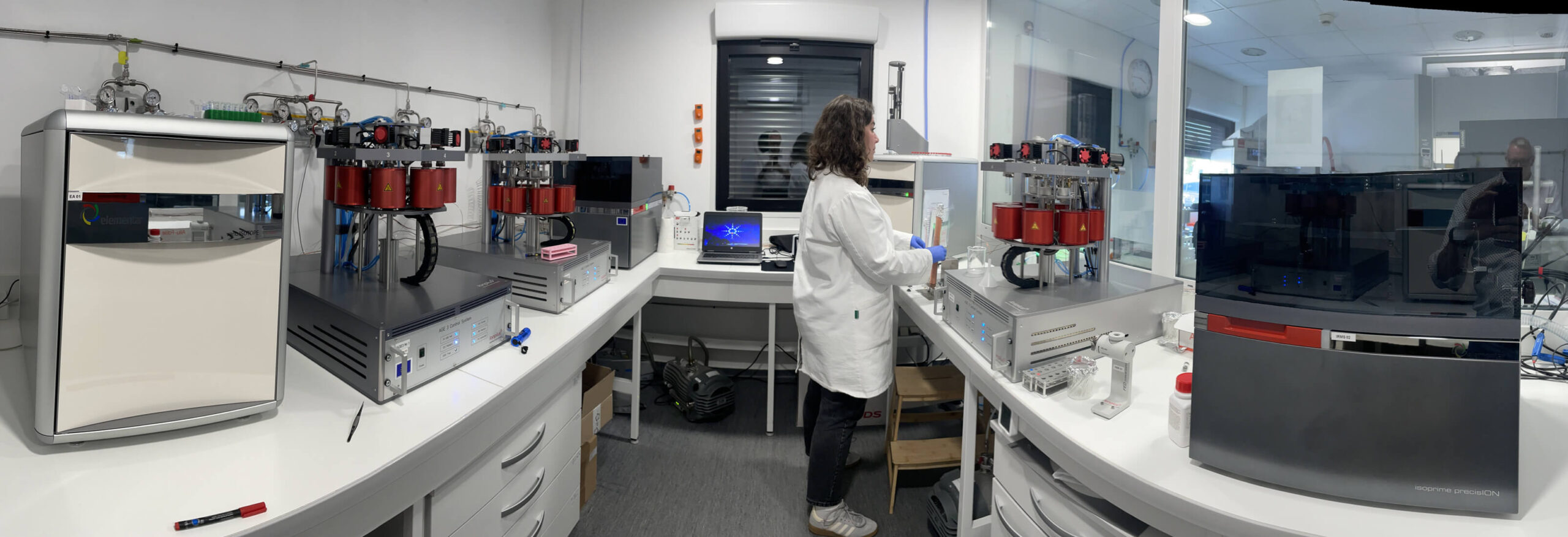
Isotopes are separated using an isotope ratio mass spectrometer (IRMS) coupled to an elemental analyzer (EA), guaranteeing optimum analytical precision.

02 - The study of stable nitrogen isotopes

The study of stable nitrogen isotopes is combined with that of carbon for the study of bones and teeth in particular.

Nitrogen isotopes are a key tracer of the dietary habits of an individual or animal. A high ratio indicates a diet rich in animal proteins, while a low ratio reflects a predominantly plant-based diet.

This analysis makes it possible to differentiate between carnivorous, herbivorous and omnivorous diets, and to detect the ecological and cultural interactions of ancient populations.

03 - Sulfur isotope analysis

Analysis of the ratio of sulfur isotopes 34 and 32 (𝛿34S) is increasingly used to complement carbon and nitrogen isotopes. These studies help us to understand the diet and movements of animals and humans during prehistoric and historic periods.

Sulfur isotopes are also used to explore variability in terrestrial, marine and freshwater diets. They are also used as indicators of environmental change.

04 - Study of strontium isotope ratios

Strontium is a metal easily found in nature, both in minerals and in soils. It is the assimilation by plants in the form of mineral salts that makes strontium isotopes interesting.

By studying the isotopic ratio of strontium 87 and 86 in teeth and archaeological bones, it will be possible to define the geographic origin of the individuals and identify any migrations.

However, 87Sr/86Srratio values are highly heterogeneous, even over limited perimeters. This is why only a study of a significant corpus will be relevant, and investigations will have to be limited to a few hypotheses only.

CIRAM, laboratories for stable isotope analysis

Our specialized isotope analysis laboratories use state-of-the-art equipment, including isotope ratio mass spectrometry (IRMS), to deliver results of unrivalled accuracy. In addition to isotope analysis, we also offer services in anthracology/ xylologyand organic residue analysis and luminescence dating.

Thanks to our expertise, we support archaeology and bioarchaeology researchers in interpreting isotopic data to trace diets, identify past migrations and characterize the origin of archaeological materials.

For accurate results from Europe's leading laboratory, request a free quote on our website.

Contact our teams

Are you asking yourself these questions?

What is isotope analysis and why is it useful in archaeology?

Isotope analysis consists of measuring the ratios between different isotopes of the same chemical element (such as carbon, nitrogen or strontium) to derive information about the past. In archaeology, it is used to understand diets, migrations, the origin of materials and climatic conditions in ancient times.

What elements are analyzed in isotope studies in archaeology?

Isotopic analyses generally focus on carbon (C), nitrogen (N), sulfur (S) and strontium (Sr). These elements are present in bones, tooth enamel, stone artifacts and certain organic materials.

Why analyze several isotopes in parallel?

Each isotope provides specific information. For example, carbon and nitrogen reveal diet, sulfur indicates the origin of food resources (terrestrial or marine), and strontium provides information on the geographic origin of an individual or a material. By cross-referencing these data, researchers obtain a more accurate picture of the past.

Can isotope spectrometry be used to analyze non-organic objects?

Yes, isotope analysis is not limited to bones and teeth. It also applies to marble and other inorganic materials. The study of carbon and oxygen isotopes, for example, makes it possible to identify the provenance of ancient marbles and trace ancient trade.

How does CIRAM guarantee the reliability of isotopic analyses?

Our laboratories use high-precision equipment, such as isotope ratio mass spectrometry (IRMS). Each sample undergoes a strict preparation and analysis protocol to ensure reliable, reproducible results.

Make an appointment with an expert

Get all the answers to your questions!

Make an appointment

Explore our dating and analysis resources

Archaeology
Comparison between carbon-14, TL, and OSL: which method should you choose?

Comparison between carbon-14, TL, and OSL: which method should you choose?

Choosing the right dating method in archaeology is not just a technical issue: it is a key decision that guides the entire interpretation of a site. Which technique to choose...

Read the article

Archaeology
The limits of carbon-14 dating: when should we turn to other methods?

The limits of carbon-14 dating: when should we turn to other methods?

How do you know whether a work of art, an archaeological object or a heritage item is really as old as it claims to be? Carbon-14 dating is often the method of choice, but it can also be used to...

Read the article

Archaeology
What role does anthracology play in preventive excavations?

What role does anthracology play in preventive excavations?

Anthracology plays a key role in preventive excavations: by studying archaeological coals, it sheds light on past human practices and paves the way for carbon dating...

Read the article

Archaeology
Mass spectrometry in archaeology: what for?

Mass spectrometry in archaeology: what for?

What methods are suitable for dating a fragile artifact, tracing the origin of a material or identifying millennia-old organic residues? Mass spectrometry provides access to...

Read the article

Archaeology
Dating for archaeology: why combine several methods?

Dating for archaeology: why combine several methods?

The cross-fertilization of dating techniques for archaeology guarantees the reliability of analyses in response to the complexity of the contexts and materials studied. Find out why...

Read the article

Archaeology
The importance of calibration in carbon-14 dating

The importance of calibration in carbon-14 dating

How can we guarantee the reliability of archaeological dating in a context where every year counts? Find out why carbon-14 calibration curves and laboratory expertise...

Read the article

Request a quote