Food industry

Food quality control laboratory

Carbon-14 analysis guarantees the authenticity, quality and conformity of food products by measuring the proportion of biobased materials and detecting any adulteration.

Contact our teams
agri-food

Carbon-14 measurement, at the heart of quality control

Carbon-14 concentration is the main indicator for determining the biobased carbon content of agri-food products. This radiocarbon analysis analysis is carried out at every stage of the manufacturing process, to verify the absence of undeclared synthetic components or adulteration.

To ensure accurate and complete service, CIRAM laboratories comply with the following quality control procedures in the agri-food sector:

  • ASTM D6866 The international standard for radiocarbon analysis of biobased product content.
  • EN 16640: this European standard specifies the method used to determine biobased carbon content by measuring the carbon-14 content.
Contact our teams
Radiocarbon analysis for rigorous control of food products

Radiocarbon analysis for rigorous control of food products

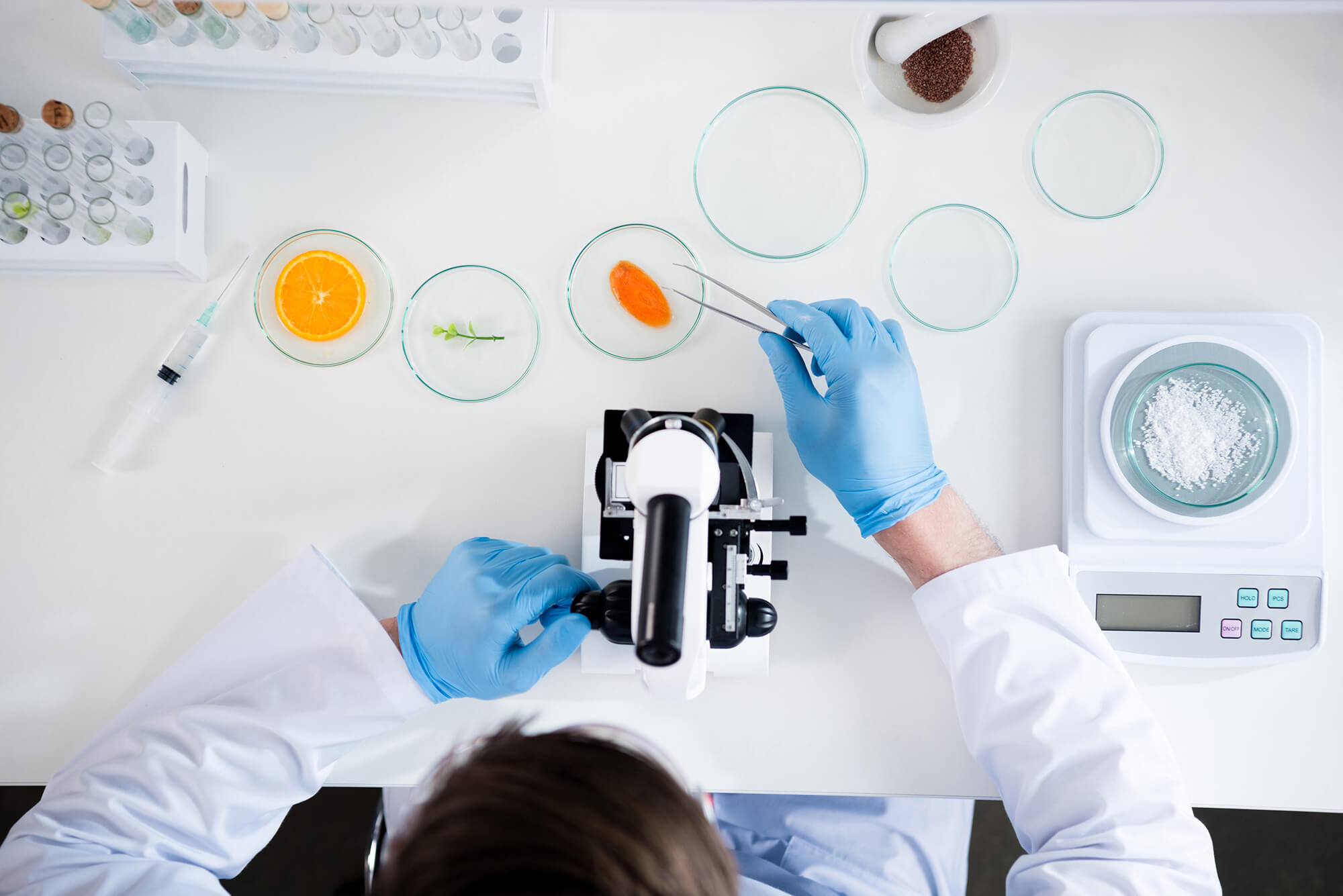
Carbon-14 and stable isotope stable isotope analysis to assess the composition and origin of food additives, including natural flavors, fragrances and colorants. We provide :

  • Precise measurement of the proportion of natural products (biobased products derived from animal or plant matter) and synthetic ingredients (petrochemicals). With this measurement, you can be sure that your suppliers are meeting their commitments, thus improving your quality control.
  • A test of compliance with current regulations to guarantee the authenticity of raw materials.
  • Scientific authentication of biological products by isotope analysis.
Request a quote

Challenges and practical applications for the food industry

01 - Analysis of essential oils

Radiocarbon analysis of essential oils will enable us to differentiate between natural and synthetic components. In fact, it will measure the concentration of bio-sourced carbon in relation to petro-sourced carbon. CIRAM's scientific teams are able to identify adulteration of just 1%.

CIRAM laboratories offer you a fast, reliable service for the analysis of your food additives.

02 - Aroma analysis

Flavors and fragrances are crucial issues in the food industry. Natural variants are much more expensive, so it's important to evaluate and verify your raw materials and inputs.

Carbon-14 analysis can be used to distinguish a naturally-occurring flavor (radiocarbon concentration 100) from a synthetic flavor (concentration 0). However, radiocarbon analysis must be coupled with stable carbon isotope analysis to differentiate vanillin from vanilla from vanillin from lignin, for example.

03 - Analysis of natural colorants

Natural colorants are prized for their organoleptic properties and their positive impact on consumer perception. However, fraudulent substitution with synthetic pigments is an industrial reality.

Radiocarbon analysis can certify the natural origin of food colorants by measuring their carbon-14 content , and identify synthetic colorants even in the presence of complex mixtures.

Why choose CIRAM laboratories to analyze your food products?

CIRAM laboratories stand out for their cutting-edge scientific expertise in radiocarbon analysis, guaranteeing accurate, rapid quality control in line with international standards. Thanks to our carbon-14 analysis method, we provide a rigorous and reliable assessment of the biobased carbon content of your agri-food products.

Our approach follows reference standards such as ASTM D6866 and EN 16640, ensuring that your products comply with European and international regulatory requirements.

CIRAM can help you analyze, certify and optimize your food products. Take advantage of the expertise of the European leader in radiocarbon analysis and request your study on our website.

Contact our teams

Are you asking yourself these questions?

What is radiocarbon analysis, and how is it applied to the control of food products?

Radiocarbon analysis measures carbon-14 content, enabling us to distinguish bio-sourced carbon from fossil carbon, essential for verifying the authenticity of agri-food products.

Why is it important to measure the biobased carbon content of food products?

This enables us to check that our products comply with international standards, and to guarantee their natural origin.

What types of food products can be analyzed using the radiocarbon method?

All products containing organic materials, such as flavorings, essential oils and food additives, can be analyzed.

How long does it take to obtain the results of a radiocarbon analysis?

Results are delivered within 10 working days, enabling rapid decision-making.

How can I contact CIRAM to carry out an analysis of food products?

You can easily get in touch with our teams via our website. Click on the "Contact our teams" button for more information or to request a customized study.

Make an appointment with an expert

Get all the answers to your questions!

Make an appointment

Explore our dating and analysis resources

Industry
Milk adulteration: what laboratory testing methods are available?

Milk adulteration: what laboratory testing methods are available?

Milk adulteration is a threat to the quality and conformity of dairy products. What methods can be used to detect these frauds quickly, reliably and ...

Read the article

Industry
How to check the naturalness of a flavor using carbon 14?

How to check the naturalness of a flavor using carbon 14?

Test the naturalness of your flavors and dietary supplements using radiocarbon and stable isotopes. Carbon 14 and stable isotopes allow...

Read the article

Industry
Why trust an ISO/IEC 17025 accredited laboratory for your stable isotope analyses?

Why trust an ISO/IEC 17025 accredited laboratory for your stable isotope analyses?

Stable isotope measurements play a key role in the quality control and traceability of industrial materials. But how can you be sure of the reliability of your results? By entrusting your...

Read the article

Industry
ISCC Plus certification: how to secure your biobased supply chains?

ISCC Plus certification: how to secure your biobased supply chains?

Increasing demands for traceability and sustainability make ISCC Plus certification a strategic asset for manufacturers involved in biobased products. Find out more...

Read the article

Industry
ISO 21644: an essential framework for CSR analysis

ISO 21644: an essential framework for CSR analysis

EN ISO 21644 is an essential standard for ensuring the compliance and traceability of solid recovered fuels (SRF). But how can you be sure that your materials comply ...

Read the article

Industry
How to recognize adulterated honey

How to recognize adulterated honey

Honey adulteration is a growing threat to the industry, compromising quality, conformity and traceability. Addition of exogenous sugars, falsification of origin, purity tests ins...

Read the article

Request a quote