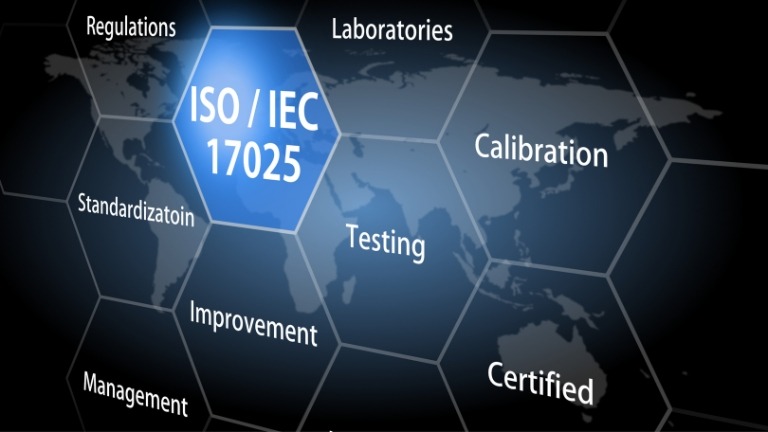

Using an ISO/IEC 17025-accredited laboratory has become a strategic requirement for manufacturers seeking analyses that ensure reliable results, sample traceability, and compliance with regulatory requirements. This accreditation guarantees that analyses, particularly those of stable isotopes, are performed using validated methods by qualified personnel, while being evaluated by the French Accreditation Committee (COFRAC). As a specialist inscientific analysis applied to industry, CIRAM offers manufacturers across various sectors its recognized expertise in graphitization and isotopic characterization through its NF EN ISO/IEC 17025 accreditation (accreditation no. 1-7217, COFRAC Testing, scope available at www.cofrac.fr).
In this article, we explore why using anISO/IEC 17025 accredited laboratory is essential to guarantee the reliability of stable isotope analyses, to understand the requirements linked to graphitization, and to master the challenges of traceability, compliance and competitiveness in a demanding industrial context.
Understanding ISO/IEC 17025 accreditation: issues and regulatory framework
Manufacturers seeking traceable, verifiable and usable data are well advised to use a laboratory accredited to ISO/IEC 17025 for their stable isotope analyses. The international recognition of results makes this a strategic lever for any company wishing to expand its activities.
What is ISO/IEC 17025 recognition and why is it crucial to the industry?
ISO/IEC 17025 is the international standard defining the general competence requirements for testing and calibration laboratories. It covers both technical aspects (validated methods, accuracy, measurement uncertainties) and management aspects (traceability, impartiality, integrity of results and competence of personnel in particular). An ISO/IEC 17025-certified laboratory thus proves that it masters the entire chain.
For manufacturers, this means :
- reliable, comparable results between laboratories
- complete traceability
- quality risk management
- easier regulatory compliance
In the specific case of stable isotope analysis, choosing CIRAM, a laboratory accredited to NF EN ISO/IEC 17025, (accreditation no. 1-7217, COFRAC Essai, scope available on www.cofrac.fr) guarantees that every stage in the analysis process, from sample reception to results processing, is governed by strict procedures that are regularly audited.
You may be wondering why it's so crucial to choose an accredited laboratory for stable isotope analysis - and what risks are involved?
Today, it's well known that untraceable data or data from uncontrolled procedures can mislead a manufacturer's strategy (material qualification, supplier control, product lifecycle management). This can have serious consequences for your company, both internally and externally. ISO/IEC 17025 recognition provides a reassuring framework for your activities.
The role of the COmité FRançais d'ACcréditation (COFRAC) and international scope (ILAC MRA)
In France, ISO/IEC 17025 accreditation is issued by the COFRAC (Comité Français d'Accréditation). This is an independent body which carries out demanding assessments based on a detailed reference system.
"But how does ISO/IEC 17025 recognition guarantee the quality of isotopic results?" Obtaining this accreditation is a demanding process for any laboratory wishing to be accredited. It requires rigorous method validation, proven staff competence, calibrated instrument maintenance and full traceability of every measurement.
This recognition guarantees that analyses carried out by an ISO 17025 laboratory will be accepted without re-checking, reinforcing the efficiency of the supply chain and compliance processes for manufacturers operating on an international scale. Choosing an ISO 17025-accredited laboratory means integrating analytical quality as a lever for industrial competitiveness. It's an integral part of any winning industrial strategy.
Why is graphitization a guarantee of quality control?
Graphitization is a key stage in the preparation of samples for radiocarbon analysis by mass spectrometry. It consists in extracting the carbon present in a pure graphite sample.
The graphitization process follows strict protocols, validated and documented within the framework of ISO/IEC 17025 accreditation. Each batch of material used, each temperature parameter, each reduction time is controlled to ensure complete traceability and reproducibility of results.
Industrial R&D teams tend to wonder about the technical challenges involved in graphitization under accreditation. These include the chemical stability of graphite, the elimination of contaminants, and the precise control of conversion conditions.
But how does an ISO/IEC 17025-accredited laboratory guarantee material traceability? CIRAM ensures traceability by systematically recording operating conditions, double-checking materials and keeping all raw results, in line with internal requirements and those of ISO/IEC 17025.
For example, ISO/IEC 17025 compliance ensures reliable quality control of raw materials, secure origin labelling and optimized traceability of finished products.
Sectors concerned and concrete impacts (industry, R&D, supply chain)
Accredited stable isotope analyses (scope available on www.cofrac.fr) are therefore finding concrete applications in several industrial sectors:
- Agri-food Food: for verification of origin and fraud prevention
- Biobased materials: certifying organic origin
- Chemistry and polymers Lifecycle monitoring and comparative batch analysis.
- Pharmaceuticals: for analytical traceability in R&D and regulatory controls.
Access to reliable isotopic data makes it possible to objectify physico-chemical phenomena, secure innovations and accelerate validation phases. These aspects are crucial for R&D teams seeking to optimize and secure their activities.
But using an ISO/IEC 17025 accredited laboratory is not just for R&D teams. For the supply chain, it secures critical data throughout the chain, reducing disputes and reinforcing the compliance of ISO 17025-accredited laboratories and their partners.
Control, compliance and value enhancement: controlling risks and processes
As a manufacturer, your ability to demonstrate the reliability of your analyses is not an option: it's a requirement for your customers or regulatory bodies. ISO/IEC 17025 accreditation therefore becomes a key asset for securing audits, enhancing compliance and reinforcing your technical credibility.
Ensure the validity and conformity of its analyses
CIRAM is accredited to NF EN ISO/IEC 17025, and is committed to producing technically valid results, accompanied by certificates of analysis with the use of the accreditation mark (accreditation n°1-7217, COFRAC Essai, scope available on www.cofrac.fr) for ISOTOPES analyses and graphitization. This document attests to the rigor of the process, from sample preparation (for graphitization, for example) to the processing of analytical data. It certifies that the analysis has been carried out according to validated methods, by competent personnel, with calibrated equipment and under quality supervision.
The analyses carried out thus offer a number of benefits in terms of validity and conformity. Indeed, the audits carried out as part of ISO/IEC 17025 accreditation and its maintenance verify not only technical compliance, but also the way in which risks and opportunities are identified and dealt with. The laboratory must demonstrate a thorough understanding of its critical processes to ensure consistent reliability.
Enhancing the value of using an accredited laboratory: image, safety and competitiveness
For a manufacturer, integrating an ISO/IEC 17025 accredited laboratory into its production or R&D chain means gaining in :
- Scientific credibility: by demonstrating the rigor of its quality approach
- Control customer satisfaction: by having and producing standardized, immediately usable reports
- Competitive edge: by offering customers products that are traceable, compliant and technically validated
Management teams can therefore choose to communicate their use of an ISO/IEC 17025 laboratory. It's a way of highlighting their mastery of quality control, their high standards, and their desire to provide their partners with usable, comparable results.
By opting for an ISO/IEC 17025 accredited scientific analysis laboratory, manufacturers do more than just outsource an analysis service: they align themselves with international best practice in their sector.
Manufacturers have every interest in choosing an ISO/IEC 17025 accredited laboratory to guarantee the reliability, traceability and conformity of their stable isotope analyses. This requirement structures quality risk management, secures audits and enhances the value of all critical data.
Thanks to its ISO/IEC 17025 accreditation (accreditation no. 1-7217, COFRAC Essai, scope available on www.cofrac.fr), CIRAM can support you in your stable isotope analysis and graphitization projects, using validated, internationally recognized methods. "
As a specialist in materials characterization, CIRAM can provide you with top-level scientific expertise tailored to the regulatory and technical challenges of your sector.Do you need reliable, traceable and usable data for your industrial activities? Contact our teams on our website for personalized support.