Milk adulteration: what laboratory testing methods are available?
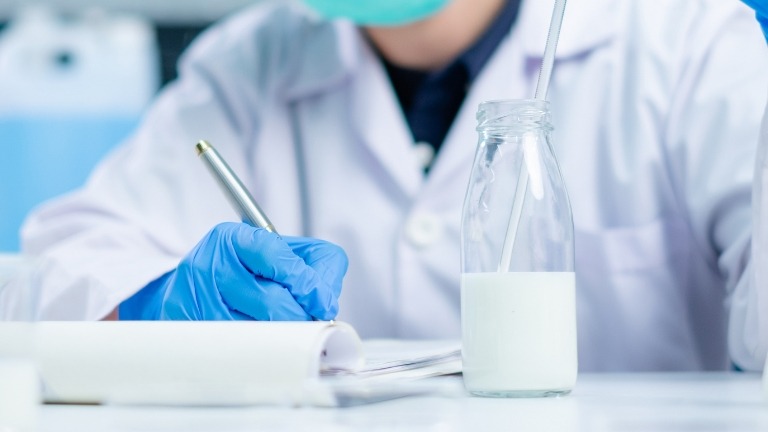
Milk adulteration is a threat to the quality and conformity of dairy products. What methods can be used to detect these frauds quickly, reliably and ...

Specializing in radiocarbon analysis since 2005, CIRAM analyzes, attests and certifies all your bio-based products, particularly paints, pigments and varnishes.
Contact our teams
With the boom in green chemistry, biosourced bio-based paints are emerging as a sustainable alternative to petrochemical-based paints. To guarantee their conformity, a number of standards and guidelines govern their marketing:
Whether you need support for your R&D, to check the quality of your suppliers' products, or to measure your finished materials, CIRAM can support you at every stage of your industrial process.
Contact our teams
Radiocarbon analysis is based on a simple principle: bio-based materials contain carbon-14, an isotope naturally present in living organisms, whereas fossil-based materials do not. By quantifying this carbon-14 in a sample (binder, pigment, solvent), CIRAM is able to determine precisely how much of it is renewable.
Our team of scientists uses gas pedal mass spectrometry (AMS), a highly accurate method (±0.5%) requiring only a few milligrams of sample.
Note that some paints contain calcium carbonate of geological origin, devoid of carbon 14. This is counted as a fossil material under standard EN 16640, which measures the proportion of biosourced materials in relation to total carbon.
A prior discussion with our teams is therefore recommended in order to interpret the results correctly.
Request a quoteA certified biosourced paint, with a precise percentage of materials of renewable origin, clearly highlights the company's environmental efforts.
Thanks to radiocarbon analysis, manufacturers can display scientific proof of this renewable origin, lending credibility to their marketing communications. This boosts partner confidence, and makes it easier to obtain environmental labels or private certifications requiring quantified data on product composition.
For example, to meet the requirements of the Karibati standard and obtain the Biosourced Product label, your paints must contain at least 20% biosourced matter.
Data from carbon-14 analysis can be used in CSR reports, carbon audits and extra-financial performance declarations (EPR). They make it possible to precisely quantify the renewable portion of products, and to enhance the value of decarbonization efforts, particularly with regard to Scope 3 indirect emissions.
In an evolving regulatory context, this information strengthens the credibility of our environmental commitments and facilitates dialogue with stakeholders, whether customers or investors.
Carbon-14 analysis of industrial paintsis also a strategic tool for research and development teams. By measuring the bio-sourced content of different formulations, it can be used to guide the choice of raw materials right from the design phase. R&D departments can compare several versions of the same product, optimize formulations to increase the renewable content, or validate the integration of new biobased resins, fillers or solvents.
This approach contributes to the development of more sustainable paints, in line with new market expectations and future regulations.
When you choose CIRAM, you benefit from over 20 years of expertise in radiocarbon dating and analysis, and a rigorous assessment that meets the most demanding standards. Thanks to the use of gas pedal mass spectrometry (AMS), CIRAM offers unrivalled precision, even for small samples. This cutting-edge technology can analyze binders, solvents and mineral fillers incorporated into your paints.
The results delivered are fully usable within a regulatory and certification framework: analyses are carried out in accordance with ISO 16620-2 and EN 16640 standards , widely recognized in the industrial sector and by certification bodies.
Take advantage of the expertise of Europe's leader in radiocarbon analysis and request your study on our website.
Contact our teamsCIRAM uses gas pedal mass spectrometry (AMS) to measure the carbon-14 concentration in paint components (binders, solvents, pigments). This cutting-edge method makes it possible to accurately determine a product's biobased content, even on very small sample quantities.
The main reference standards are :
We can analyze the paint as a whole, or the binders, solvents, fillers or pigments separately.
Results are available within 10 working days.
Simply contact us via our website or by telephone to obtain a quotation and arrange for samples to be sent to our laboratory.
Milk adulteration is a threat to the quality and conformity of dairy products. What methods can be used to detect these frauds quickly, reliably and ...
Test the naturalness of your flavors and dietary supplements using radiocarbon and stable isotopes. Carbon 14 and stable isotopes allow...
Stable isotope measurements play a key role in the quality control and traceability of industrial materials. But how can you be sure of the reliability of your results? By entrusting your...
Increasing demands for traceability and sustainability make ISCC Plus certification a strategic asset for manufacturers involved in biobased products. Find out more...
EN ISO 21644 is an essential standard for ensuring the compliance and traceability of solid recovered fuels (SRF). But how can you be sure that your materials comply ...
Honey adulteration is a growing threat to the industry, compromising quality, conformity and traceability. Addition of exogenous sugars, falsification of origin, purity tests ins...