
As with rocks or metal, there is no dating method for glass or enamel as such. But the multi-criteria, multi-disciplinary approach of the CIRAM laboratories enables us to give an opinion on the age of your glass objects.
A precise analytical protocol for studying glass objects
For the study of art objects, the first and most obvious type of marker is the chemical composition of the material. Secondly, CIRAM laboratories observe the passage of time and induced alteration. The composition of materials must correspond to the manufacturing techniques of the time. For weathering, the degradation of materials must be of natural origin.
The chemical composition of glass, the first decisive marker
The chemical composition of glass or enamel is a valuable source of chronological information: vitrifiers, stabilizers, fluxes or pigments, the results already provide valuable information.
The composition of a glass, enamel or glaze can be indicative of an era or civilization. For example, lead and potassium concentrations will indicate whether the glassmaking technique corresponds to the Middle Ages or the Renaissance. The nature of the pigments can identify modern production. Cadmium or chromium date 19th or 20th century glass or stained glass.
Our scientists analyze the chemical nature of the glass and the chromogenic elements present to already provide objective data that our laboratory teams interpret to pronounce on the age of the glass objects.
Glass weathering analysis, a crucial step
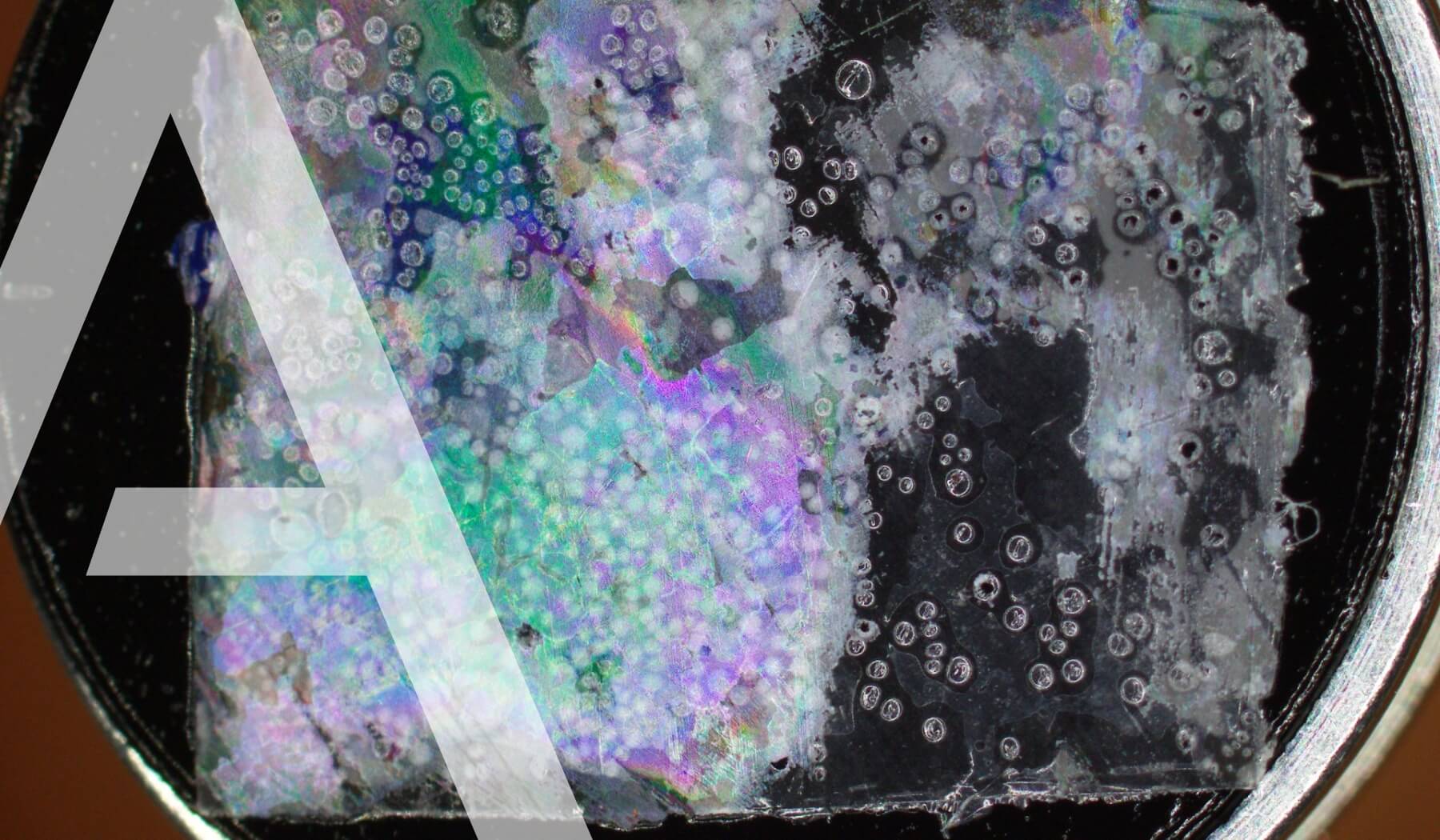
The most important part of examining a glass object is analyzing its weathering. A glass object that is hundreds or thousands of years old will have undergone significant environmental alteration, due to humidity, temperature variations and the development of micro-organisms. The degree of weathering provides chronological clues as to age or modernity. Glass weathering depends not only on the environment in which it is stored, but also on its composition. If conditions are highly alkaline, then the silica contained in the glass may be progressively dissolved, leaving a dull surface. Under more neutral, slightly alkaline or acidic conditions, glass corrosion is characterized by the progressive elimination of alkaline ions (leaching), sodium and potassium, as well as certain alkaline-earth ions (notably calcium). These are replaced by water and hydroxide ions, OH-. These processes give the surface an onion-skin appearance (laminated multilayers), which may appear iridescent due to the diffraction of light by this microstructure.
Detecting falsification through the presence of fluorine
On the other hand, if fluorine is detected in altered areas, we're dealing with artificial, modern alteration, i.e. incompatible with an ancient period. In fact, the presence of fluorine is totally abnormal in the context of natural burial or the natural ageing process of glass. Fluorine is not present in natural groundwater, as it reacts strongly with calcium to form insoluble minerals. As calcium is one of the most abundant elements in soils, the possibility of observing certain soluble fluorine ions is extremely limited. This means that fluorine cannot come from environmental pollution.
The presence of fluorine is highly problematic, as it indicates that the object has been artificially altered with hydrofluoric acid or a fluorine-rich compound, in order to simulate glass ageing. This acid is the only one capable of dissolving glass. It cannot be used for cleaning or restoration purposes. Consequently, the presence of fluorine in "weathered" areas of glass is a formal indication of modernity.
Micro-analysis to distinguish between forgeries and original works
Microanalysis remains little-known, as it does not provide direct chronological indicators like carbon-14 dating, for example. However, this technique is the most suitable tool for discriminating between fakes and authentic items, particularly for glass and enamel items that do not lend themselves to direct dating methods. It is important to combine all information to authenticate a glass or enamel object.