
Find out more about the various methods for analyzing solid recovered fuels, as well as current international and European regulations.
What is solid recovered fuel (SRF)?
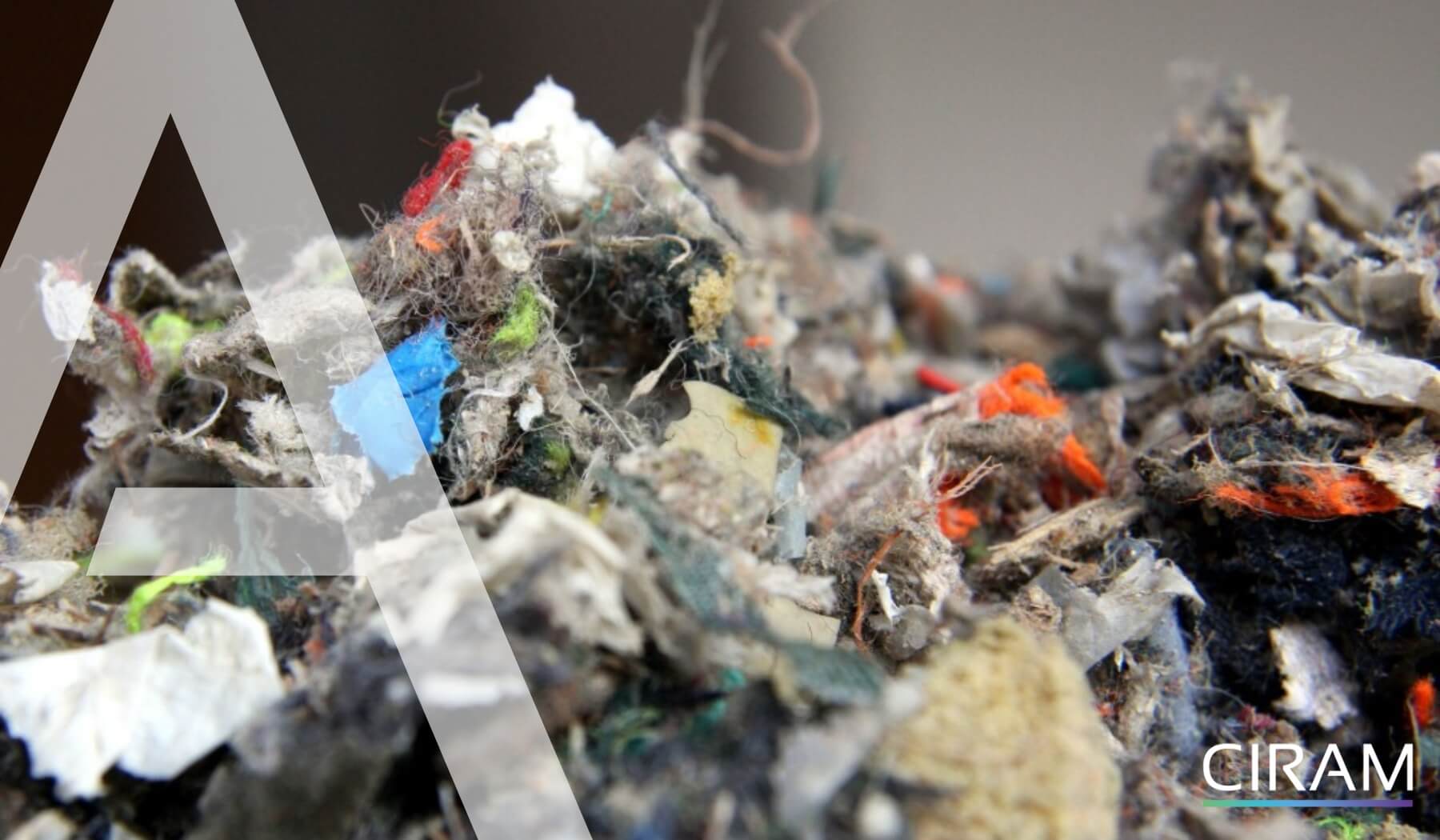
Solid recovered fuels (SRF) are a new, partially renewable energy source. SRFs enable the recovery of household or industrial waste and are an attractive alternative to fossil fuels. However, before they can be used, solid recovered fuels must first be analyzed, as they are heterogeneous materials that may contain paper, cardboard, and wood, as well as petroleum-based products such as plastic.
Techniques used for CRS analysis
There are several methods for analyzing the bio-based carbon content of CSR while complying with the NF EN ISO 21644 standard.
CSR can be analyzed by manual sorting, selective dissolution or radiocarbon analysis.
The selective dissolution technique
Selective dissolution is based on the assumption that biomass dissolves under the combined effect of sulfuric acid and hydrogen peroxide. While this technique may seem simpler to use than radiocarbon analysis, it does present a number of biases and inaccuracies:
- Selective dissolution assumes that all materials have common physico-chemical properties.
- Some plastics, though petroleum-based, are biodegradable and will therefore be dissolved and associated with biomass.
- Conversely, some biobased polymers are not biodegradable and will therefore not dissolve;
- The EN ISO 21644 standard specifies that the selective dissolution method underestimates the biobased content by 3% when CSRs contain paper, and by up to 16% for those containing rubber.
The selective dissolution method therefore lacks precision and reliability. That's why CIRAM laboratories use a more precise and reliable scientific technique: radiocarbon.
The radiocarbon technique, the method used by CIRAM laboratories
To deliver accurate, reliable results that comply with current standards, CIRAM laboratories use the radiocarbon technique to measure the biomass content of SRF.
This analysis is based on the activity of the carbon 14 isotope. Knowing that carbon 14 decays over time, disappearing after 60,0000 years, we can consider that oil and other fossil materials no longer contain carbon 14; they contain only "old" carbon, unlike biomass, which contains exclusively "modern" carbon.
The radiocarbon technique measures the amount of "old" and "modern" carbon. The method is efficient and offers many advantages:
- It works on all materials, whether solid, liquid or gaseous;
- Greater reliability and precision than with selective dissolution. Accuracy with radiocarbon is estimated at 0.5% and the detection limit at 0.3%;
- There is no underestimation or overestimation of biobased content;
- The radiocarbon method developed in CIRAM laboratories provides accurate biomass quantity values.
Sample preparation for radiocarbon technique
While radiocarbon analysis is more accurate, it requires special sample preparation.
Since radiocarbon samples consist of various materials, the sample must first be homogenized before carbon-14 dating can be performed. Micronization ensures the representativeness of the sample and, consequently, of the result. While no radiocarbon laboratory is accredited for micronization according to the NF EN ISO 21646 standard, there are specialized sample preparation units that perform these mechanical treatments prior to radiocarbon dating.
Why choose carbon-14 for CSR analysis?
As we've said, the radiocarbon method is the most accurate and reliable analysis for your solid recovered fuels. With this technique, you not only reduce the shortfall in revenue, but also avoid a tax adjustment due to misdeclaration of biobased content.
Taking tires as an example, selective dissolution underestimates the biobased content of rubber by 16%. Bearing in mind that tires contain an average of 40% rubber, we can estimate a shortfall of 10,000 tonnes of C02 equivalent in 2015 with selective dissolution.
Radiocarbon analysis is therefore the most reliable and accurate method for characterizing your CSR.