
Along with carbon-14 dating, thermoluminescence testing (TL testing) is the most widely used technique for scientifically authenticating art objects. CIRAM laboratories combine thermoluminescence (TL test) with X-ray scanner imaging to detect fakes in authentic works of art. A look back at the methods used by CIRAM laboratories.
Complementary methods for authenticating terracotta works
The development of counterfeiters' techniques, combined with their growing understanding of analytical authentication techniques, means that thermoluminescence and carbon-14 are increasingly necessary, but not sufficient. These dating methods provide an initial chronological assessment of the material's age. However, it is becoming increasingly common for counterfeiters to use old materials, which they then reshape to produce fakes.
Fortunately, CIRAM refines the authentication of your works of art by adding complementary analyses such as X-ray scanner imaging.
Examples of new forgeries and methods for detecting them
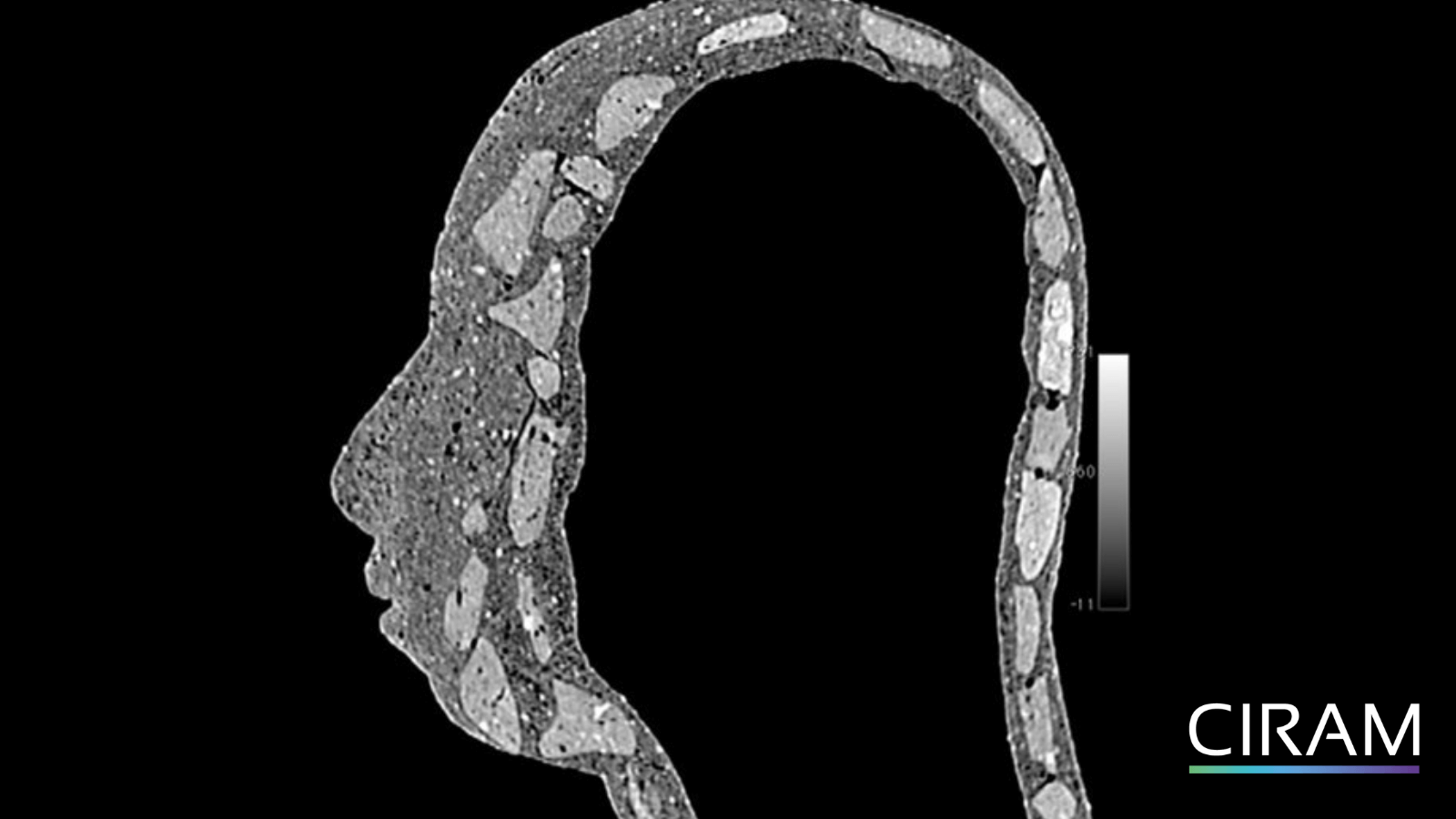
Thermoluminescence tests carried out on several samples of this head seemed to indicate that the material was fired around 1000 years ago. However, while the results obtained on the various samples were consistent, their characteristics were sufficiently heterogeneous to arouse suspicion. Thanks to the 3-dimensional vision generated by scanner imaging, we can see that this head is made up of an agglomerate of ancient terracotta shards re-cut and assembled with modern clay. The face has been over-modelled on top of the shards. This object falls into the category of "intelligent fakes". This involves using ancient materials to fool thermoluminescence tests. In this case, only a combination of different methods can detect new-generation counterfeits.
Counterfeiters, reading more scientific publications than one might imagine, have unfortunately become more sophisticated in their methods. Aware that the study of corrosion was becoming a major factor in the analysis of a work, some set about creating forgeries mixing old and modern parts.
Aware of this new trend, CIRAM's laboratories are combining methods to refine their analyses and identify new intelligent fakes.
On the X-ray image below, you can see the old part at the bottom and the modern part made of small metal plates assembled with glue or resin.
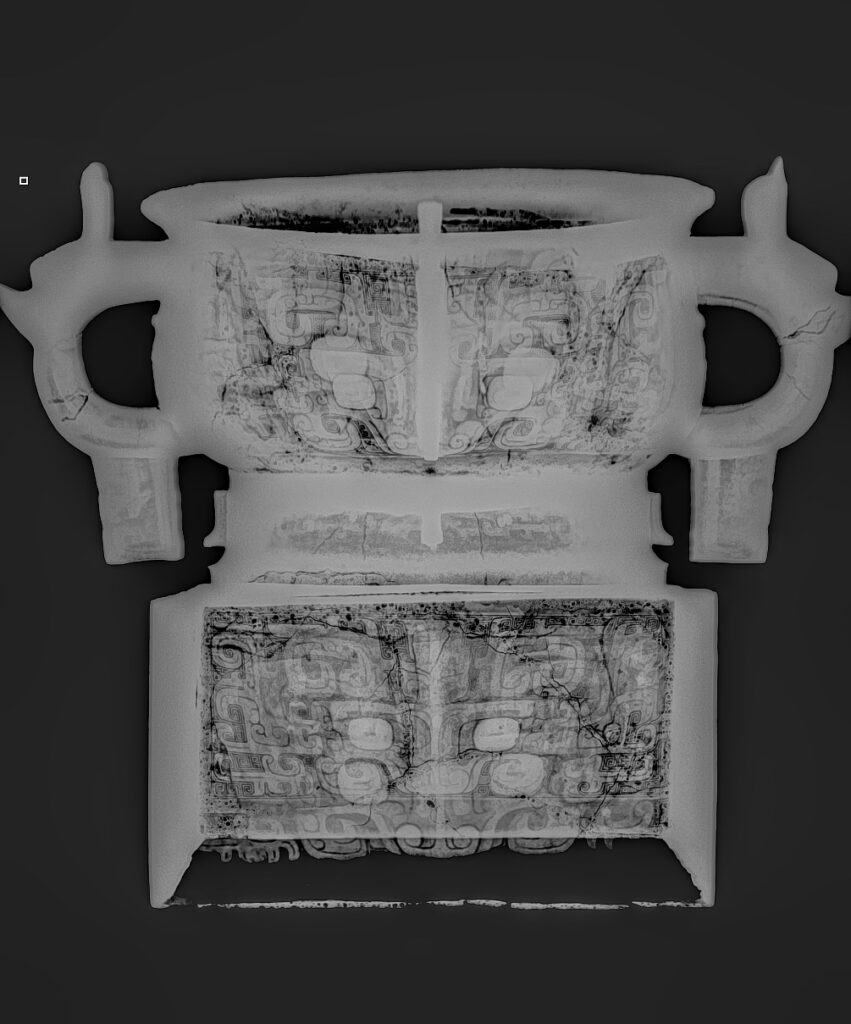
To identify these assemblies, it is necessary to X-ray the objects, in order to be able to specify whether they have only been restored or whether they are the result of a modern assembly. Once again, we can see that complementary methods are the best discriminating analytical strategies.
Complementary analyses to detect new forgeries
Thanks to factual data derived from physico-chemical analysis, correlation with accumulated knowledge of the evolution of forms, and techniques to support the quest for authenticity, it is possible to authenticate a terracotta work.
To make a precise diagnosis, our scientists always propose a combination of clues, while remaining aware of the limits of each approach. If certainty is the absolute goal of authentication, it is rarely attainable. However, the detection of a fake will always be more obvious than the certainty of an authentic object. But thanks to our expertise and know-how, the result will always be reliable, objective and relevant.