Extraction of morta oak wood from marshland environments for scientific analysis and dating

Fossilized wood samples dated by CIRAM lab

Fossilized wood samples dated by CIRAM lab

Reading time:

7–10 minutes

Written by:

CIRAM recently dated two pieces of fossilized wood: a "morta" oak and a marsh yew. Both were found buried in the same location, in the Bessin and Cotentin marshes in Normandy (Calvados and Manche). The state of preservation of these two fragments is remarkable. Radiocarbon analyses date the oak to between 4,344 and 4,066 BCE (Before Common Era), and the yew to between 2,027 and 1,778 BCE. Despite being 6,000 and 4,000 years old, respectively, these woods retain an almost intact structure and visual appearance.

How can such preservation be explained? And what do these ancient woods tell us about the history of the landscape? Here’s a brief overview of a material that is as fascinating as it is precious.

In summary:

  • CIRAM has dated two pieces of fossilized wood discovered in the Normandy marshes: a dead oak tree approximately 6,000 years old and a marsh yew approximately 4,000 years old.
  • Their exceptional state of preservation is due to their having been buried in an oxygen-poor peat environment, which prevented their decomposition.
  • These fossilized woods serve as a valuable record that helps us reconstruct the evolution of ancient landscapes and environments.
  • CIRAM's analyses reveal a remarkably well-preserved anatomical structure and a significant increase in wood density resulting from the fossilization process.
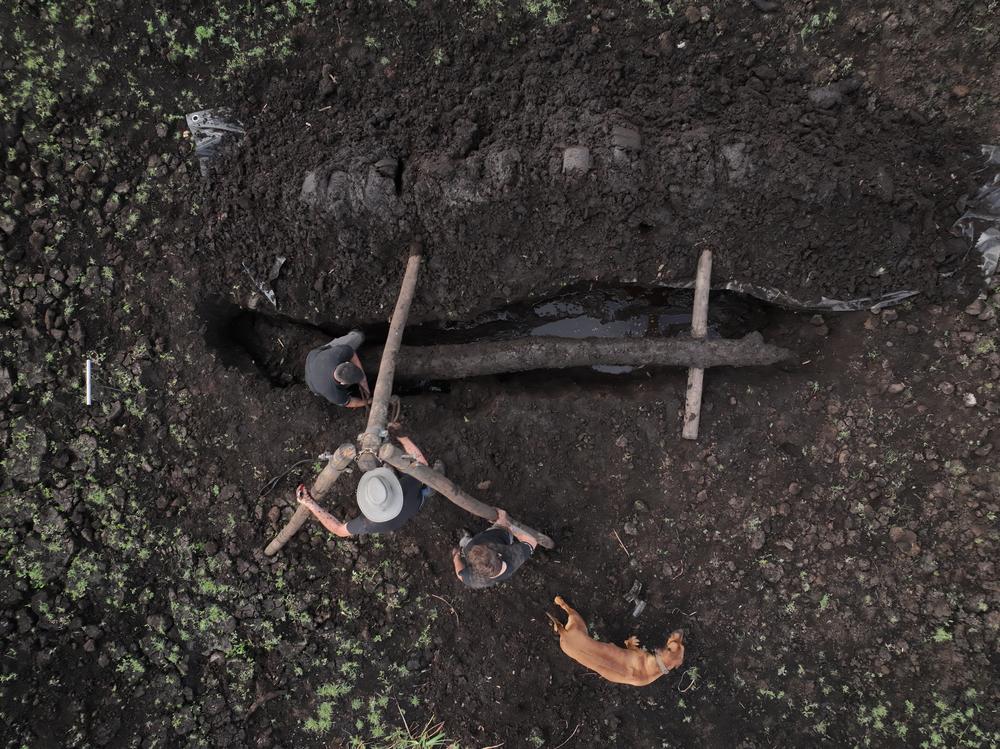
CIRAM-extraction-morta-Workshop-JHP

Extraction of a morta tree by Atelier JHP.
(source: Le morta – Atelier JHP)

Morta : wood from submerged forests

Morta is a particularly ancient oak species found buried in the peat of marshes. Hidden there for millennia, it now constitutes as an exceptional material at the crossroads of geoarchaeology, wood science, and fine craftsmanship.

Archaeological assessments carried out as part of the dredging work on the Brière canals, undertaken by the Brivet Watershed Syndicate (SBVB), show that morta trees constitute veritable environmental archives. These ancient trees allow us to document, in particular: 

  • Variations in water levels in the marshes,
  • The phases of burial of ancient forests,
  • Traces of ancient human activity (charcoal, detrital deposits),
  • Landscapes evolution since the Neolithic period.

The woods are thus integrated into a comprehensive understanding of the territory, encompassing both archaeological and paleo-environmental aspects. Radiocarbon dating places the origin of the bog oak between the late Neolithic and early Bronze Age; that is, having grown approximately 5,000 to 7,000 years ago in a forest environment that has since disappeared. This period, marked by significant hydrological changes in the marshes, led to the gradual burial of the trees under peat deposits. The wood was thus deprived of oxygen, which prevented its normal decomposition.

The processing and marketing of morta

The commercial harvesting of bog oak is now strictly regulated: it takes place over a short period each year, in areas defined by local authorities. In the Brière marsh, for example, harvesting is only permitted for six weeks a year, from September 15th to October 30th, when the marsh is not too flooded, and the extraction site is located in conjunction with the Brière Regional Natural Park (PNRB). The ground is probed, and any wood found is harvested without mechanical assistance to preserve the integrity of the soil; the site is then filled in after extraction. An application for Protected Geographical Indication (PGI) status for the Brière marsh holly (morta) is currently under consideration to safeguard and regulate the harvesting of this unique natural heritage as much as possible.

And if this wood is so prized, it's partly due to its technical and aesthetic properties. It was once used for making sturdy frames or as firewood. Today, it's not sold in its raw state but transformed into knives, pens, pipes, sculptures, or other small turned or carved objects.

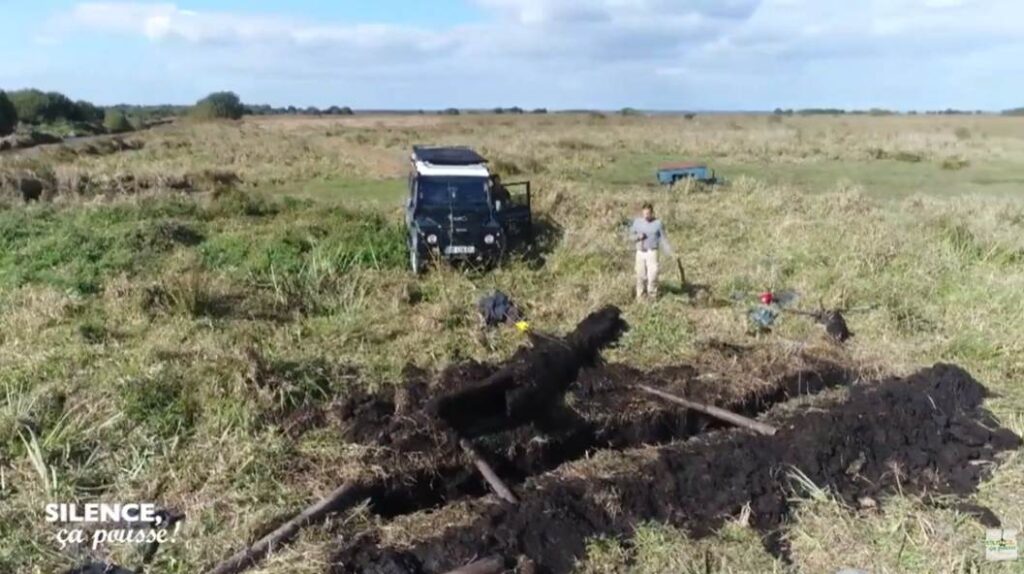
Video screenshot showing the extraction of "morta" wood by JHP Workshops

Silence, it’s growing! Video of the harvesting and processing of a morta by Atelier JHP.
(source: Le morta – Atelier JHP and Le morta – Silence, ça pousse ! – France Télévisions)

Analyses conducted by CIRAM

However, let us return to the analysis of the samples : in these anoxic conditions, our two wood species from Calvados underwent a long fossilization process, rendering them rot-resistant under natural conditions. This anaerobic environment is the source of the exceptional preservation and slow transformation into a dense, dark, and stabilized material. As previously mentioned, carbon-14 dating reveals two periods of burial, even though our oak and yew were found in the same location. We can reasonably deduce the existence of periods of rising and falling water levels, responsible for their decline and subsequent entrapment in peat deposits.

For oak, the black color is obviously not its original color, as it is a wood with naturally light brown hues. It is this particular coloration, evidence of chemical interactions that occurred over millennia in a humid environment, that gives it its aesthetic charm, particularly prized for works of art. Under the same conditions, yew (Taxus baccata) wood has darkened slightly, whereas it is usually a brownish-orange wood.
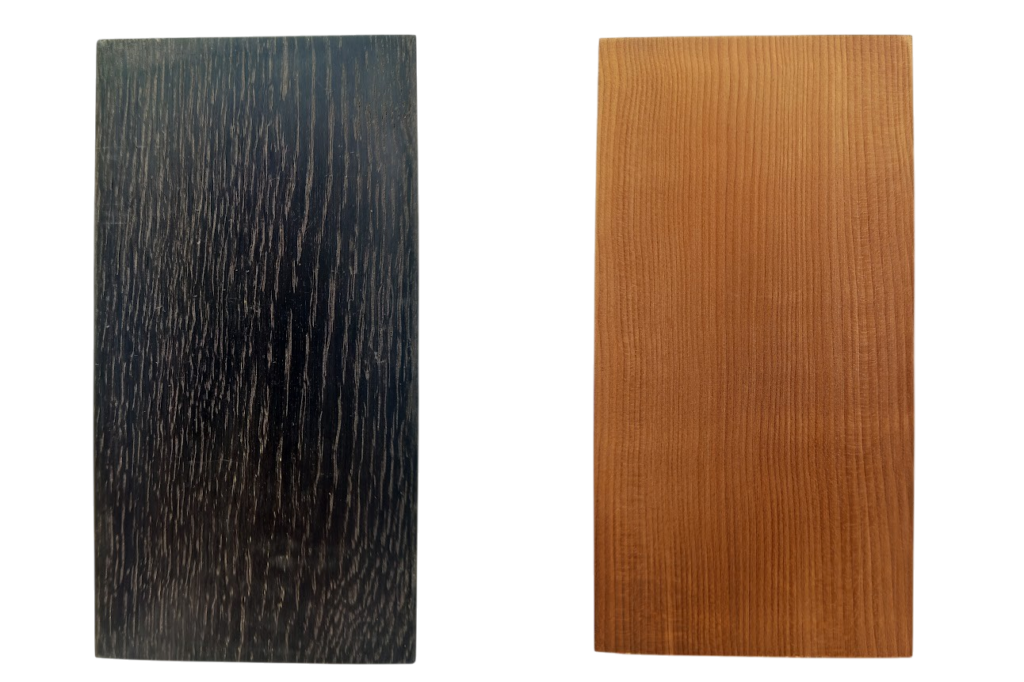
Dead oak and swamp yew

Wood species analyzed by CIRAM laboratories: "morta" oak (black) and swamp yew (brown).

Anatomical Analysis of Wood Species

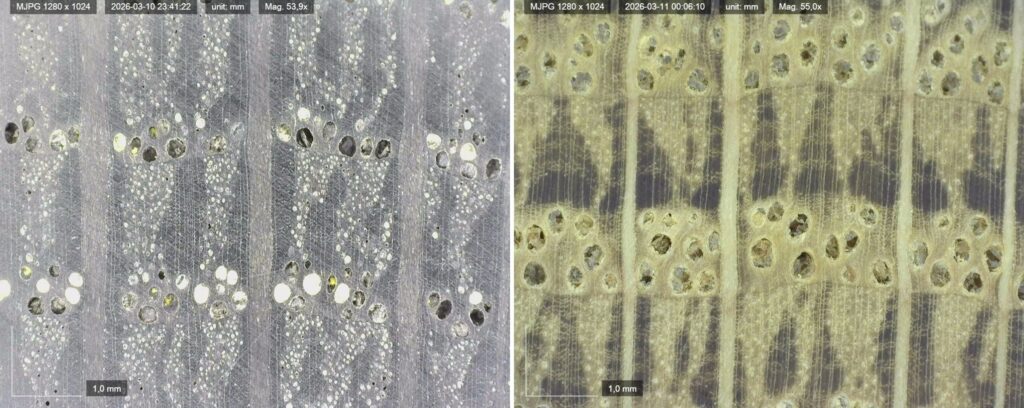
Our oak sample was compared to a contemporary oak. The cross-section of this thousand-year-old oak reveals all the characteristic features of the deciduous oak genus, namely:

  • A porous initial zone,
  • Very wide wood rays, clearly visible to the naked eye, and others that are very thin,
  • A tangential alignment of large vessels filled with tyloses in the earlywood and small vessels forming flame-like structures in the latewood.

The curvature of the growth rings is slight: the tree was therefore of large diameter and its growth slow. It was an old specimen. This observation attests to the incredible preservation of the wood from its death to the present day!

Cross-section of mort and oak

Cross-section of a Morta sample (left) and a contemporary oak (right) after fine-grit sanding (x1200).

Technological Analysis of Wood Species

Finally, the morta oak exhibits particular mechanical characteristics. The mineralization of the wood during its burial was accompanied by a significant change in its density; the average measured on several samples of our "morta" oak gives us an average value of 974 kg/m³. However, according to the Tropix technical data sheet published by CIRAD, the density for a sessile oak or a pedunculate oak (Quercus petraea or Quercus robur) is around 740 kg/m³, representing an increase of 31% (source: Quercus robur / petraea technical data sheet).

Our yew tree underwent equally dramatic mineralization: measurements taken on 6 samples yielded an average of around 750 kg/m³, whereas the usual density is between 480 and 600 kg/m³, representing a densification of 24 to 56%! This significant increase in density reflects the physico-chemical transformations of the wood in a water-saturated and oxygen-poor environment, which permanently alter its mechanical properties.

This high density makes them particularly resistant materials but also demanding to work with. Working with bog oak requires specific tools and expertise, as it is very dull (carbide-bladed tools, negative cutting angles, reduced passes to limit vibrations, slow and controlled work, etc.).

Interactive experience: find the bog oak!

What if you put theory into practice? As part of a Scientific Game Jam (March 10–12, 2023), an online video game was designed in just 48 hours around bog oak. The premise: explore a marsh, probe the ground… and try to locate buried logs, just like artisans do in the field.

This serious game offers a unique immersion in prospecting methods, translating scientific data into an interactive experience accessible to everyone. We bet you'll be digging! 😉

image

Screenshot from Planet Bog, a serious game dedicated to the search for morta.
(source: Planet Bog and Planet Bog Tutorial)

Acknowledgments and Sources

All of the data used in this article comes from geoarchaeological research conducted by the Loire-Atlantique Archaeology Department as part of the monitoring of the dredging of the Brière Marsh by the Brivet Watershed Authority, the Grande Brière collective geoarchaeological research program (team led by Yann Le Jeune, Loire-Atlantique Archaeology Service), various journalistic articles, as well as field observations and technological analyses of the material. We also thank Jean-Henri Pagnon, the creator of Morta knives, for his valuable advice and permission to use his photographic resources

Share this article

Avatar by Jennifer Coët

Need more information or have a question?

Our team will get back to you as soon as possible.

Comparison between carbon-14, TL, and OSL: which method should you choose?

Reading time:

8–11 minutes

Written by:

Choosing the right dating method in an archaeological context is never trivial. It is a strategic choice for archaeologists, which can influence the interpretation of a site, the temporal organization of the remains, or even the cultural attribution of a set of artifacts. While chronological accuracy is becoming central to research protocols, a clear understanding of the differences between the available methods makes it possible to optimize results both in the field and in the laboratory.

Carbon-14 dating, thermoluminescence (TL), and optically stimulated luminescence (OSL) are the most commonly used techniques for dating materials from various archaeological contexts. However, they are based on different physical principles and each has specific advantages depending on the nature of the samples and their storage environment.

In this article, we offer a comparative and technical overview of these three methods, aimed at archaeologists, researchers, and enthusiasts. You will find a clear explanation of how they work, a comparative table of use cases, advice on which to choose depending on the context, and an overview of the guarantees provided by a specialized laboratory such as CIRAM.

In summary:

  • The choice between carbon-14 dating, thermoluminescence (TL), andOSL depends on the material to be dated, the archaeological context, and the objectives of the study
  • Carbon-14 dating is used for organic materials, thermoluminescence (TL) for heated materials (ceramics, terracotta), and optically stimulated luminescence (OSL ) for buried sediments.
  • Each method has its own areas of application, limitations, and levels of accuracy.
  • Using a specialized laboratory and combining multiple methods makes it possible to obtain more reliable dates and a better interpretation of archaeological sites.

Three dating techniques, three distinct scientific approaches

Carbon-14: a reference method for organic materials

Carbon-14 (radiocarbon) dating is based on measuring the radioactive decay of the ¹⁴C isotope, which is naturally present in living organisms. When the organism dies, the exchange of carbon with the environment ceases and the isotope begins to decay with a half-life of approximately 5,730 years. By measuring the residual amount of ¹⁴C relative to stable carbon ¹²C, it is possible to estimate the date of death of the organism.

This method is particularly suitable for dating:

  • charcoal
  • bones
  • textiles or plant fibers
  • or any organic residue datable to approximately 50,000 years ago.

Radiocarbon dating is widely used in archaeology because it offers an average accuracy of ±20 to 200 years. However, it can only be used on organic materials, which excludes ceramics, stones, metals, and mineral sediments. 

This technique is also sensitive to modern contamination (bacteria, roots, infiltration) which can skew the results. It is therefore crucial to take samples carefully in order to ensure reliable scientific dating.

Thermoluminescence (TL): a proven method for heated minerals

Thermoluminescence dating is based on measuring the light emitted by a mineral when it is reheated in a laboratory. This technique analyzes the electrons trapped in the crystal structure of the material since its last exposure to high temperatures, usually during its manufacture or use in a home. These electrons accumulate under the effect of natural radioactivity in the environment and retain a measurable "signal."

In the laboratory, controlled heating is carried out, releasing this signal in the form of luminescence. The more intense the signal, the longer the period that has elapsed since the last heating.

This method is particularly suitable for dating:

  • terracotta, ceramics, tiles, antique bricks
  • heated elements such as fireplace stones, ovens, or fragments of thermal coatings

Thermoluminescence covers a time range of approximately 300 to 500,000 years, with an average accuracy of ±10%.

However, this technique has certain limitations:

  • it is destructive (a significant fragment of the material is removed for analysis),
  • it is sensitive to possible subsequent warming (natural or anthropogenic),
  • It requires precise knowledge of the ambient radioactivity in which the material was buried in order to calculate the date accurately.

As with any method based on accumulated signals, the quality of the sample and context data is crucial to ensuring the reliability of the results.

OSL: a precise method for dating buried sediments

Optically stimulated luminescence (OSL) dating is based on measuring the light signal emitted by minerals, usually quartz or feldspar, when exposed to controlled light in a laboratory. This signal corresponds to the accumulation of electrons trapped in the mineral's crystal lattice since its last exposure to light.

In other words, OSL dating makes it possible to estimate when the sediment was buried, i.e., the last time it was exposed to daylight. It is a direct scientific dating method for sedimentary events. This technique is particularly useful in archaeological contexts where organic matter is absent.

OSL is particularly suitable for dating:

  • buried soil layers or archaeological levels
  • sediments associated with structures (foundations, embankments, traffic levels)
  • geoarchaeological or paleoenvironmental contexts (alluvial deposits, dunes, loess)

OSL dating covers a time range from approximately 1,000 to 700,000 years, with an average accuracy of ±5 to ±15% depending on the context of the object.

However, it requires a very strict sampling protocol. Samples must be protected from light as soon as they are extracted, as even brief exposure to daylight can erase the signal. They are usually collected using opaque tubes that are sealed immediately under controlled conditions.

This method also requires specific equipment for packaging and analysis, as well as rigorous data processing to account for the site's natural radioactivity.

As with other luminescence dating techniques, the reliability of scientific dating depends directly on the quality of the sample, the preservation of the sediment, and the control of environmental parameters.

Which archaeological dating method should you choose: Carbon-14, TL, or OSL?

Comparison table of methods

Here is a table showing the strengths and weaknesses of each scientific dating method:

MethodMaterial typeMeasurable ageAverage accuracyLimitations
Carbon 14Organic material (bones, wood, coal, textiles, etc.)Up to ~50,000 years ago±20 to ±200 yearsNot applicable to mineral materials, highly sensitive to contamination
ThermoluminescenceHeated minerals (ceramic, terracotta, etc.)300 to 500,000 years±10 %Rear heaters, destructive method
OSLSediments, quartz/feldspar exposed to light1,000 to 700,000 years±5 to ±15%Collected away from light, strict protocol mandatory

Which criterion for which context?

The choice of the most appropriate method depends on several factors:

  • Nature of the material: a fragment of wood → C14, pottery → TL, sediment under occupation soil → OSL
  • Conservation: if organic matter is absent or too degraded, TL or OSL become the only options.
  • Research question: dating an event (e.g., burial of a level, last use of a hearth)
  • Stratigraphic context: choosing a non-destructive or complementary method

However, the context of study in the context of excavations may include various elements to be analyzed. This allows for more reliable dating due to the cross-referencing of methods. The dating laboratory responsible for analyzing the samples, if competent, can coordinate and carry out these studies in order to obtain the most accurate and precise dating possible.  

Example: on a Neolithic site featuring a hearth, ceramics, and sedimentary layers:

  • Coal → Carbon-14 dating
  • Terracotta → Thermoluminescence dating
  • Sediments → OSL dating

Laboratory analysis: why use CIRAM?

CIRAM: scientific rigor and interdisciplinary expertise

Choosing the right dating method in an archaeological context is not enough: the analysis must also be carried out according to impeccable protocols. CIRAM, a leading archaeometry laboratory based in Nouvelle-Aquitaine, supports national and international archaeological teams at every stage:

  • Help choosing the right method for your context (material, site, objectives)
  • Optimized sampling and transport protocol
  • Analyses performed on internationally calibrated instruments
  • Quality control, double analysis if necessary, complete traceability
  • Clear technical report, usable in publications, excavation reports, or scientific assessments

Dating and research strategy: integrating analyses into an overall interpretation of the site

The CIRAM laboratory does not simply provide a date: our team helps you interpret the results in order to understand the site.

Our cross-disciplinary approaches enable, for example:

  • cross-check the dates obtained using several methods (C14 + TL + OSL)
  • to indirectly date an object via its stratigraphic context
  • to provide an integrated timeline of occupancy levels

Use case: on a site poor in organic matter, OSL dating can be used to date the archaeological layer, reinforced by TL dating on ceramics. This cross-referencing improves the robustness of the chronological framework and improves the accuracy of dating in the study of the archaeological context.

Choosing between carbon-14, thermoluminescence, or OSL is much more than a technical step: it is a decision with significant scientific and heritage implications. As we have seen, each method offers advantages depending on the material, the site, and the research objectives.

If you want to guarantee the reliability and accuracy of your dating results, call on an expert dating laboratory such as CIRAM. Our experts are skilled in every stage of the analysis process, from sampling to interpretation. With our cutting-edge equipment and multidisciplinary team, CIRAM supports archaeologists, researchers, and project owners in their scientific dating projects.

Share this article

Avatar by Patrick Rossetti

You may be asking yourself these questions about dating methods in an archaeological context?

1. What is the best method for cleaning antique ceramics?

Thermoluminescence (TL), because this technique is suitable for heated minerals.

2. Can multiple dating methods be combined at a single site?

Yes, combining methods is actually recommended to strengthen the chronological interpretation. By combining the strengths of each technique, we can gain a better understanding of the context. 

3. Are carbon-14, TL, and OSL analyses Are they destructive?

The C14 and TL dating methods are only partially intrusive. OSL is moderately intrusive. CIRAM experts work with archaeologists on sampling practices to minimize the impact of sample collection on the artifact. 

4. How long does it take to get the results?

It depends on several factors, but generally, test results are available within two weeks, depending on the method and the number of samples.

Need more information or have a question?

Our team will get back to you as soon as possible.

Scientific dating plays an essential role in the fields of art and archaeology, both in terms of heritage preservation and financial considerations (sales, insurance). It can be used to validate the age of an object, clarify its provenance or authenticate a work of art. One of the most widely used techniques is radiocarbon dating, commonly known as carbon-14 dating, which in many cases remains an essential reference. This technique is particularly useful for dating organic materials such as wood, bone or textiles. It does, however, have certain limitations that experts in these fields need to be aware of to avoid misleading interpretations.

This method is not suitable for all types of materials, nor for all historical periods, however effective it may be. In the context of specialized expertise, it is therefore crucial to know when it reaches its limits, so as to be able to turn to complementary solutions if necessary.

In this article, we will first explore what carbon-14 dating can and cannot do. We will then list the alternative methods to be considered, depending on the specific material or context. Finally, we will explain how a laboratory specialized in carbon 14 dating (such as CIRAM) can support professionals and institutions in making reliable, appropriate and strategically relevant analyses.

What carbon-14 dating can and cannot do

Although radiocarbon dating remains an essential reference in the study of ancient organic materials, it doesn't meet all requirements, especially as objects become more complex. It is therefore crucial to understand the context in which it is applied, in order to choose the most appropriate method for each case.

The principles and benefits of carbon-14 dating

Carbon-14 dating is based on a well-established principle: measure the amount of the radioactiveisotope ¹⁴C still present in an organic sample, then deduce its age. This method is effective for dating formerly living materials: wood, bone, shells, textiles, leather, paper or even charcoal that can be found in the analyzed object.

In most contexts, its reliability is beyond question. The method can generally provide a coherent chronological range, extending to around 60,000 years, with relatively controlled margins of error. This is particularly the case when conservation conditions are good and sampling is carried out using optimized protocols.

This dating method is particularly prized for validating a period hypothesis, building a conservation strategy, or simply consolidating the historical traceability of an object. When appraising a work of art, such as a medieval parchment or a fragment of funerary cloth, ¹⁴C dating offers a legible, documented scientific argument.

The technical, material and temporal limits of carbon 14

Despite its many advantages, radiocarbon dating is subject to a number of important limitations. Firstly, it is reserved exclusively for organic materials. Metals, ceramics, mineral pigments, glass or stone cannot be directly dated by this method.

Secondly, its accuracy diminishes the further you move away from its optimal study window. After 60,000 years, there are not enough ¹⁴C left to obtain a usable date. Conversely, objects that are too recent can pose problems, not least because of the effects induced by human activity (e.g. nuclear testing due to the post-bomb effect) on atmospheric radiocarbon content.

Other factors can distort results, such as poorly documented restoration, contaminated sampling or aggressive chemical cleaning. Finally, a crucial point must be stressed: carbon-14 dates the raw material, not necessarily the use or manufacture of the object. A piece of furniture made from old wood, or a painting done on a reused support, can thus induce a biased reading if the analysis is poorly contextualized.

In such cases, it is essential to call on the expertise of a specialized laboratory, which can use other analytical tools to cross-reference data and guarantee reliable dating.

When should other dating or analysis techniques be preferred to carbon-14 dating?

In certain situations, the limitations of carbon-14 dating mean that other approaches are required to obtain a reliable reading of the object studied. This is particularly the case when the materials are not organic, or when a more complete analysis of the context is required.

Alternatives for inorganic and complex materials

When the objects to be studied are made of ceramic, glass, stone, metal or inorganic pigments, carbon-14 dating is not applicable, as there is no organic material to analyze. Other dating techniques can be used, depending on the specific type of material to be analyzed.

Thermoluminescence (TL) is used to date the last firing of a ceramic, thus revealing its period of manufacture. Electron spin resonance (ESR) is used on certain minerals, such as quartz or fossilized bones, to obtain dates that go beyond the chronological limits of carbon 14. Optically stimulated luminescence (OSL) can also be used to date the exposure of sediments or mineral materials to light.

Other approaches, such as uranium-thorium analysis, can be considered depending on the specific characteristics of the materials and the context in which they are used. At the same time, more detailed physico-chemical investigations can be carried out to study patina layers, corrosion or material composition, in order to guide indirect dating.

Crossing methods: the key to reliable, interpretable dating

The combination of several dating methods, coupled with an interdisciplinary approach (materials science, art history, archaeology) is often essential in complex cases, such as those involving composite objects, restorations or multiple materials.

For example, a sculpture combining wood and metal requires a separate analysis of each part: radiocarbon dating of the wood, metallographic study of the bronze or iron. Similarly, polychrome works, or works restored at different periods, require a sequential reading of the different layers: pigments, binders, varnishes, etc...

This rigorous cross-fertilization of analytical methods consolidates results and avoids misinterpretation: it's not just a matter of dating a material, but of understanding when and how the object took on its present form.

A laboratory specialized in art or archaeology like CIRAM implements an integrated approach. In this analytical process, each methodology serves to control or complement the other, ensuring a coherent, contextualized and exploitable reading, whether for a museum, restorer, researcher or auction house.

Support from specialized laboratories: strategic leverage for professionals

The intervention of a specialized laboratory is no longer simply a matter of technical support when carbon-14 dating alone reaches its limits: it is at the very heart of a project's patrimonial, legal or commercial strategy.

Why use a scientific analysis laboratory like CIRAM?

A dating result cannot be limited to an isolated date. It must be integrated into a global approach, taking into account the materials, the historical context and the potentially composite nature of the object. This is where a dating laboratory like CIRAM becomes a key partner.

For over 20 years, CIRAM has been supporting museums, archaeologists, galleries, auction houses and conservators-restorers with scientific expertise that is recognized both in France and internationally. In addition to all the technical requirements of carbon 14 dating (sample preparation, elimination of contamination, advanced calibration), the laboratory's multi-technical capabilities are among the most extensive in the sector.

Thermoluminescence for ceramics, physico-chemical analysis for patina or corrosion layers: each methodology is adapted to the material, but also to the type of question posed. CIRAM also takes care to provide a contextualized reading of the results, in line with the stylistic, historical and archaeological data provided by the experts or clients.

Finally, in-house protocols offer rigor, traceability and transparency, in response to the demands of legal experts, insurance companies and heritage institutions. It's a form of quality assurance, essential when undertaking a definitive appraisal of an object's authenticity or historical value.

Integrate analyses into a professional strategy: validation, conservation, enhancement

A well-conducted scientific study does more than simply "date". It is part of a broader strategy for managing the object or collection. Analytical results help to secure decisions at every stage of the process: acquisition, restoration, certification, right up to valuation.

CIRAM 's study reports are designed to be readable and usable: clear in their interpretation, detailed in their foundations, and accompanied by recommendations in the event of uncertainties or unexpected results.

For auction houses, they become tools of transparency, boosting buyer confidence. For museums, they contribute to the scientific documentation of collections. For insurers and conservation departments, they help define the value or condition of an item.

At a time when markets are increasingly demanding and subject to the threat of counterfeiting or concealed restoration, interdisciplinary expertise is essential. It combines the study of materials, art history and heritage sciences to enhance the value of objects. And this is precisely what CIRAM offers: a rigorous, tailor-made diagnosis to meet every professional challenge.

All dating methods have their strengths, but also their limitations. C14 dating remains an invaluable tool for analyzing organic materials, but it cannot answer every problem. As we have seen, it is not suited to composite objects, inorganic materials or complex historical contexts. That's why it's important to adopt a personalized approach, based on cross-fertilization of techniques and led by an expert laboratory.

At CIRAM, each project benefits from a rigorous diagnosis to determine the most appropriate method: carbon 14, thermoluminescence, OSL, or multi-material analysis. With over 20 years' experience, our experts support museums, archaeologists, galleries, restorers and auction houses in interpreting results and integrating them strategically.

For reliable, contextualized analyses tailored to your business challenges, whether conservation, authentication or asset enhancement, call on CIRAM's scientists. Request a personalized study and benefit from CIRAM's scientific expertise to secure your projects.

What role does anthracology play in preventive excavations?

Reading time:

6–9 minutes

Written by:

For archaeologists, every fragment discovered during a preventive excavation can reveal valuable information about past societies. Among the disciplines mobilized during excavations,anthracology occupies an essential place. Studying archaeological charcoal not only enables us to reconstruct ancient environments, but also to better understand the use of wood and human practices. It is also a key step in preparing for carbon-14 dating, guaranteeing reliable and relevant results.

In this article, we first explore what anthracology is and its specific role in preventive archaeology. We will then look at how it complements carbon-14 dating, by optimizing sample selection. Finally, we look at the role and added value of specialized archaeology laboratories such as CIRAM, which support teams of archaeologists in the interpretation and scientific enhancement of remains.

In summary:

  • Anthracology studies archaeological charcoal to reconstruct ancient environments and gain a better understanding of past human practices.
  • In preventive archaeology, anthracology helps identify the most relevant charcoal samples and minimize bias prior to carbon-14 dating.
  • The combination of anthracology and radiocarbon dating ensures more reliable chronologies and a better interpretation of the remains.
  • Drawing on its expertise in anthracology, C14 dating, and archaeometric analysis, CIRAM supports archaeological teams in preserving and scientifically evaluating their excavations.

Understanding anthracology in the context of preventive excavations

Anthracology is a cutting-edge discipline in archaeology, offering preventive excavation teams an essential scientific tool for rapidly interpreting contexts and preparing the dating of remains.

Anthracology definition and methodology

Anthracology is a branch of archaeobotany specializing in the study of carbonized wood (charcoal). This method of analysis relies on microscopic observation of anatomical structures, using techniques such as charcoal logging, to determine the species or genera of wood used in archaeological contexts.

Coals found in preventive excavations can come from fireplaces, combustion structures, burnt building components or natural fires. What they all have in common is that they faithfully preserve the anatomical structures of the original wood, enabling scientists to make precise taxonomic identifications.

However, analysis is not limited to simple recognition: it reveals human practices (choice of species, harvesting methods, combustion techniques) and the environments exploited by ancient societies.

The importance of coals in preventive archaeology

In preventive excavations, time and precision of analysis are decisive. That's why coals play a unique role. They are both evidence of local paleo-vegetation and the ideal material for carbon-14 dating (up to around 60,000 years).

In practical terms, anthracology helps archaeologists answer several strategic questions:

  • What environments surrounded the excavated site? The study of charcoal allows us to reconstruct paleoenvironments and wood harvesting practices.
  • Which coals to choose for dating? Criteria include preservation, size and stratigraphic position.
  • How to avoid bias? Anthracology limits the "old wood" effect, which artificially ages chronologies.

The use of anthracology alone cannot restore the entirety of an ancient landscape. However, it is particularly relevant as a complement to other approaches (palynology, carpology, phytoliths). In a preventive context, it remains a tool of choice for orienting analyses and guiding the selection of datable charcoals.

Anthracology and C14 dating: an essential preliminary step

Combining anthracology and radiocarbon dating is no methodological luxury for archaeologists: it's the guarantee of reliable, scientifically usable chronologies for preventive excavations.

Selection and preparation of coals for dating

The selection of dateable charcoal samples is a critical step. Some fragments may come from older parts of a tree, introducing a temporal bias, while others, more recent, better reflect the archaeological event under study.

Thanks to anthracology, archaeologists can :

  • Identify the most appropriate species
  • Discard fragments likely to produce erroneous dating
  • Ensuring consistency between stratigraphic context and dated material

Incorrect selection of charcoal inevitably has serious consequences: chronological inconsistencies, unusable results and loss of scientific value. Anthracology, when used upstream of a dating study, limits these risks and secures the reliability of established sequences.

Complementarity between anthracology and radiocarbon dating

Anthracology is often used as a preliminary step to C14 dating, since it ensures rigorous sample selection. Anthracology does not compete with any other dating method; on the contrary, it is a complementary analysis to radiocarbon dating. One selects the most reliable coals, the other provides precise dating. 

This synergy directly addresses a key concern of preventive archaeologists: how to ensure that the dating obtained reflects the reality of the site? By guiding the selection of charcoals studied, anthracology reduces the margins of uncertainty and reinforces the robustness of the results.

In this way, the discipline is not limited to simply reading the environment: it becomes a key to chronology, contributing fully to archaeometric dating and the overall interpretation of remains.

The role of specialized anthracology laboratories in securing excavation results

Preventive excavations are time-sensitive. They therefore require rapid, rigorous and certified analyses. Only a laboratory specialized in anthracology and carbon-14 dating can offer archaeologists this level of guarantee.

The scientific expertise of archaeological analysis laboratories

An archaeological analysis laboratory does more than simply examine charcoal: it applies validated protocols, integrating non-destructive analysis methods, microanalysis and scientific imaging. It relies on specialized databases such as ANTHRACO to consolidate its interpretations.

This methodological rigor makes it possible to :

  • Certify the selection of coals to be dated
  • Ensuring traceability of results
  • Avoid interpretative bias due to partial or non-standardized processing

For archaeological teams, the use of an expert laboratory transforms a regulatory constraint into a genuine scientific opportunity. Its intervention enhances the heritage value of the remains discovered.

CIRAM, a partner for preventive archaeology teams

CIRAM is France's leading archaeological analysis laboratory. With over 20 years' experience, CIRAM's scientific teams are key partners for archaeologists involved in preventive excavation projects. Its expertise covers anthracological archaeology, xylology, carbon-14 dating and archaeometric analysis of materials.

The laboratory's scientists advise and carry out :

  • Wood species identification
  • Selecting and preparing coals for dating
  • Reliable, certified radiocarbon dating

This integrated approach meets the practical needs of archaeologists: to rapidly produce usable results, to secure scientific interpretations and to enhance the value of data within the framework of archaeological heritage management. Working with CIRAM ensures that each sample makes an effective contribution to the establishment of an accurate chronology and the faithful transmission of the past.

Applied anthracology in archaeology is an essential study for preventive excavations. By identifying wood species and guiding the selection of datable charcoals, it guarantees reliable and relevant carbon-14 dating. Coupled with radiocarbon dating, it provides precise chronologies and reduces the risk of misinterpretation.

For archaeologists and those in charge of preventive operations, the support of a specialized archaeological analysis laboratory is crucial. With over two decades of expertise, CIRAM offers a complete approach: anthracology, xylology, C14 dating and archaeometric analysis to secure and enhance the value of excavation results.

If you’re looking for a partner to analyze your charcoal samples and provide solid, useful scientific data, turn to the CIRAM team to help you better understand and protect the archaeological heritage you’ve uncovered. Request an anthracological study today to ensure the reliability of your analyses and enhance the insights gained from your excavation projects.

Share this article

Joey Montagut's avatar

Need more information or have a question?

Our team will get back to you as soon as possible.

Mass spectrometry has become an essential tool in archaeology, both for carbon-14 dating and for the analysis of organic or isotopic materials. However, mass spectrometry has long been confined to fundamental research laboratories, despite the many advantages it can offer archaeological study teams. Today, its precision and sensitivity enable it to reveal information invisible to the naked eye, on sometimes minute samples.

But to master this technology, it is still necessary to understand which type of spectrometry to use on which materials, and above all, how to interpret the results in an archaeological context.

In this article, we explore how mass spectrometry works and its various variants (AMS, IRMS, GC-MS). We will then detail its concrete applications for archaeological artifacts. Finally, we analyze how a specialized archaeology laboratory like CIRAM can support archaeologists, from sampling to interpreted analysis.

Understanding mass spectrometry in archaeology: principles and techniques

Mass spectrometry is an essential tool in archaeological analysis, for carbon-14 dating, isotopic studies and the identification of complex organic molecules.

The principle of mass spectrometry applied to the analysis of archaeological materials

The principle of mass spectrometry is based on the separation and identification of ions produced from a sample subjected to an ionization source. This technique makes it possible to determine the elemental, isotopic or molecular composition of a material, even when the quantity is minute. In archaeology, the ability to detect isotopic or organic traces even at very low concentrations opens the way to non-destructive, precise and contextualized analyses.

However, mass spectrometry for archaeology is not a single method, but rather a set of specialized protocols, tailored to the scientific questions posed. AMS (Accelerator Mass Spectrometry) analyses are distinguished by their ability to measure carbon-14 isotopes directly. The result is more reliable dating, on smaller samples, and better calibration than with conventional methods (such as LSC).

The main mass spectrometry techniques: AMS, IRMS and spectrometry coupled with chromatography

When applied to the archaeological context, mass spectrometry is combined with three analysis techniques:

Gas pedal Mass Spectrometry (AMS): the standard for carbon-14 dating. It achieves extreme sensitivity while reducing margins of error. It is particularly useful for dating fragile or precious archaeological material (textile fibers, bones, charcoal in funerary contexts).

Isotope ratio mass spectrometry (IRMS): IRMS enables the analysis of light isotopes (13C, 15N, 18O, 34S...), which are indicators of diets, geographical origins or cultural practices. It is essential for any stable isotope analysis.

Coupled chromatography-mass spectrometry (GC-MS or LC-MS) enables the identification of organic molecules such as lipids, proteins or substance residues (wax, oil, wine, etc.). These methods are at the heart of biomarker studies in archaeological artifacts.

The combination of these techniques means that mass spectrometry can be used in archaeology not only to date, but also to understand the function, provenance and context of the remains studied. 

Practical applications and interpretations: how spectrometry sheds light on the history of artefacts

Beyond the instrumental performance of this technique, the challenge of mass spectrometry lies in its ability to interpret analytical results in order to refine archaeological hypotheses, contextualize remains and reconstruct past practices.

Dating, reconstruction, identification: what each method reveals

Gas pedal Mass Spectrometry, or AMS, remains the reference method for carbon-14 dating in archaeology. Unlike conventional techniques, it enables samples weighing just a few milligrams to be dated with extreme precision, thanks to direct measurement of the 14C/12C ratio. C14 dating by AMS is therefore the preferred method for analyzing delicate objects or those of great heritage value (human bones, funerary textiles, charcoal in enclosed contexts). It provides precise archaeological dating, while limiting bias due to contaminants or sample size.

IRMS stable isotope analysis opens up a whole new field of interpretation in archaeological contexts. The study of stable isotopes of carbon, nitrogen, oxygen or sulphur makes it possible to trace diets, identify areas of origin, and even distinguish social practices (e.g., identifying diets differentiated by status or gender). 

Chromatography coupled with mass spectrometry (GC-MS or LC-MS) can be used to explore organic molecules trapped in artifacts: food lipids, resin or wine residues, degraded proteins, etc. These analyses provide functional information on the use of artifacts (containers, tools, ornaments) and are invaluable for paleoenvironmental studies or proteomic approaches.

Limits, precautions and interpretation of results in an archaeological context

While the possibilities offered by mass spectrometry in archaeology are vast, they nevertheless require the implementation of rigorous study protocols. Samples must be taken in advance of the excavation in order to understand the nature of the material, its conservation conditions and any possible risks of contamination. Reliable interpretation depends on close collaboration between the field teams and the analysis laboratory specialized in archaeological studies.

Finally, the results cannot be read in isolation from the research context: dating, isotope analysis or organic identification, these techniques do not deliver absolute truths, but their results offer powerful indicators when cross-referenced with archaeological data.

Choosing the right scientific partner: the key role of specialized laboratories like CIRAM

For archaeologists, using mass spectrometry is not a choice based on technical performance: it relies above all on the expertise of the laboratory in charge of analysis, from sampling to interpretation of results.

Why rely on an expert mass spectrometry laboratory?

Archaeologists call on specialized archaeology laboratories like CIRAM to benefit from their complete mastery of analytical protocol, directly linked to archaeological issues. For example, the CIRAM laboratory has three complementary platforms:

  • AMS for carbon-14 dating of organic materials
  • IRMS for stable isotope analysis
  • GC-MS/LC-MS for mass chromatography (analysis of organic molecules)

This positioning enables high-quality monitoring upstream and downstream of archaeological excavations, with the benefit of an interdisciplinary team (archaeologists, physical chemists, isotope engineers). The laboratory must also be able to contribute its expertise in sample selection, analytical strategy and scientific interpretation, in a spirit of co-construction with field teams.

For project leaders wondering how to choose a specialized laboratory for mass spectrometry analysis in archaeology, the selection criteria are clear:

  • benefit from recognized industry expertise
  • offer traceability of protocols
  • state-of-the-art technologies
  • provide advice on the upstream (sampling) and downstream (results) phases.

It is therefore crucial for field teams to select a nationally (as well as internationally) recognized player to ensure that artifacts are properly studied. 

Methodology, deadlines, costs: what a laboratory like CIRAM can do for excavation teams

Anticipation by archaeological teams is a key factor here. An experienced laboratory can assist archaeologists right from the diagnosis or excavation phase, by specifying the precautions to be taken before taking samples:

  • avoid modern contamination
  • adapt the method to the nature of the material (bones, charcoal, textiles, organic residues)
  • ensure optimal preservation of samples until analysis

As far as lead times are concerned, an AMS or IRMS analysis generally takes 2 to 6 weeks, depending on the laboratory's workload and the type of processing required. Prices vary according to the type of analysis, number of samples and calibration requirements, but remain manageable with a view to enhancing the value of scientific data.

Finally, a laboratory like CIRAM plays an advisory role in interpreting results and integrating data into a solid chronological or functional framework, a decisive factor for publications, excavation reports or collaborative research projects.

Mass spectrometry in archaeology is becoming an essential analytical tool for archaeologists wishing to reveal the invisible information contained in their artifacts. Whether it's AMS for precise dating, IRMS for reconstructing lifestyles, or GC-MS for deciphering the use of artifacts, these techniques offer a fine scientific reading of the past. However, their effectiveness depends on the choice of an expert laboratory, able to guarantee rigor, advice and support.

The CIRAM laboratory puts its expertise in radiocarbon, isotopic and organic analysis at the service of those involved in preventive, programmed or research archaeology. Do you need dating or analysis of your artifacts? Tell our specialists what you need. We're with you every step of the way, from sampling to interpretation of results.

Archaeologists need to establish a reliable chronology to understand the occupation, evolution and use of a site, as this is a fundamental element of their discipline. However, given the diversity of contexts, materials and research objectives, no single method can guarantee irrefutable dating. For this reason, researchers today are adopting the combination of several dating methods as the reference approach in archaeological contexts. Combining techniques such as radiocarbon dating, thermoluminescence, OSL, dendrochronology and ESR enables them to refine, validate and secure the results of their studies. To achieve this, however, they need to know the strengths and limitations of each method, respect protocols and understand the decisive role of specialized laboratories. 

In this article, we offer a review of dating techniques in archaeological contexts, an examination of their complementarity and a clarification of the importance of close collaboration with an expert laboratory, capable of carrying out a range of relevant analyses, such as CIRAM.

Understanding the diversity of dating methods in archaeology

In an archaeological context, knowledge of the specifics of dating and materials analysis methods is essential for optimizing analytical strategy right from the outset of a project. This enables research teams to limit the impact of field, material and schedule constraints specific to this environment.

Dating methods for archaeology: an overview of absolute and relative techniques

The dating process in archaeology is based on two main methodological groups: absolute dating and relative dating. Each group serves distinct purposes, depending on the nature of the artifacts, the excavation context, or the constraints of expected chronological precision.

Absolute methods, such as carbon-14 (or radiocarbon) dating, thermoluminescence, dendrochronology, optically stimulated luminescence (OSL), electron spin resonance (ESR) or uranium-thorium (U-Th), aim to assign a chronology expressed in years. They can be applied to a variety of materials, such as organic matter (charcoal, bones), ceramics, sediments, building materials, etc.

On the other hand, relative dating techniques, such as archaeological stratigraphy, typology or seriation, enable us to chronologically order layers and objects without providing an absolute age. They are essential for contextualizing finds on site, particularly in complex or disturbed environments.

To do this, archaeologists need to choose which method to use, depending on the type of archaeological material to be dated (wood, ancient pottery, ceramics, bone, sediment), its conservation, its context and the chronological resolution required. It is therefore important, right from this stage, to consult with an analytical laboratory in order to avoid possible biases and anticipate analytical constraints.

Advantages, limitations and technical challenges of the various methods

Each technique has a defined field of application, specific margins of error and strict protocols. Carbon-14 dating, for example, is reliable up to 50,000 years for organic materials, but remains sensitive to recent contamination. Thermoluminescence and OSL, on the other hand, are reserved for materials that have undergone final heating or exposure to light (ceramics, sediments), with uncertainties linked to the annual dose received.

Other useful methods, such as ESR or U-Th, are adapted to specific contexts (enamels, limestones, fossil teeth). As for dendrochronology, it offers annual precision but requires a suitable local reference frame.

The reliability of dating for archaeology therefore depends less on a single method than on a reasoned choice, informed by the limitations of each chosen technique and the imperatives of the field.

Cross-fertilizing methods to make archaeological chronology more reliable

No single method, however effective, is sufficient to establish a reliable chronology for the sample analyzed. Cross-dating methods are therefore essential to reinforce the robustness of established chronologies.

Why adopt a multi-technique approach to archaeological dating?

Cross-referencing several dating methods in archaeology enables us to compare, refine or confirm the results obtained. By combining different techniques based on different physical or chemical principles, we reduce the margins of error associated with each method, while increasing reliability.

Let's take the example of a prehistoric site combining hearths, ceramic furniture and bone remains. Radiocarbon dating on charcoal can be combined with thermoluminescence dating on the heated ceramic fragments, or OSL dating on the surrounding sediments, to obtain a more precise view of the sample's history. This chronological triangulation makes it possible to exclude anomalies (e.g. recent carbon-14 pollution) or to specify the actual age of deposition.

Another common case for archaeologists is the dating of bones, which is regularly subject to leaching or post-depositional contamination. Parallel use of ESR dating, which is more stable over time, helps to secure historical interpretation. This type of approach (combination) is particularly recommended in complex contexts (caves, disturbed levels, tropical environments), or when the dating of artifacts & archaeological samples must be integrated into long sequences.

Towards a coherent chronology: interpreting, modelling and exploiting results

As we've seen, combining analysis methods limits their limitations and adds their own advantages. However, crossing techniques is not enough: the results must be integrated into a coherent chronological framework. This phase relies on advanced statistical tools, notably Bayesian models. These enable data to be linked together, while taking into account the uncertainties inherent in each measurement.

Dating for multi-technique archaeology makes it possible to reconstruct phases of occupation, to better define the dynamics of a site, or to redefine technical periods. This advanced methodology is a decisive asset for dating prehistoric sites, built structures and burial contexts.

Finally, this approach further enhances the scientific value of the results, their credibility with heritage institutions, and their potential for dissemination in specialized publications. In short, the cross-fertilization of techniques is not a simple choice, but becomes a strategic lever for any dating approach in demanding archaeology.

Collaborate with an analytical laboratory to guarantee dating quality

The success of a multi-technique archaeological dating strategy depends as much on the choice of methods as on the expertise of the laboratory carrying out the analyses. To achieve this, archaeologists need to select a specialized laboratory, capable of operating different analysis techniques and with recognized expertise.

Expertise, protocols and support: the role of specialized laboratories

Accredited laboratories such as CIRAM, experts in the analysis of archaeological materials and in archaeological dating methods, offer support throughout the entire dating process: from sampling, to the choice of methods, right through to interpretation.

Each technique used, whether carbon-14 dating, thermoluminescence, OSL, ESR, U-Th or any other relevant method, requires strict conditions to avoid bias: choice of sample, contamination management, transport, calibration, validation of reference curves. A simple error in any of these steps is enough to invalidate a result, whatever the method.

CIRAM supports professionals right from the field phase, working with teams of archaeologists to define the most relevant materials to be analyzed (ceramic dating, ancient pottery, bones, sediments). CIRAM's teams of experts can also help define the quantities required and recommend appropriate technical protocols.

In addition, the laboratory masters modern dating techniques for archaeology. This expertise is backed up by in-depth knowledge of the requirements of preventive and programmed archaeology, enabling us to better anticipate deadlines and comply with administrative constraints (reports, invitations to tender, excavations).

Deadlines, budget, scientific promotion: a fully-fledged project partner

The cost of archaeological dating varies according to the technique(s) used, the nature of the sample and the number of analyses required for a given site. 

A laboratory specialized in archaeology and with expertise in several analytical techniques, such as CIRAM, acts as a strategic partner. It is able to optimize analytical choices according to budgets, excavation schedules and scientific objectives. It also contributes to the valorization of results, by providing usable reports for publication, grant applications or scientific mediation.

Finally, for interdisciplinary projects, the involvement of a laboratory facilitates coordination between archaeologists, archaeometallurgists, geochronologists and curators. Today, this synergy is essential to produce robust, usable chronologies based on high-precision physical and chemical dating.

More and more archaeologists are realizing that dating is no longer based on a single method, but on a reasoned approach, combining complementary archaeological dating techniques to guarantee accurate and reliable results. The choice of method depends on the materials, the context and the objectives of the project. To obtain reliable results, you need to rely on an experienced laboratory like CIRAM to provide rigorous support.

CIRAM specializes in radiocarbon analysis and analysis methods for archaeological materials, supporting archaeology professionals at every stage: methodological advice, protocols, interpretation and valorization of results.

Would you like to make your timelines more reliable, optimize your budgets and combine several techniques? Contact us and request a study from CIRAM's experts to benefit from tailor-made support.

The importance of calibration in carbon-14 dating

In archaeological studies, establishing a reliable chronology is not based solely on the crude dating of remains. Chronological calibration is essential to transform a result into usable information, in line with the historical and stratigraphic dynamics of the site. To achieve this, it is crucial to master dating and calibration methods, understand their limitations, choose the right protocol and correctly interpret carbon-14 calibration curves. These are all key steps in refining the chronological analysis.

In this article we explore archaeological dating methods and their challenges, the central role of chronological calibration in adjusting absolute dates, and the central role of analytical laboratories specializing in archaeological dating such as CIRAM

Understanding dating methods and their chronological implications

Rigorously assessing the age of remains involves more than simply choosing one method or another: it involves strategic thinking about the nature of the materials, the objectives of the excavation and the integration of the results into a coherent chronological sequence.

Overview of archaeological dating methods: between relative and absolute dating

Dating methods fall into two main complementary categories. Relative dating, based on stratigraphy, typochronology or seriation, makes it possible to position an artifact in a sequence without determining its exact age. It remains essential for reading contexts, but must often be cross-referenced with absolute dating to refine researchers' hypotheses.

Among absolute (more precise) techniques, radiocarbon dating (or carbon-14 dating) is the most commonly used for organic materials(bone, wood, seeds, textiles). However, this dating method requires rigorous chronological calibration in order to convert radiocarbon ages into calibrated calendar years. Other analytical techniques can also be applied in specific contexts: dendrochronology (study of wood), thermoluminescence (TL) and OSL (study of ceramics and sediments).

The choice of dating method therefore depends on the nature of the materials (bone, charcoal, mortar, ceramics), their state of preservation, the excavation context, and the level of precision expected. It is therefore crucial to have the support of a dating laboratory right from the stage of defining analytical objectives.

The challenges of a reliable chronology for archaeological interpretation

Reliable chronological analysis of remains is essential for understanding occupation dynamics, construction sequences and human interactions. The rough dating provided by the analysis is not enough: only a calibrated dating can be used to insert an event into an archaeologically usable chronological grid.

The accuracy of dating depends on several factors: the quality of the sample, the sampling protocol, the method used and the calibration. This is where calibration curves for carbon 14 come into play, in particular IntCal, the essential tool for correcting natural radiocarbon fluctuations in space and time. The result is a more reliable interpretation of dating results.

Calling in a specialist laboratory like CIRAM at an early stage in the research process ensures consistency in dating, while avoiding bias due to poorly controlled sampling or the wrong choice of method.

Chronological calibration: central to the adjustment of absolute dates

All radiocarbon dating needs to be calibrated before it can be used archaeologically. This operation, still sometimes underestimated, directly conditions the accuracy and reliability of chronologies.

Why calibrate radiocarbon dating? Calibration principles and curves

Carbon 14 has never been present in constant quantities in the atmosphere. Natural variations in C14 levels over time distort the raw results, expressed in BP (Before Present) years. This is why it is essential to use a calibration curve to convert the raw radiocarbon age into reliable calibrated calendar dates.

These carbon-14 calibration curves, constructed from dendrochronological sequences, corals or marine sediments, adjust the results according to known variations in C14. This enables the measured radiocarbon age to be corrected, thus reducing ambiguities in the dating of archaeological sites. It is this step that transforms raw data into calibrated dating, usable in a chrono-stratigraphic study.

From theory to practice: protocols, limits and interpretation of calibrated results

It is essential to follow a rigorous calibration-dating protocol right from the sampling phase, to guarantee the quality of chronological calibration. Several factors can distort the analysis, such as poor sampling, sample contamination or inappropriate choice of method, even with a reliable calibration curve.

Furthermore, any interpretation of a carbon-14 calibration curve requires expertise: the plateaus of the curve can generate extended chronological ranges, and statistical integration (Bayesian models, for example) may be necessary to refine the results. This raises another question: can several methods be cross-checked to reinforce the validity of the results? The answer is yes, and this approach is even recommended in contexts with high chrono-stratigraphic complexity.

Finally, it is crucial to identify the limits of calibration curves as a function of period and location. The support of a laboratory specializing in archaeometry enables you to navigate with precision in this demanding technical field, which is in constant need of improvement.

Specialized laboratories and best practices for reliable calibrated dating

The effectiveness of dating and calibration methods depends as much on the quality of the analysis as on the dialogue between archaeologists and the laboratory. Close collaboration is essential to secure the entire dating chain.

The importance of specialized laboratories for calibration and interpretation of results

Using a laboratory specialized in chronological calibration is not just a technical step: it's a real strategic lever for building a usable and robust chronology. As early as the excavation phase, a partner like CIRAM can advise on sampling strategy and identify the archaeological dating method best suited to the nature of the remains (bone, wood, mortar, organic materials, bricks, sediments).

The services offered by a dating laboratory like CIRAM go far beyond raw analysis. They include interpretation of results, explanation of calibrated dates, management of uncertainties, and even integration into a Bayesian model if several dates are available. This expert approach avoids frequent errors such as incorrectly parameterized calibration or misreading of calibration curves.

Since calibration protocols are sometimes specific to different materials, it is strongly recommended to establish a collaboration plan as soon as the first surveys are carried out. This also enables you to anticipate the time and costs associated with the analysis.

Best practices and advice for archaeologists: selection, deadlines and integration of results

To ensure the reliability of chronological calibration methods, several best practices must be observed:

  • select uncontaminated samples representative of the context under study
  • precisely document stratigraphic provenance
  • transmit all useful data to the laboratory (relative dating, typology, sequence).

In terms of logistics, average analysis times vary from 2 to 4 weeks, depending on the method chosen and the complexity of the protocol. Costs depend on the technique(s) used and the volumes analyzed.

Once the dates have been obtained and calibrated, it is essential to integrate them into the overall chronology of the operation. This means working to ensure consistency with field data and, ideally, support from the laboratory to avoid misinterpretation and optimize scientific output.

Chronological calibration is therefore an essential step in guaranteeing the reliability of carbon-14 dating. Only a rigorous approach, combining an appropriate choice of methodology, a controlled sampling protocol and calibration using a reference curve, can firmly anchor artifacts in a usable chronology.

As a specialist in calibrated radiocarbon dating, CIRAM supports archaeologists at every stage, from the very beginning of the analytical strategy to the interpretation of results. Thanks to its recognized expertise, the laboratory guarantees reliable analyses, adapted to the challenges of the field and to the highest scientific standards. To obtain a verified chronology of your site and materials, request a study from our teams of archaeological dating experts.

The carbon-14 dating is one of the most reliable methods for establishing the age of organic remains studied in archaeology. For over 70 years, it has enabled archaeologists to reconstruct the chronology of ancient sites, artifacts and events. Whether wood, bone, charcoal, collagen or mortar: each material requires a rigorous protocol, precise calibration and expert interpretation.

In this article, we explore the principle of carbon 14, its protocol, applications, limitations and the key role of specialized laboratories. 

Scientific principles and protocol of carbon-14 dating for archaeology

Carbon-14 or radiocarbon dating is an essential study for establishing the chronology of archaeological sites and artifacts. It is crucial that professionals involved in excavation and analysis are able to understand the scientific basis and protocol of carbon-14 analysis to optimize the interpretation of results.

The scientific principle of radiocarbon dating

The principle of carbon 14 is based on the measurement of the radioactive isotope carbon 14 (14C) contained in organic matter. During the life of an organism (plant, animal, human), the exchange of carbon with the atmosphere maintains a balance between carbon 12 (12C) and carbon 14. At death, this exchange ceases, and 14C decreases with a half-life of 5,730 years.

The carbon-14 dating method involves measuring the residual 14C/12C ratio to calculate the time elapsed since the death of the organism, expressed in gross age, in BP years ("Before Present", where "present" = 1954). It's important to remember, however, that variations in atmospheric carbon 14 over time require results to be calibrated. Calibration curves, based on dendrochronology, coral or marine sediment data, are used to convert raw age into calibrated dates. 

On the other hand, modern technologies, notably gas pedal spectrometry (AMS), are highly sensitive, making it possible to carbon-14 date wood, bones, charcoal, collagen or bioapatite, even from very small samples (a few milligrams).

Analysis protocol and sampling criteria

The carbon-14 dating protocol applied to archaeology comprises several key stages:

  1. Sampling: a rigorous choice of material while minimizing the risk of contamination (a fundamental criterion in guaranteeing the reliability of carbon-14 dating).
  2. Chemical pre-treatments: sample purification to eliminate modern or old contaminants, and extraction of the material to be dated (cellulose, collagen).
  3. Elemental analysis, isotope measurement and graphitization: carbon and nitrogen concentration, 13C/12C isotope ratio, carbon extraction and transformation into graphite, 14C/12C ratio measurement.
  4. Calibration and validation of results.

The minimum sample size depends on the material and its state of preservation. For example, a few milligrams are sufficient for AMS, but preserving samples for carbon-14 dating analysis remains a major challenge, especially for weathered materials.

In this respect, collaboration with a recognized carbon-14 laboratory, such as CIRAM, guarantees compliance with international standards, strict sampling protocols and carbon-14 dating laboratory certification, all of which are crucial to the scientific robustness of dating.

Applications, limits and interpretation of results

Whilecarbon-14 dating is a suitable method, the relevance of the analysis depends on the materials analyzed, the calibration of the results and the experts' understanding of its limitations.

Applications and method accuracy

The carbon-14 dating method applies exclusively to organic materials:

  • Carbon-14 dating of timbers, piles and charcoal.
  • Carbon-14 dating of bones: human or animal, by analyzing collagen or bioapatite.
  • Carbon-14 dating of charcoal: fireplaces, ancient habitats, mortars.

These materials enable reliable carbon-14 analysis in an archaeological context . However, it is essential to remember that radiocarbon dating measures the death of the organism, not the use of the object or associated site.

How accurate and reliable is dating?
With well-preserved samples and rigorous protocols, the typical uncertainty is ± 30 to ± 300 years. However, this accuracy varies according to the age and type of material sampled.

The reliability of carbon-14 dating of archaeological artefacts also depends on the absence of contamination. This is why the quality of the sampling protocol and laboratory processing are crucial.

Limits, calibration and interpretation of results

What are the age limits?
Carbon-14 dating is effective up to around 50,000 years. Beyond that, the residual amount of 14C becomes too small to be measured accurately.

How are the results interpreted?
Raw ages expressed in BP must be calibrated to convert them into calibrated dates, using international calibration curves (IntCal). This interpretation of carbon-14 dating results is crucial for placing artifacts in their precise chronological context.

Comparatif méthodes de datation archéologique
La datation par radiocarbone est souvent privilégiée pour les périodes récentes (< 50 000 ans). Pour des âges supérieurs ou des matériaux non organiques, des techniques comme la datation par thermoluminescence ou la datation OSL sont utilisées en complément.

Thus, the choice of method always depends on the type of material studied, the presumed age and the scientific objectives set by the archaeologists.

The role of laboratories specializing in carbon-14 analysis for archaeology

Beyond the method itself, the quality of the analyses relies on the expertise of the carbon 14 laboratories, specialists in archaeology, and their ability to support archaeologists at every stage.

Analytical laboratories: a strategic partner for archaeologists

The choice of a laboratory specialized in archaeometry is decisive in guaranteeing the reliability of sample analysis by carbon 14 dating. CIRAM, for example, is an accredited laboratory specializing in carbon-14 dating, recognized for its archaeometric analyses and offering much more than a simple isotopic measurement.

The laboratories provide :

  • Upstream advice: help with sampling protocols to limit contamination and optimize the choice of materials.
  • Sample preparation: with chemical purification techniques adapted to the type of remains (wood, bones, charcoal, collagen, bioapatite).
  • Analysis and interpretation: supply of a detailed carbon-14 analysis report with calibrated results and uncertainty.
  • Scientific collaboration: the possibility of working in partnership for dating expertise, particularly in the context of research projects.

This comprehensive approach is essential to meet the growing demands of preventive archaeology and academic research projects.

Costs, deadlines and prospects

What are the associated costs and timescales?
The cost of carbon-14 analysis varies according to the complexity of the treatment, the type of material and the volume of samples. Reduced rates may apply for larger series. Turnaround times for radiocarbon analysis are generally 2 to 8 weeks, with some laboratories like CIRAM offering results within 2 weeks. 

Towards integrated archaeometry
In addition to carbon-14, complementary techniques such as spectrometry, microanalysis and non-invasive imaging enrich the analysis of archaeological materials. This integrated archaeometry enables us to refine our understanding of sites and optimize strategies for restoring dated archaeological objects.

For this, calling on a competent archaeometric analysis laboratory such as CIRAM guarantees robust, interpretable results that are adapted to the specific challenges of each project.

Carbon-14 dating for archaeology remains an essential method for establishing the chronology of sites and artifacts. However, the reliability of the studies depends on the type of material analyzed, the quality of the sampling and the expertise of the laboratory carrying out the radiocarbon analysis. Understanding the principle of carbon 14 in an archaeological context, mastering the carbon 14 dating protocol and rigorously interpreting the results are essential for accurate, usable results.

The CIRAM laboratory, a recognized specialist in radiocarbon dating, supports archaeologists every step of the way: from sampling and preparation to measurement and interpretation of results. To guarantee reliable analyses tailored to your needs, request a study from CIRAM's archaeological teams today.

The dating of mummies is an essential analysis that enables archaeologists to accurately reconstruct the history of ancient civilizations. Among the various methods of archaeological dating,carbon-14 analysis is an essential tool for researchers. However, its application to mummies often raises methodological challenges such as sample selection, contamination risks, chronological limits and the corrections needed to avoid them.

In this article, we explore in detail the process of radiocarbon dating: its specificities as applied to Egyptian and Andean mummies, but also the scientific solutions at our disposal that enable us to optimize the accuracy of carbon-14 dating of mummies. Finally, we'll look at how specialized laboratories such as CIRAMplay a key role in archaeological activities and dating.

Specific features of carbon-14 dating of mummies

Carbon-14 dating is an essential analytical method for helping archaeologists establish the chronology of mummies. However, archaeologists need to guarantee reliable results, and a number of technical and methodological issues arise. These include sample selection, contamination and isotopic bias.

Type of samples to be analyzed

To carbon-14 date a mummy, researchers need to take samples of the organic material present. The main samples at their disposal are :

  • Mummified biological tissues: skin, hair, tendons or bones.
  • Mummy bandages: often made of linen, an organic material that can be directly used for analysis.
  • Biological residues: dried fluids, pigments applied to the body, or embalming resins. However, their use can pose problems for dating.

Mummy hair is a particularly interesting material for carbon-14 dating due to its resistance to degradation. One study demonstrated that a specific protocol for extracting keratin from the hair cortex required only around twenty milligrams of sample, minimizing the impact on the mummy's integrity while providing accurate dates. This technique is particularly well suited to mummies kept in museums. 

Mummy-specific challenges

Although there are a variety of analyzable samples on a mummy, several factors complicatecarbon-14 dating :

  • Modern contamination: exposure to recent preservatives (varnishes, resins, bitumen) can distort the measurement of the ¹⁴C/¹²C ratio.
  • Conservation environment: the development of micro-organisms could artificially rejuvenate dating, if they are not strictly eliminated.
  • Aging of organic material: poor preservation could prevent the collection of enough material for accurate dating.

A study conducted on the Golden Mummy of Dunkirk has shown that sample selection and chemical pretreatment are crucial to ensuring the reliability of the results. The process of selectively extracting keratin from the hair made it possible to eliminate exogenous materials and obtain a reliable date.
We will therefore explore the specific methods applied to mummies in order to cover the unique aspects of this subject of analysis. 

Advanced carbon-14 dating methodology applied to mummies

Reliable carbon-14 dating of mummies relies on a rigorous protocol of sampling, preparation and laboratory analysis. Each step is designed to eliminate possible biases and guarantee optimum accuracy despite the challenges inherent in ancient materials. 

Sample preparation and extraction

Carbon-14 dating requires meticulous sample preparation. This involves several crucial steps:

  • Mechanical and chemical cleaning : this refers to chemical pre-treatment techniques (ABA method: acid-base-acid) to remove modern contaminants.
  • Selection of the most reliable fractions: mummified hair is preferred as it offers better resistance to environmental alterations.
  • Isotope filtering: analysis of carbon isotope ratios to detect any anomalies.

Key laboratory steps

C14 analysis relies on precise laboratory steps to guarantee reliable and scientifically robust results:

  • Measuring the ¹⁴C/¹²C ratio: gas pedal mass spectrometry (AMS) can analyze very small samples.
  • Isotopic bias control: are adjustments to account for natural isotopic fractionation.
  • Calibration of results: based on IntCal 20 or SH Cal20 calibration curves, essential for correcting historical carbon-14 fluctuations.

Case studies in mummy dating

Egyptian mummies: dating burial bandages

The linen bandages that encase Egyptian mummies, offer excellent reliability for carbon-14 dating. A study carried out on New Kingdom mummies has confirmed their belonging to the XVIIIᵉ dynasty thanks to gas pedal mass spectrometry (AMS). This technique enables very small samples to be analyzed, minimizing the impact on the mummy's integrity.

A remarkable example is that of the Nesi-Khons mummy, having been dated between 4ᵉ and 1ᵉʳ centuries BC. The strips from this mummy contained not only an Etruscan text in linen, but also a papyrus from the Egyptian Book of the Dead, offering a unique opportunity to cross-reference textual data with carbon-14 dating.

Andean mummies: the challenges of extreme environments

A recent study of mummies discovered in the Argentinian Andes used an innovative approach: researchers counter-dated the lice nits found on the mummies' hair. This method made it possible to estimate the age of these mummies at between 1300 and 2300 years, while providing valuable genetic information on the mummified individuals.

Complex cases: modern contaminations

Some mummies were treated during the XIXᵉ century with modern substances. To counteract such contamination and achieve reliable dating, scientists must thoroughly clean samples before analysis in order to obtain usable results. The case of the mummy of Ramses II is a perfect illustration of the problem of contamination. 

New approaches: dating funerary textiles

Thestudy of funerary textiles, notably at El Deir in Egypt, has opened up new perspectives for dating mummies. Researchers have been able to identify different types of textiles, including new linen strips and everyday fabrics. This approach, using reference material, not only makes it possible to date mummies, but also to obtain information on the funerary practices and social status of the deceased.

Natural mummies: challenges and opportunities

Natural mummies, bodies formed under specific environmental conditions that ensure their preservation, present unique challenges for dating. 

For example, bodies preserved in permafrost or peat may have absorbed ancient carbon, skewing the results of carbon-14 dating. In such cases, scientists combine several methods beyond C14 dating, such as pollen or wood analysis, to obtain reliable dates.

Carbon-14 dating remains the reference method for establishing the chronology of mummies, but it requires rigorous protocols to avoid contamination and circumvent isotopic biases. The contribution of specialized laboratories, such as CIRAM, is therefore essential to refine results and contextualize the history of ancient civilizations. The ability of dating laboratories to combine different analytical techniques enables researchers to accurately determine the age of mummies. Archaeologists can benefit from theintegration of complementary techniques, guaranteeing even greater precision in thestudy of ancient organic remains. If you have a problem related to the analysis of a sample from a mummy, contact our teams today to benefit from their expertise.

For preventive archaeology, carbon-14 dating remains one of the essential methods for establishing precise and reliable chronologies. In this article, we explore its fundamental role in the analysis of organic remains, from rigorous protocols to the interpretation of results. Find out how this technique supports development projects while preserving our heritage, and why working with specialist archaeology laboratories like CIRAM guarantees high-quality analyses.

The fundamentals of preventive archaeology and carbon-14 dating

Preventive archaeology is a key discipline in the preservation of cultural heritage that may be threatened by development projects. It intervenes upstream of construction work to detect, analyze and protect archaeological remains. Carbon-14 dating is one of the essential tools in this process, providing crucial precision in establishing the chronology of the sites studied, thus supporting archaeologists in their mission to understand the past.

Preventive archaeology: definition and challenges

Preventive archaeology, as defined by law in France (the January 17, 2001 law on preventive archaeology), aims to safeguard, through archaeological study, soil archives endangered by public or private works. Unlike programmed archaeology, which is based on planned scientific projects with no urgency, preventive archaeology responds to the time constraints imposed by construction sites.

This process involves several stages:

  • Diagnosis: archaeologists carry out surveys to assess the presence and condition of remains.
  • Excavations: if significant elements are discovered, an extensive excavation phase is carried out to document and study the remains.

The challenges of preventive archaeology are manifold: it enables us to better understand the ways of life of past civilizations, preserve irreplaceable data and reconcile modern development with heritage protection.

Carbon-14 dating is a key analytical method for achieving these objectives. It enables researchers to establish precise archaeological contexts by dating organic materials such as bones, wood or charcoal. This study helps to reconstruct human and civilizational histories, some of which date back several millennia.

The basics of carbon-14 dating

Carbon-14 dating involves studying the decay of a radioactive isotope present in living organisms. After their death, the quantity of carbon 14 decays at a constant rate, with a half-life of 5,730 years. By measuring the quantity of carbon 14 remaining in a sample, scientists can determine its age with remarkable precision, ranging from the very recent (20th century) to the very ancient, going back 50,000 years.

However, it is important to be aware of the possible limitations of carbon-14 dating:

  • Contamination: samples may be altered by modern elements or natural pollutants, which would distort the results.
  • Calibration: raw results need to be adjusted using calibration curves, as atmospheric carbon-14 levels vary in space and time.

These challenges underline the importance of adhering to strict protocols during sampling and analysis. Thanks to carbon-14 dating, preventive archaeology can better understand the temporal organization of the sites studied, offering a more complete and accurate reading of our historical heritage.

The application of carbon-14 dating in preventive archaeology projects

Archaeologists frequently use carbon-14 dating in preventive archaeology projects. The reliability of this analytical method relies on the implementation of rigorous protocols, from sample collection in the field, through chemical pre-treatment, extraction, automatic graphitization and AMS measurements, to laboratory interpretation of results. This approach guarantees reliable and precise analyses, essential for establishing an accurate chronology of the remains.

Steps for integrating carbon-14 dating into a project

1. Sample collection

Archaeologists have to collect organic materials(bones, charcoal, macro remains, organic residues, peat, shells, etc.) in compliance with strict protocols on the excavation site. These samples must be carefully handled to avoid any contamination that could distort the results of the study.

Each sample taken is accompanied by detailed documentation, including stratigraphic position, geographical context and environmental conditions. This documentation stage is essential to ensure consistent interpretation of the data in subsequent analyses.

2. Laboratory preparation

Samples are then transported to the laboratory, where they undergo various treatments prior to dating. They are mechanically cleaned and undergo ABA chemical treatment, and collagen extraction for bones, to eliminate contaminants such as modern carbonates or parasitic organic matter. Next, organic carbon is extracted from the sample by automatic graphitization, and carbon and nitrogenisotope analysis is carried out in parallel.

This process enables scientists specializing in carbon-14 dating for archaeology to ensure that only molecules of organic origin are analyzed, providing accurate results without contamination. Compliance with this protocol is essential to avoid errors and guarantee reliable dating.

3. Measurement and calibration

Analysis of archaeological samples by carbon-14 dating is carried out using advanced technologies such as a particle gas pedal coupled with mass spectrometry (AMS). This method detects minute quantities of 14C in the sample, offering unrivalled precision even for very ancient remains.

However, this raw measurement cannot be used as it stands. In fact, these results are obtained in BP years (Before Present, with 1950 as the reference), and are referred to as "raw age". They must be corrected, or "calibrated". This stage uses international calibration curves, which take into account variations in atmospheric carbon-14 levels over time. The final result then provides calibrated date intervals, an essential element for reliable interpretation.

Interpretation of results and practical applications

Interpreting the results of carbon-14 dating in preventive excavations requires in-depth expertise. Data from various analyses (carbon 14 or other) are then cross-referenced with stratigraphic and contextual information to avoid any errors. For example, the position of samples in a stratigraphic sequence enables us to check their consistency with other dated remains.

Case study: a prehistoric site
At a Bronze Age site in France, analysis of charcoal associated with a combustion structure revealed human occupation dating back some 4,000 years. This dating has enriched our understanding of human practices of the period, by identifying specific lifestyles linked to the exploitation of natural resources.

The wealth of results obtained illustrates the importance of using carbon-14 dating to reconstruct the chronologies of archaeological sites. It contributes not only to our historical knowledge, but also to guiding decisions related to heritage preservation.

Thanks to a strict methodology and cutting-edge tools, carbon-14 dating has become an essential technique for meeting the challenges of preventive archaeology. It provides the precision essential to understanding the sites studied, while supporting scientific and operational decisions. Archaeologists, constrained by the deadlines linked to the nature of preventive archaeology excavations, will need to call on specialists in the analysis of archaeological remains to benefit from their expertise and responsiveness.

The role of laboratories in preventive archaeology

Laboratories specializing in archaeomaterial dating and analysis, such as CIRAM, play a central role in preventive archaeology projects. The laboratories' scientific and technical expertise guarantees reliable analyses, tailored to the needs of archaeologists and the constraints of development projects. Thanks to state-of-the-art tools and close collaboration with field teams, these laboratories contribute to the protection and study of archaeological heritage.

Specialized laboratory expertise and services

Laboratories like CIRAM offer a range of essential services for the dating and analysis of organic materials sampled on site. Their expertise is based on advanced technologies, in particularparticle gas pedal mass spectrometry (AMS), which enables precise measurement of the quantity of carbon 14 in even very small and/or very old samples.

Laboratories can carry out a variety of studies: 

  • Bone dating: essential for studying the occupation of settlement areas or burial practices.
  • Analysis of old wood: to understand how forest resources were used or how habitats were built.
  • Study of charcoal: this is the key to reconstructing environmental contexts or identifying traces of combustion.
  • Sediment dating: used to establish a chronology of natural or anthropogenic deposits in archaeological sites.

These services meet the specific requirements of preventive archaeology projects, where speed and precision are often crucial to meeting tight construction deadlines while preserving heritage.

Collaboration between laboratories and archaeologists

Close collaboration between laboratories specializing in carbon-14 dating and archaeologists is essential to guarantee the quality and relevance of analyses. Preventive archaeology teams can thus benefit from : 

1. Advice in the field:

Laboratories specialized in archaeology provide their expertise right from the artifact collection phase. They guide archaeologists through sample collection and storage protocols, to avoid contamination or errors linked to inappropriate handling. This advice ensures the preservation of artifacts for analysis.

2. Detailed reporting

Analysis results are synthesized in clear, comprehensible reports that can be used by archaeological teams. These documents include calibrated data, scientific interpretations and recommendations for integrating the results into the overall archaeological context. 

3. Ongoing scientific support

The laboratories are also involved in data interpretation, working closely with archaeologists. This collaboration between laboratories and preventive archaeology teams enables isotope analysis data to be cross-referenced with excavation data, guaranteeing a more complete and applied understanding of the sites studied.

Specialized laboratories are not service providers. They provide a level of advice that enables archaeologists to properly collect, analyze and understand dates and other scientific analyses. In this way, we can better understand and preserve our heritage.

Carbon-14 dating has established itself as a fundamental tool for preventive archaeology, enabling precise and reliable chronologies to be established for the remains of the past. In this article, we explore how this method, integrated into a rigorous analysis process, enriches our understanding of excavated sites while meeting the requirements of today's development projects.

Specialized laboratories, such as CIRAMlaboratories, play a key role in this process. They provide archaeologists with scientific expertise and tailor-made support for preventive archaeology professionals wishing to improve their knowledge of excavated sites. To guarantee the success of your projects and benefit from our recognized expertise, request a study with CIRAM scientists today. Let's work together to preserve our heritage while respecting the challenges you face. 

Request a quote